Slow Travel Scotland - 48 hours in the Cairngorms
Words by Liz Schaffer & photographs by Orlando Gili - A version of this story was first published in the book Slow Travel Britain.
Nan Shepherd was ahead of her time. Born just outside Aberdeen, she was a writer, poet and teacher who, through her seminal book The Living Mountain, revealed just how wondrous and necessary time immersed in the natural world can be.
Shepherd wrote The Living Mountain in 1940, but the manuscript remained hidden in a drawer for more than 30 years until she was finally persuaded to publish. The book is an ode to the Cairngorms, a staggering mass of granite peaks (many over 4,000 metres) that were once higher than the Alps. She championed moving slowly; for Shepherd, it was all about taking time with her surrounds and appreciating the smells, shapes and elements, rather than racing to a summit. Well before it was in vogue, Shepherd was aware of the connection between an external landscape and our inner workings; how nature not only shapes our thinking, but our understanding of who we are. As Robert Macfarlane wrote in his foreword to The Living Mountain: ‘She knew that topography has long offered humans powerful allegories, keen ways of figuring ourselves to ourselves, strong means of shaping memories and giving form to thought.’
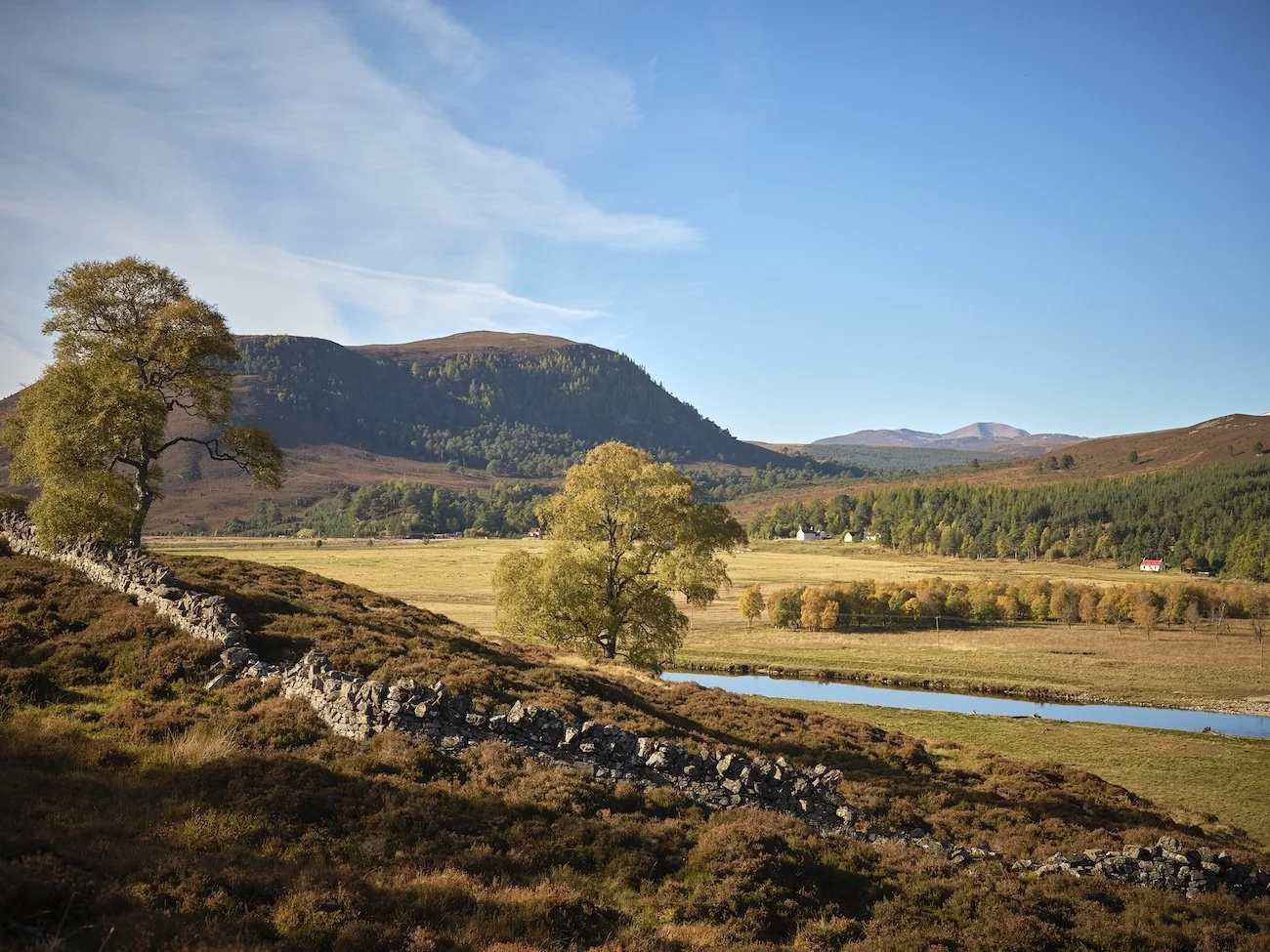
Shepherd did most of her work from a red-roofed croft in the town of Braemar, a place where she could live and breathe the Cairngorms, the UK’s largest National Park. When I devoured her nature writing as a student in Australia, the landscapes she described - a mass of juniper, heather and birch, towering peaks and brutal winters (the Cairngorms’ high mountains are the coldest place in Britain) - seemed far-flung and improbably wild. So you can imagine my surprise when, upon checking in at The Fife Arms hotel, I learnt that her croft was only a half-hour uphill walk away. I had made the journey to the hotel to indulge in art and luxury, but from that moment on my mission changed. I wanted to see these mountains as Shepherd did (which is something the hotel could help with).
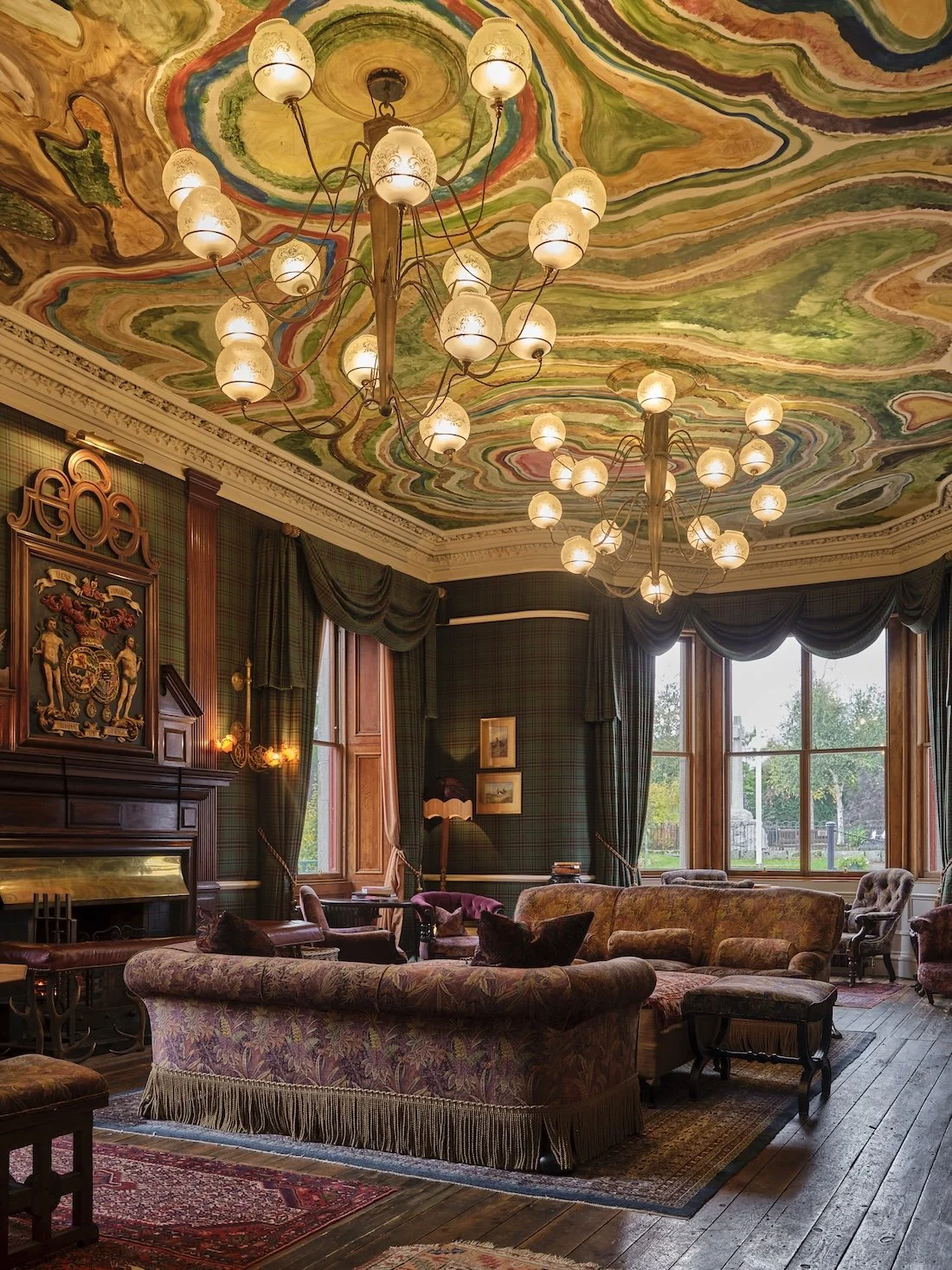
Every detail in The Fife Arms nods to the Cairngorms. Opened by the duo behind Hauser & Worth global gallery, it is filled with around 16,000 pieces of art, including antique glass chandeliers dripping with Scottish flowers, and a painted ceiling in the drawing room that’s part abstract topographic map, part homage to Cairngorms crystal. Everything here comes with a tale, which is fitting, given that even before Shepherd arrived, Braemar was a town of storytellers - something Fife guide Shona Armstrong adores waxing lyrical about.
A member of the Mountain Rescue team (an absolute lifeline among these beautiful but punishing peaks), Shona joined the Fife after retiring as the town’s GP, but it was the inaugural Braemar Literary Festival in 2022 that inspired her to start nature-centric literary tours for the hotel, many of which end at Shepherd’s croft. Robert Louis Stevenson had a cottage in town where he wrote parts of Treasure Island, and Lord Byron spent some of his childhood in Deeside. His Highlands poetry includes Dark Lochnagar, climbing this eponymous Munro, set back from the rest of the Cairngorms, is a great way to appreciate the range’s scale, and understand how remote this wilderness truly is. Although Sir Walter Scott never ventured this far north, he helped bring tourism to the Highlands through the popularity of his Waverley novels (which captured the romance of the Jacobite period) and his fascination, like Shepherd, with the ways nature could help heal the mind. To prove this point, Shona read from his dairy: ‘Took a good sharp walk for the first time since my illness, and found myself the better in health and in spirit. The freeness of the air, the singing of the birds, the beautiful aspect of nature, the size of the venerable trees all gave me a delightful feeling this morning. It seemed there was pleasure even in living and breathing without anything else.’
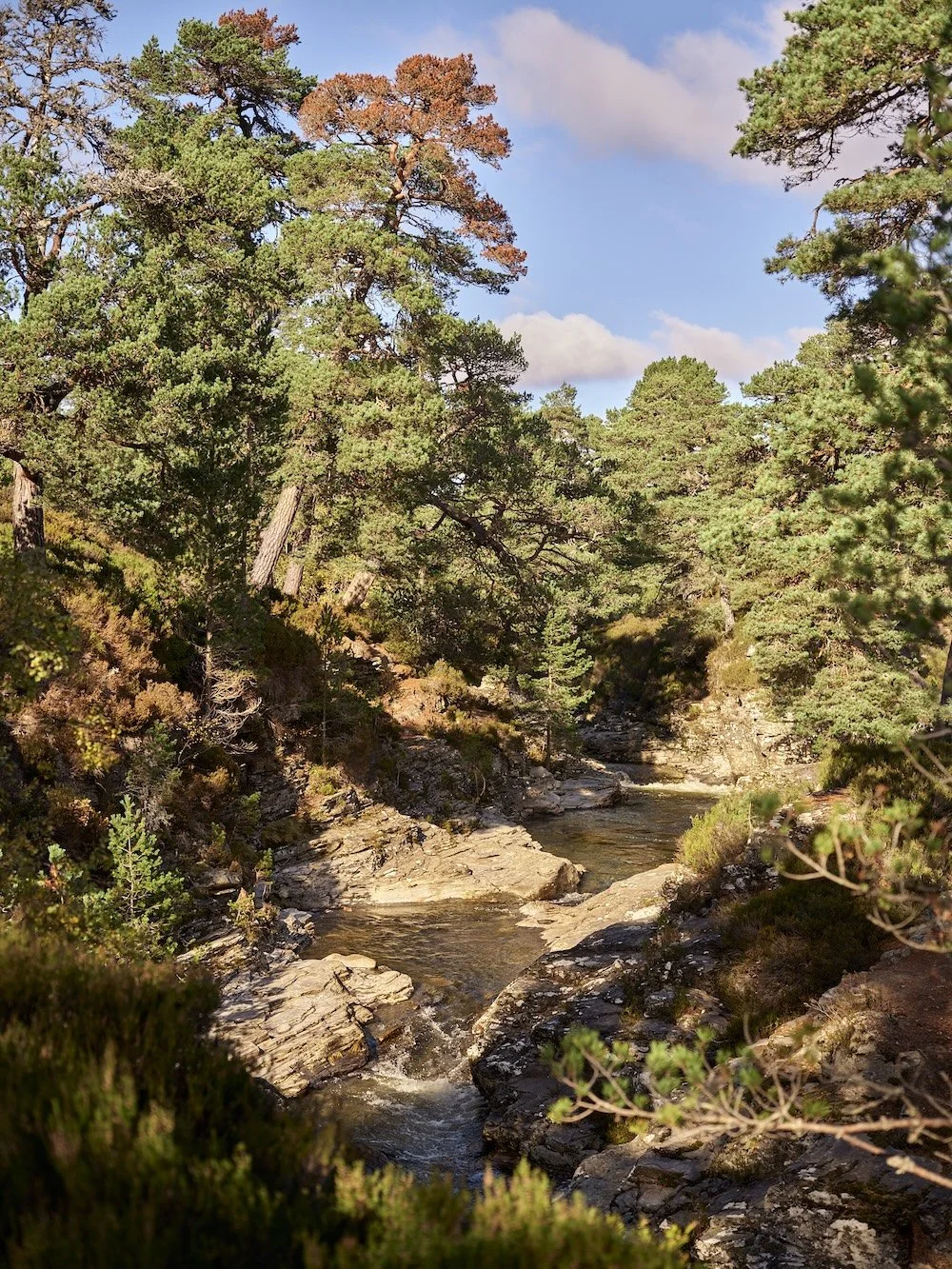
It was Shona who drew my attention to Shepherd’s playfulness and the fact that having a fondness for wildness and solitude doesn’t always need to be a serious affair. Reading from her beloved first edition of The Living Mountain (a family heirloom), Shona revealed that Shepherd had simple, almost childlike ways of seeing a landscape anew - a technique we can still employ when keen to notice the details we might otherwise overlook. ‘Lay the head down, or better still, face away from what you look at, and bend with straddled legs till you see your world upside down. How new it has become! From the close-by sprigs of heather to the most distant fold of the land, each detail stands erect in its own validity. In no other way have I seen of my own unaided sight that the earth is round.’
Love for the Cairngorms runs in the Armstrong family, with Shona’s niece Annie leading Fife guests on custom walking, swimming and foraging adventures through the National Park. Annie feels a connection to Shepherd (who taught her grandmother at Aberdeen College of Education), and shares her approach to these Munros, embracing the idea of taking her time to get to know them - to revel in exploration and discovery, rather than dashing to the top.
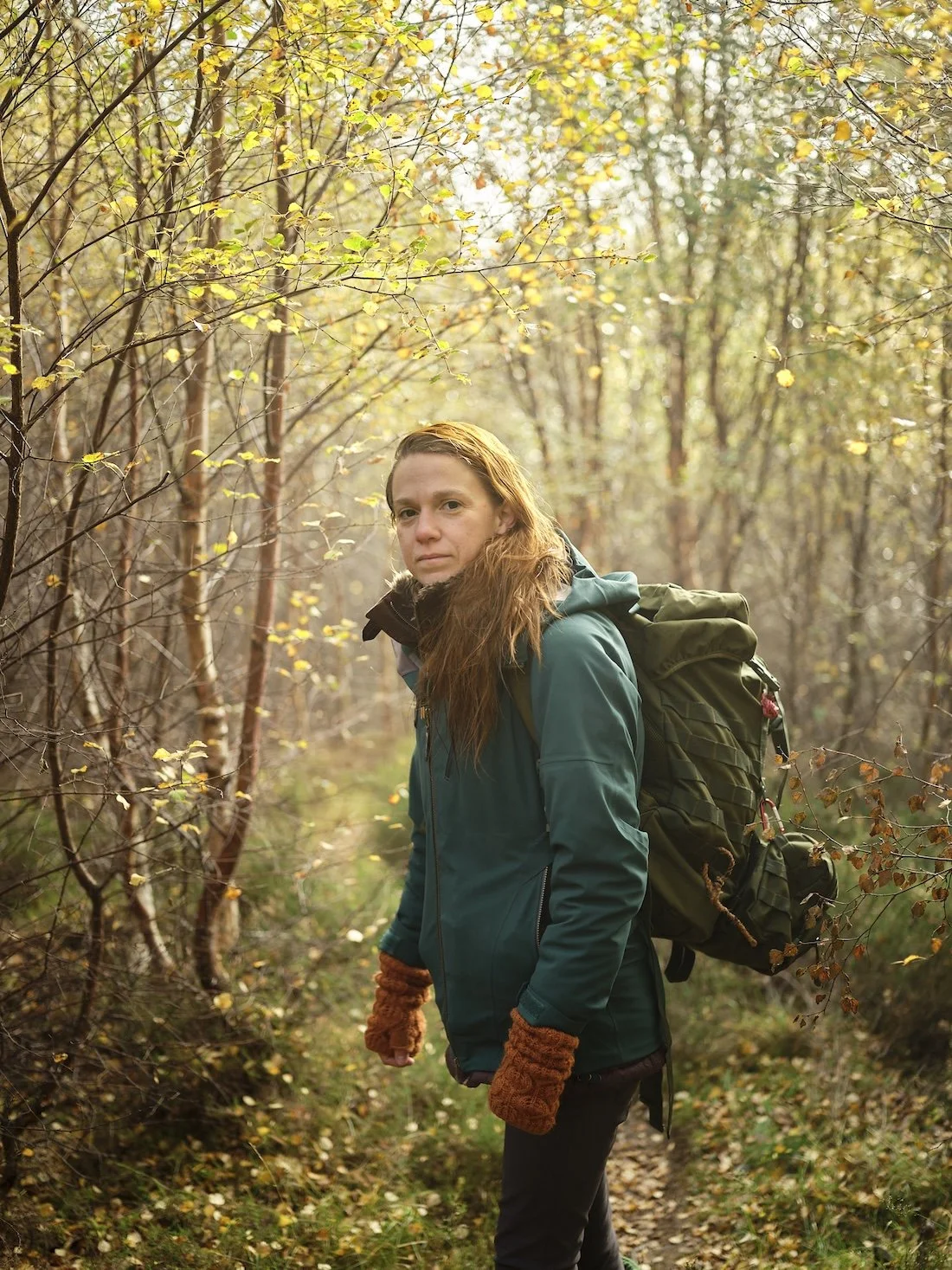
Walking with Annie one frosty morning, stopping to touch the frozen bog myrtle and juniper, its sweet scent released as you roll the dried berry in your hand, I started to embrace the mystical. We were surrounded by mountain birch, which Annie likes to think is the domain of Ghillie Dhu - a fairy who is happy for children to play in his birch forests, but is wary of adults, given their fondness of cutting down trees. If you ever stumble in the woods, or are hit by a branch, that’s his doing. Wanting the see this terrain as a place of stories and myth, I found myself listening more intently, hyper-aware of my senses in a spirited attempt to let the magic in, to hear the rustle of fairy footsteps. Shepherd believed that we needed to use all our senses to experience the Cairngorms, from sight which granted her entry to ‘the world of light, of colour, of shape, of shadow’, to sound, something that is beautiful, even in its absence. ‘For the ear, the most vital thing that can be listened to here is silence. To bend the ear to silence if to discover how seldom it is there. Always something moves.’
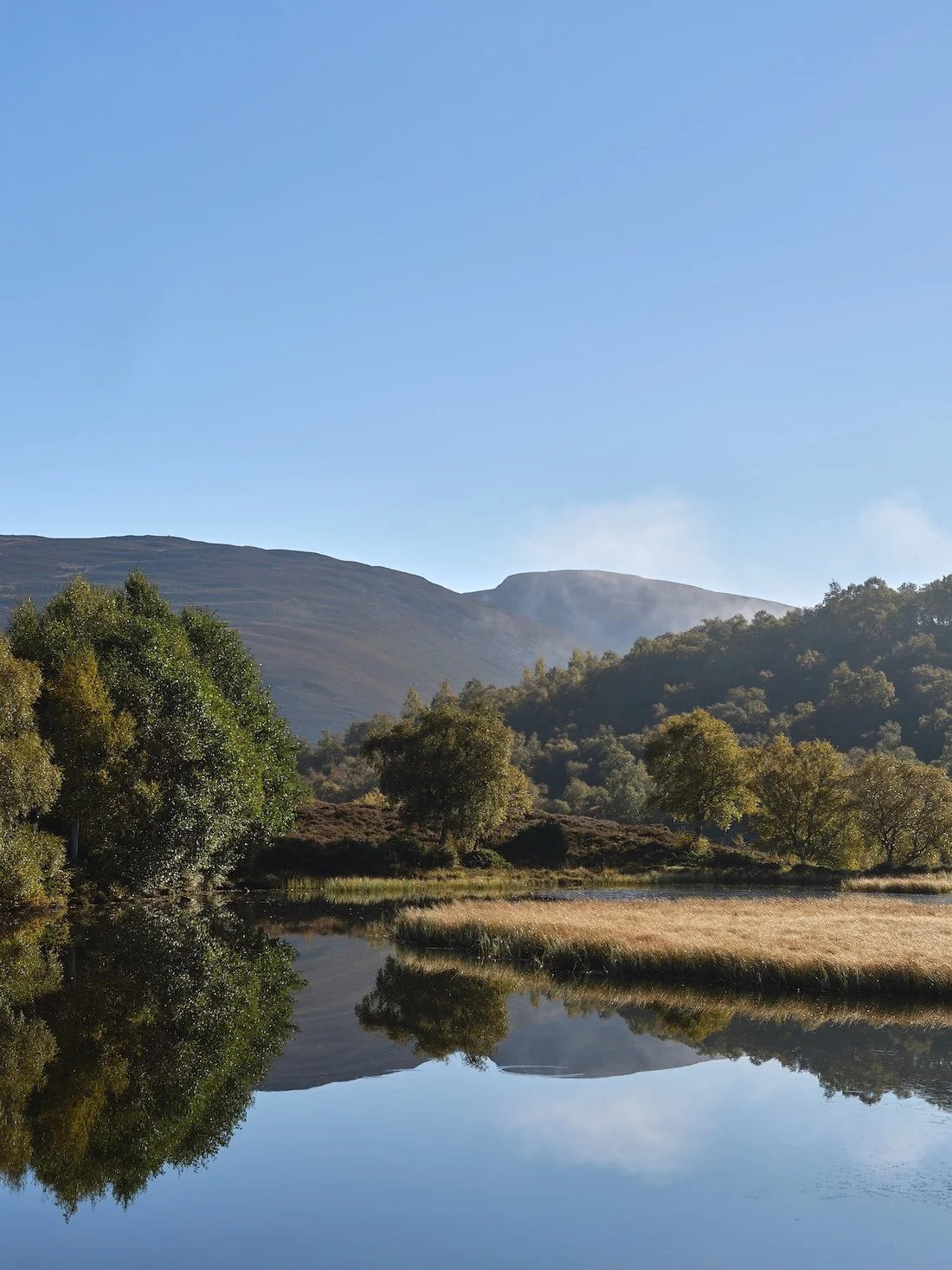
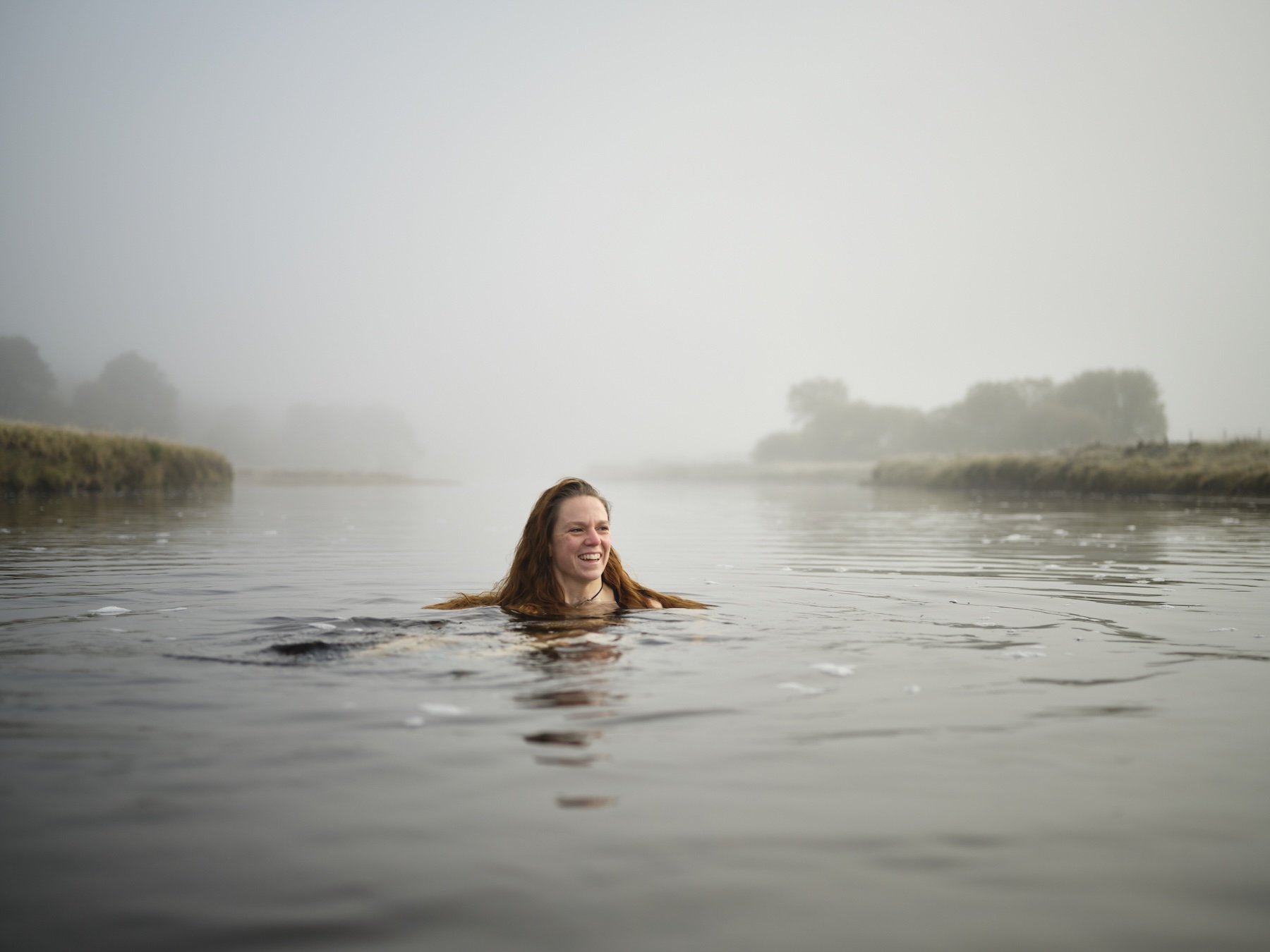
Led by Annie, my day had begun with a traipse through thick mist, the icy ground crackling under my feet, to Pulladh, a natural pool on the River Dee. Looking at the rippling water, I understood what Shepherd meant when she described a loch as being ‘frost-cold to the fingers’. Even Annie, who has been exploring these waterways since she was two, took a moment to summon up the courage to swim. No matter how much experience you have, it’s normal to lose that childlike desire to simply jump in. But it’s so exhilarating when you finally do.
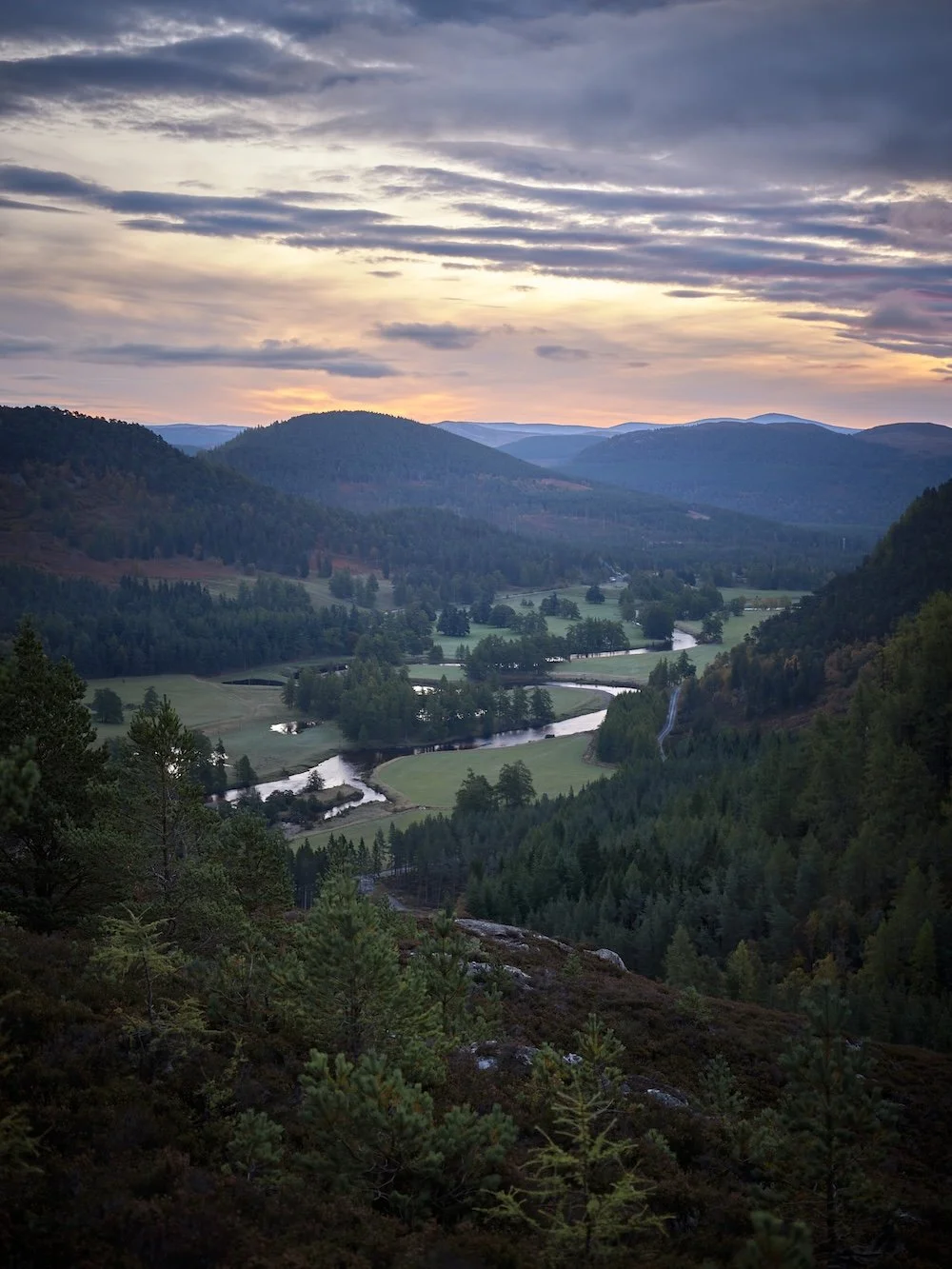
The next morning, I set out from The Fife Arms under cover of darkness, walking through dense Scots Pine to Creag Choinnich (Gaelic for mossy hill). My heart pounded on the ascent, the sound of my breathing occasionally drowned out by the call of rutting stags, easily mistaken for disgruntled cows. But at the summit, all my early morning moodiness slipped away. Above me, the sky was glowing, the sunrise a mesmeric mix of tangerine and blush that lit up the frost-covered heather like snow. Returning to town, my feet light and my mind clear, I passed a kilted man at the hill’s base, a leather suitcase in his hand. He was off to practise his bagpipes in the forest, a personal morning ritual - a reminder that there is no on way to embrace the natural world.
What astounds me most about the Cairngorms is just how much exists in a relatively small space. You could hike for days over the Park’s 55 Munros (four of which are the UK’s highest), or simply sit by the Dee with your back against the sun-warmed stone of an old croft and let the scene wash over you. Either way, the next time you set out, everything will seem completely transformed, new details emerging with every adventure. Even if you were to return to the same spot, there are subtle changes at play, the movement of a cloud or herd of deer, the slow shifting of the seasons. This all alters what we see and feel, our perception more in sync with nature’s shifting rhythms than we might realise. As Shepher writes: ’One never quite knows the mountain, nor oneself in relation to it. However often I walk on them, these hills hold astonishments for me. There is no getting accustomed to them’.
For the full story - and other British adventures - check out Slow Travel Britain.