
Six Boutique Lisbon Hotels We Adore
Few city break destinations are as magical as Lisbon, a vibrant, sunny city packed with restaurants, creatives, green spaces, bars and boutique hotels worth building a holiday around. Read on for a round-up of six of our favourite Lisbon hotels – character-and-design-centric boltholes that we originally captured for our 146-page Lisbon Guide, which you can purchase here, or in a bundle with our Guides to London, Sydney and Kanazawa here.
At Lodestars Anthology, our editors independently select everything we feature. Some of the links you’ll find on our site are affiliate links, and this means we may earn a small commission if you choose to book or purchase through them, at no extra cost to you. We’re always transparent about affiliate links, and our content is never influenced by these partnerships.
Photographs by Daisy Wingate-Saul & Francisco Nogueira, Words by Liz Schaffer & Sarah Kelleher
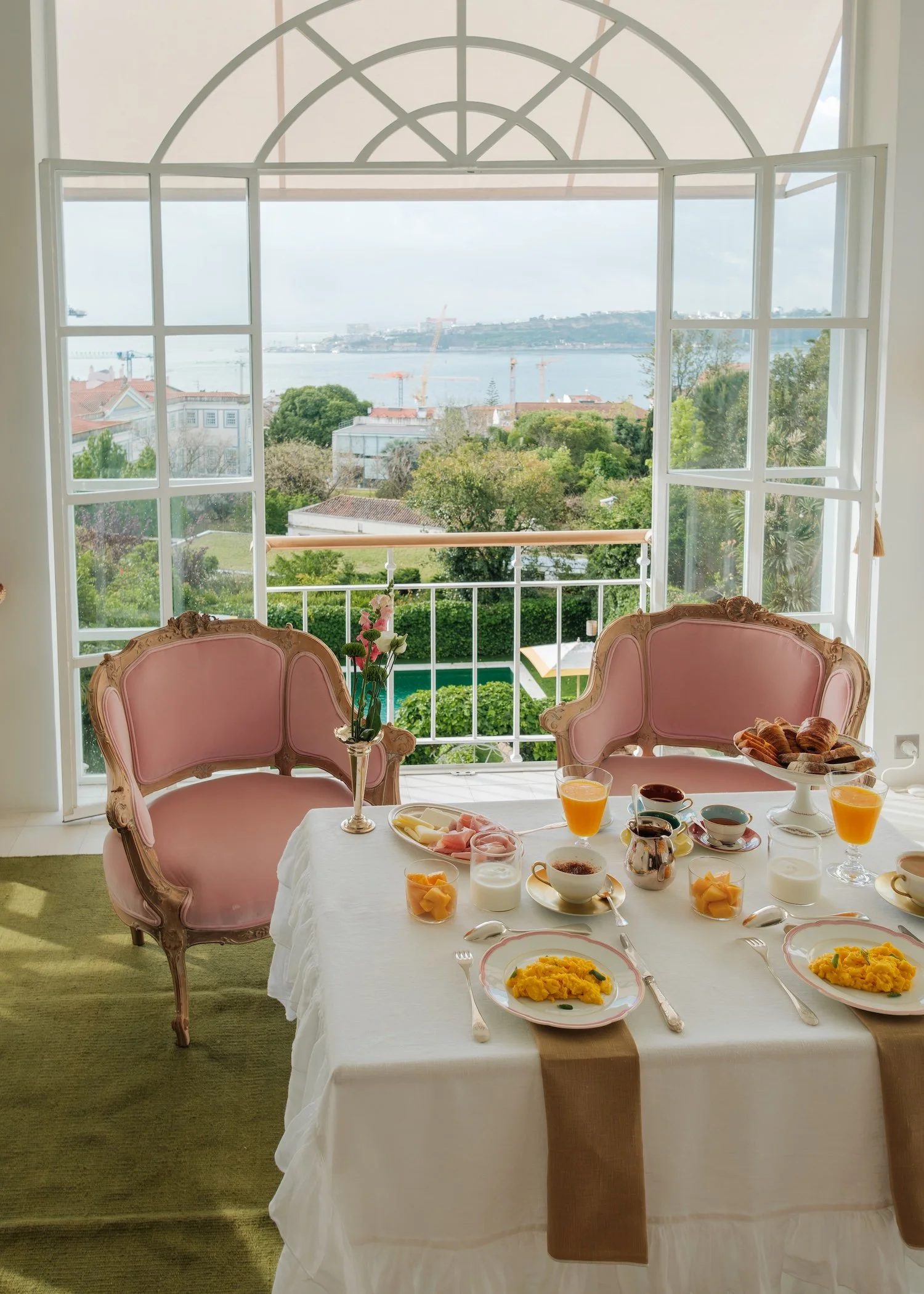
Tarabel Lisbon
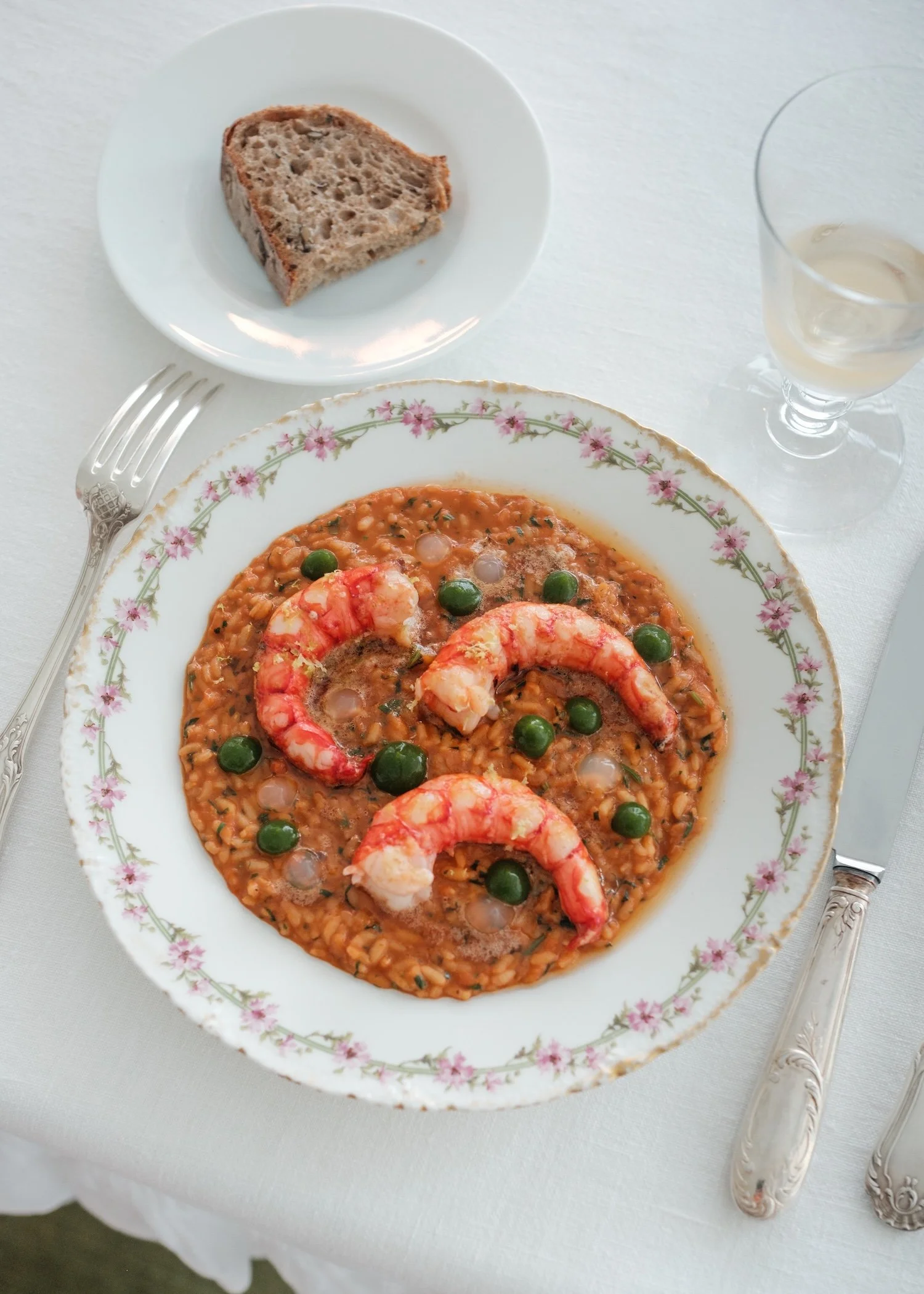
I’m taking my time over dinner, my gaze constantly drifting across the terraced garden and emerald-hued pool. Ships are pootling away on the Tagus River and the jacarandas are in full bloom. In a city renowned for its miradouros (viewpoints), Tarabel’s restaurant has a unique vantage point, seemingly suspended above the rooftops. The meal itself features some bold, unexpected flavours – a hint of fennel, a touch of sesame – but the balance is faultless, with individual elements emerging in every bite. Nothing is overpowered, everything dances.
The pace at this deliciously swish boutique bolthole is calm – partly because it’s found in Lapa (a neighbourhood that’s also home to the beloved Greek taverna Kefi and near the peacock-strewn Jardim Estrela, famed for its Saturday craft market) and partly because of its design. The nine rooms and suites (all of which come with freestanding, claw-footed tubs) and airy communal spaces are adorned with furnishings from across the globe, and each has its own personality. You will spy artworks hidden behind faux bookcases, scatterings of shells and an ornate vintage birdcage by the entrance.
Things are a touch quieter here, yet there’s plenty to entertain. Walk downhill and you’ll reach LX Factory, a 19th-century textiles factory that’s been converted into a store, market and restaurant-packed cultural hub; and if you’re craving greenery, the pathway-laced Parque Florestal de Monsanto is a short stroll away. Then again, you could simply stay by the pool, having stocked up on reading material at Salted Books and pastries from doBeco. Far from the summer crowds, Tarabel Lisbon will help you fall in love with the city’s slower side.
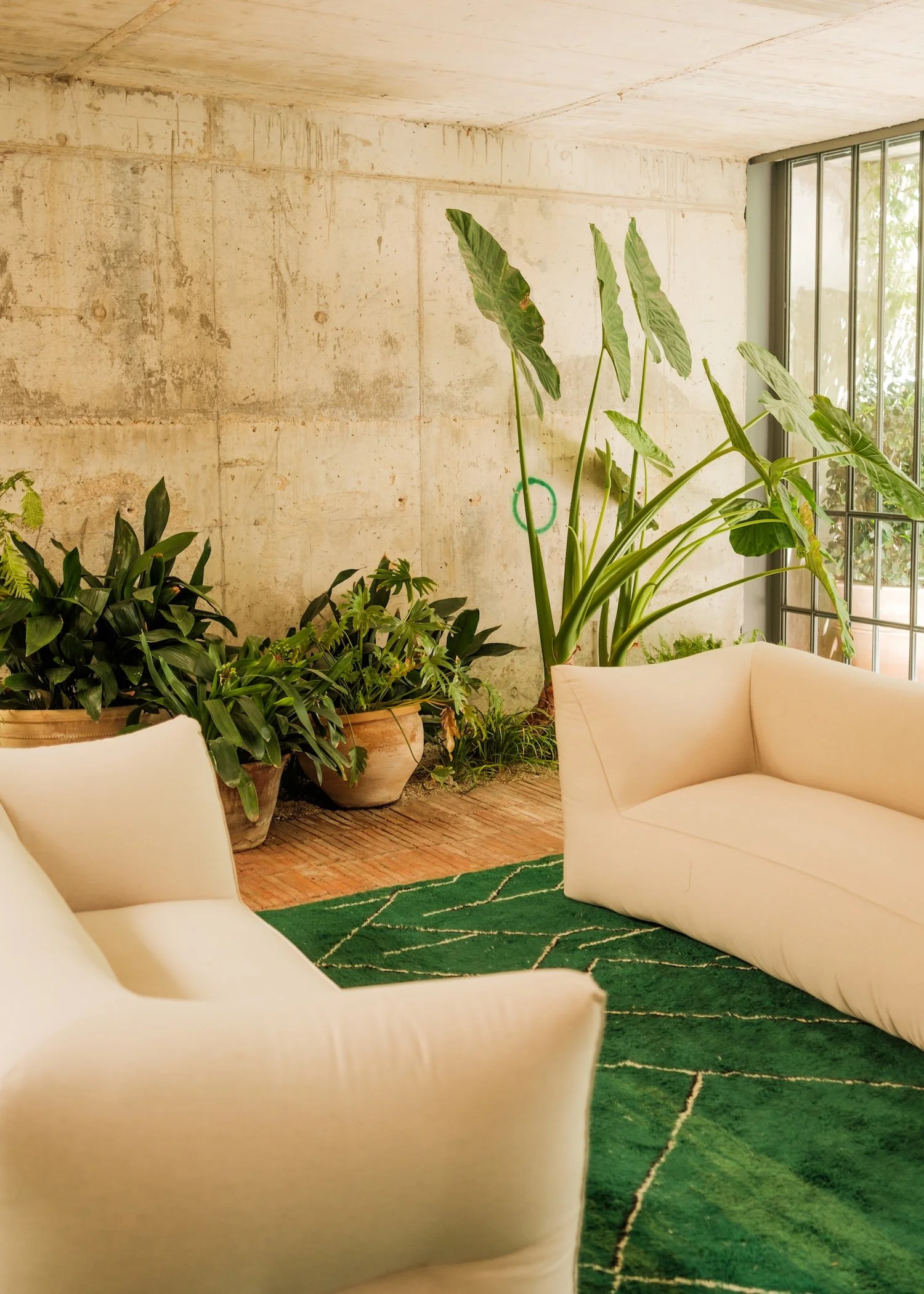
Pátio do Tijolo
If you find yourself on a crowded street, turn off whenever you can – it’s amazing how many pockets of calm exist within Lisbon’s frenetic, hypnotic heart. Not only are these side streets often stunning – brimming with tile-adorned homes, churches and gardens – but they also contain treasures like the architecturally fascinating Pátio do Tijolo, which is hidden away behind an unassuming green residential gate.
Everything about Pátio do Tijolo is designed to calm your body and mind – the muted hues, the greenery, the staggering city views from each room’s terrace, and the scent of roses that envelops you the moment you step through the front door. Add to this nooks to sit and read in and a vibrant assortment of covetable contemporary art, and you have a space you’ll never want to leave.
The hotel itself is built on the site of an abandoned timber yard, and parts of the original workshop can be glimpsed in the ground floor garden, which wends its way through the property. Elsewhere, the largely neutral palette is a homage to Lisbon limestone (a ubiquitous building material that softens the sunlight and makes the city look like it’s aglow), while the decorations (from colourful cushions to custom ceramics) are made by Portuguese artisans.
Pátio do Tijolo is a true oasis; light is dappled, cake and coffee are always on offer and the views are easy to get lost in. It doesn’t feel like a hotel, but a hideaway that becomes entirely your own.
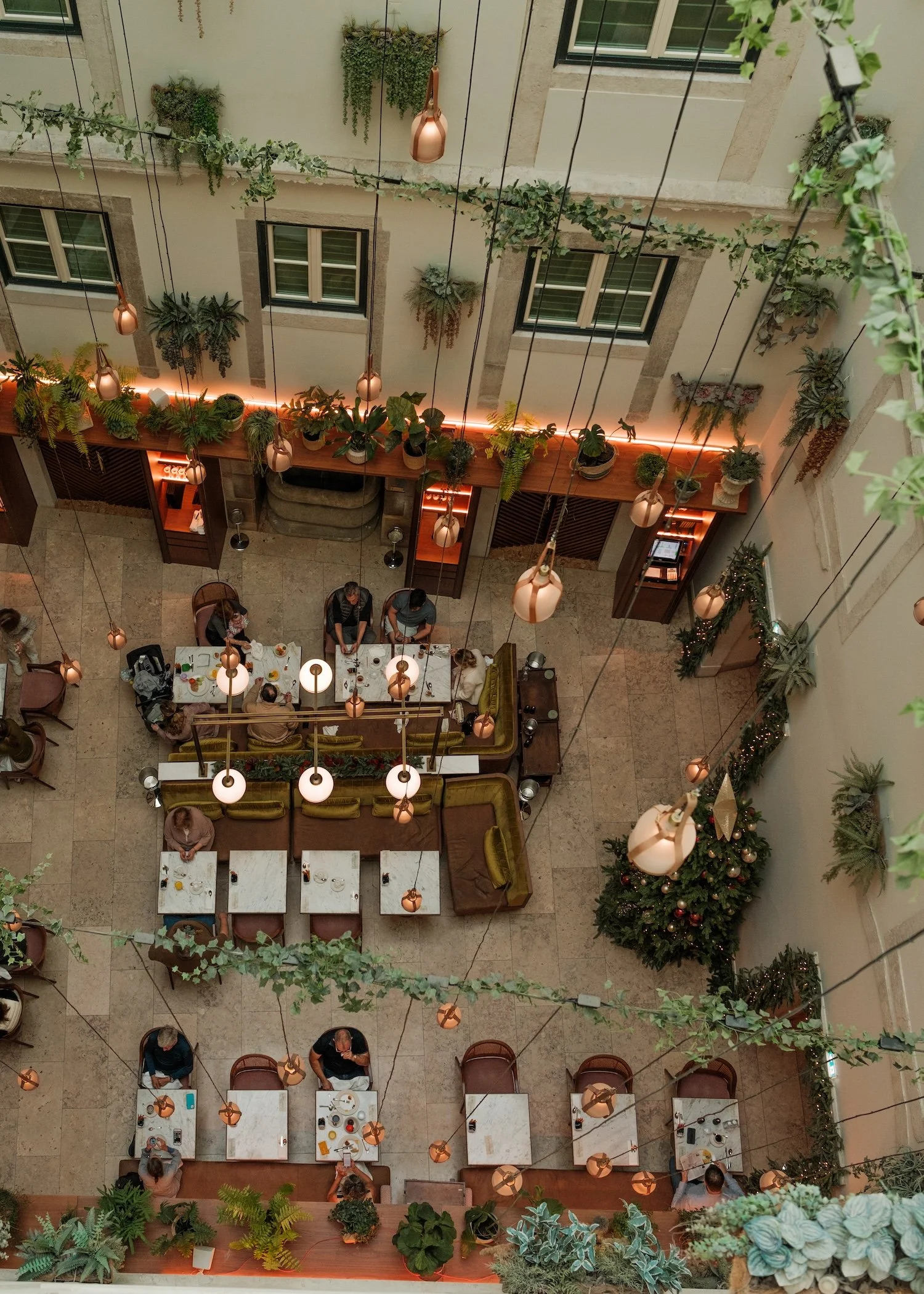
Palácio Ludovice Wine Experience Hotel
Perched atop one of Lisbon’s seven hills between Bairro Alto and Príncipe Real, the history-packed Palácio Ludovice Wine Experience Hotel was one of the few buildings to survive the Lisbon Earthquake of 1755. This design-centric bolthole began life as a private residence, and while the sunshine-yellow facade and original details (like stone archways, stucco ceilings and 18th-century tiles) will have you thinking of a different era, contemporary flourishes abound. Jewel tones and bold wallpapers are balanced by mid-century inspired furnishings, and the space proves that playfulness and elegance make for dreamy bedfellows.
Kick off an evening of refined revelry with one of the hotel’s daily wine tastings; this is a country with around 300 native grape varieties and diverse production methods, so introductions are always welcome. Once you’re acquainted with Vinho Verde (which grows in the north and comes with hints of green apple and lime), float through to Federico Restaurant for dinner. Filling the hotel’s greenery-draped, enclosed courtyard, the fare fuses Portuguese and French flavours, and is paired with classic tipples and custom wine cocktails.
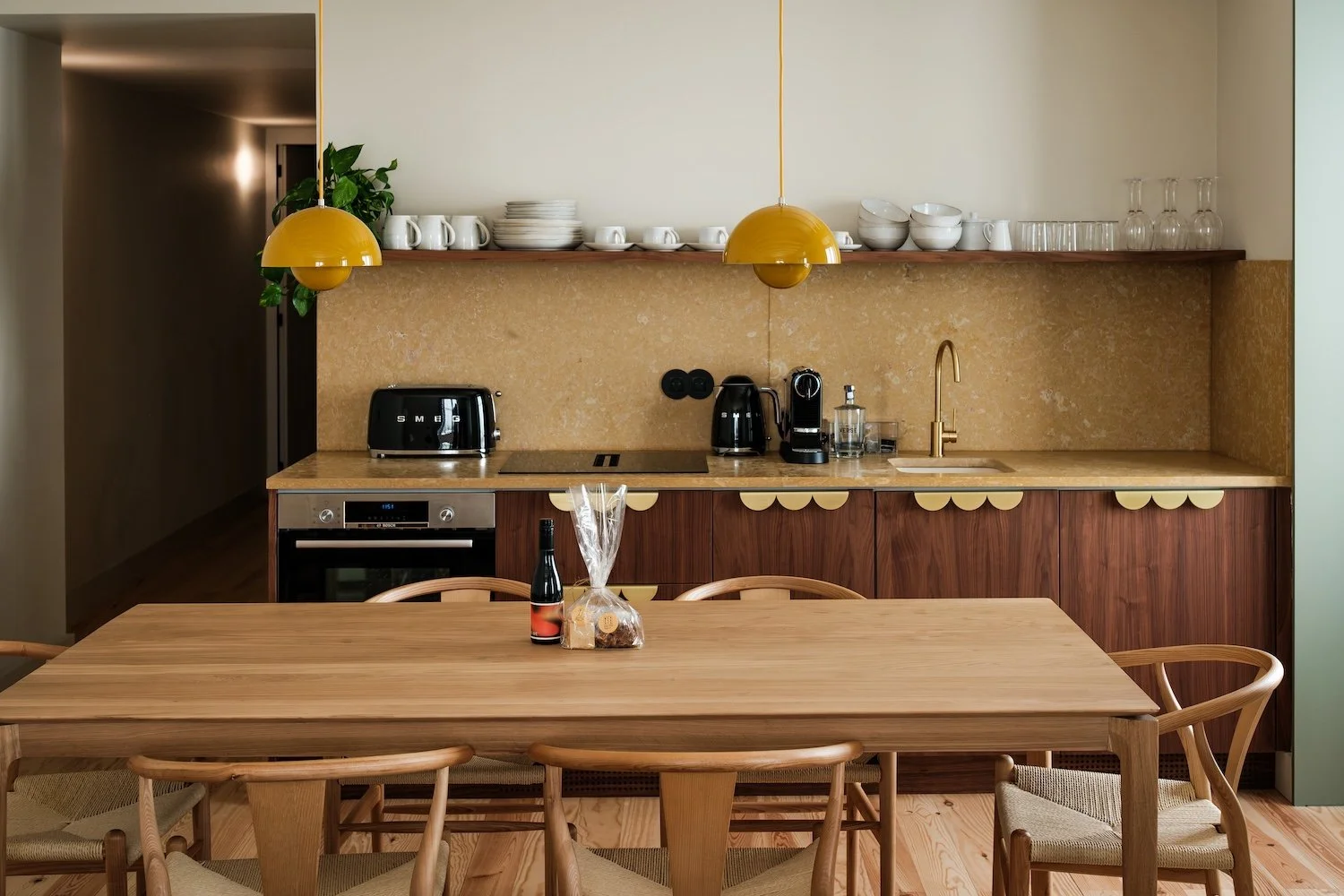
The Verse, Lisbon
To really feel like a local, book yourself into The Verse, a collection of 15 perfectly curated apartments that combine the glamour of a hotel stay with the comforts of home. Inspired by regional landscapes, each room is decorated in calming base tones of sand and wood, and enlivened with swirling pink or green marble accents and sculptural contemporary furnishings. In keeping with The Verse’s ethos, you can get cosy and enjoy locally-sourced wine and provisions in your room while watching everyday life play out beyond your window, or grab a cocktail or two in their stylish ground-floor bar before hitting the town.
The Verse is found along bustling Rua de São Bento (a cobbled street lined with boutique shops and cafes), which you’ll be itching to explore. To get started, head out the front door, turn right and walk for one minute to reach Hello Kristof, where you can enjoy breakfast courtesy of the hotel (if you don’t fancy having it in your room). This artisan coffee shop, cafe and magazine store serves delicious coffee brewed with small-batch beans sourced from sustainable farms – perfect for sipping whilst perusing the select range of travel, culinary and lifestyle magazines. Their Eggs Benedict is also out of this world.
Hotel das Amoreiras
Standing on a quiet street bordering the leafy Jardim das Amoreiras, Hotel das Amoreiras is a boutique delight, a luxurious refuge created by Pedro Oliveira and Alicia Valero. This may be the couple’s first foray into hospitality, but helming a hotel like this has long been Pedro’s dream, and you sense that passion and care the moment you float through the doors.
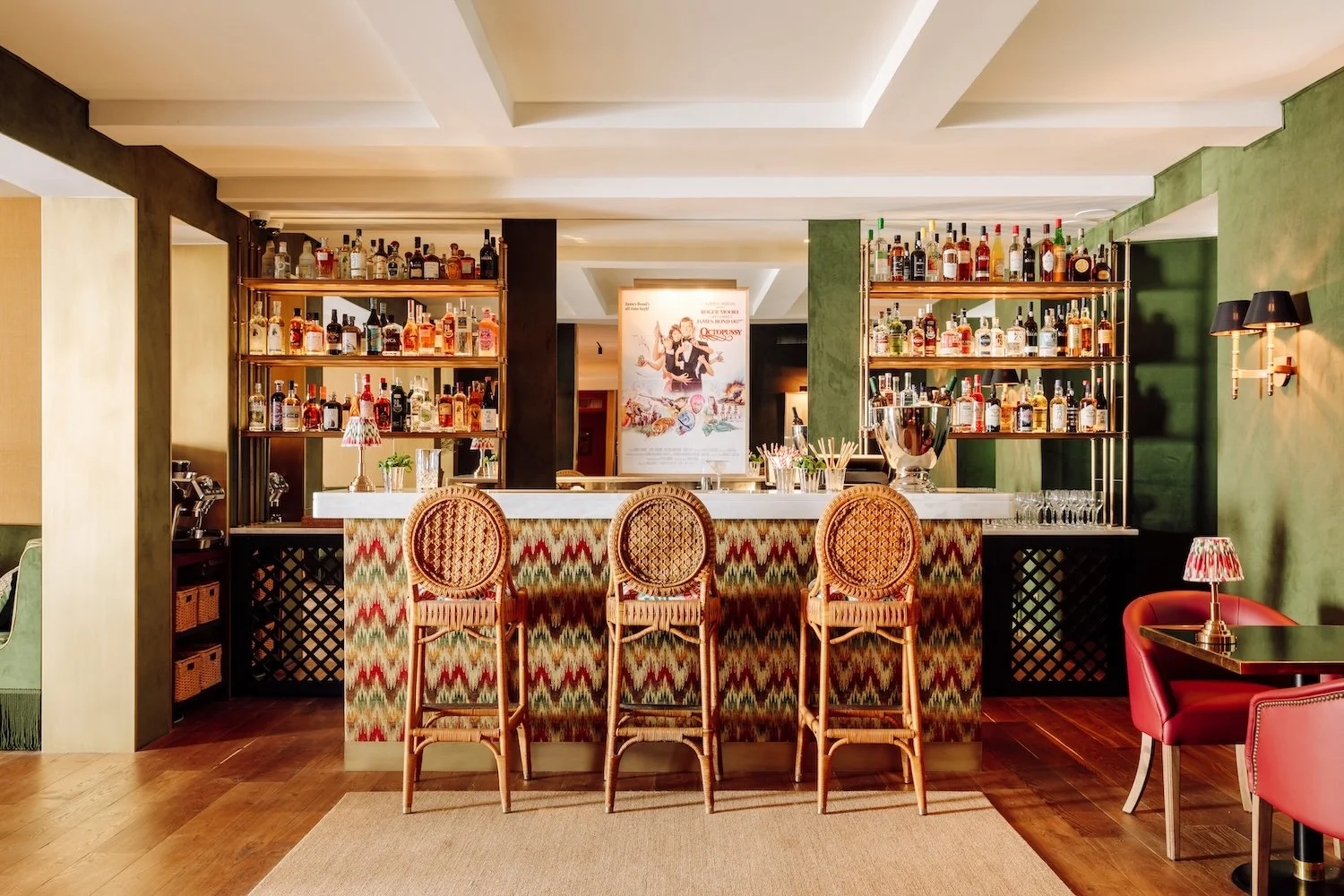
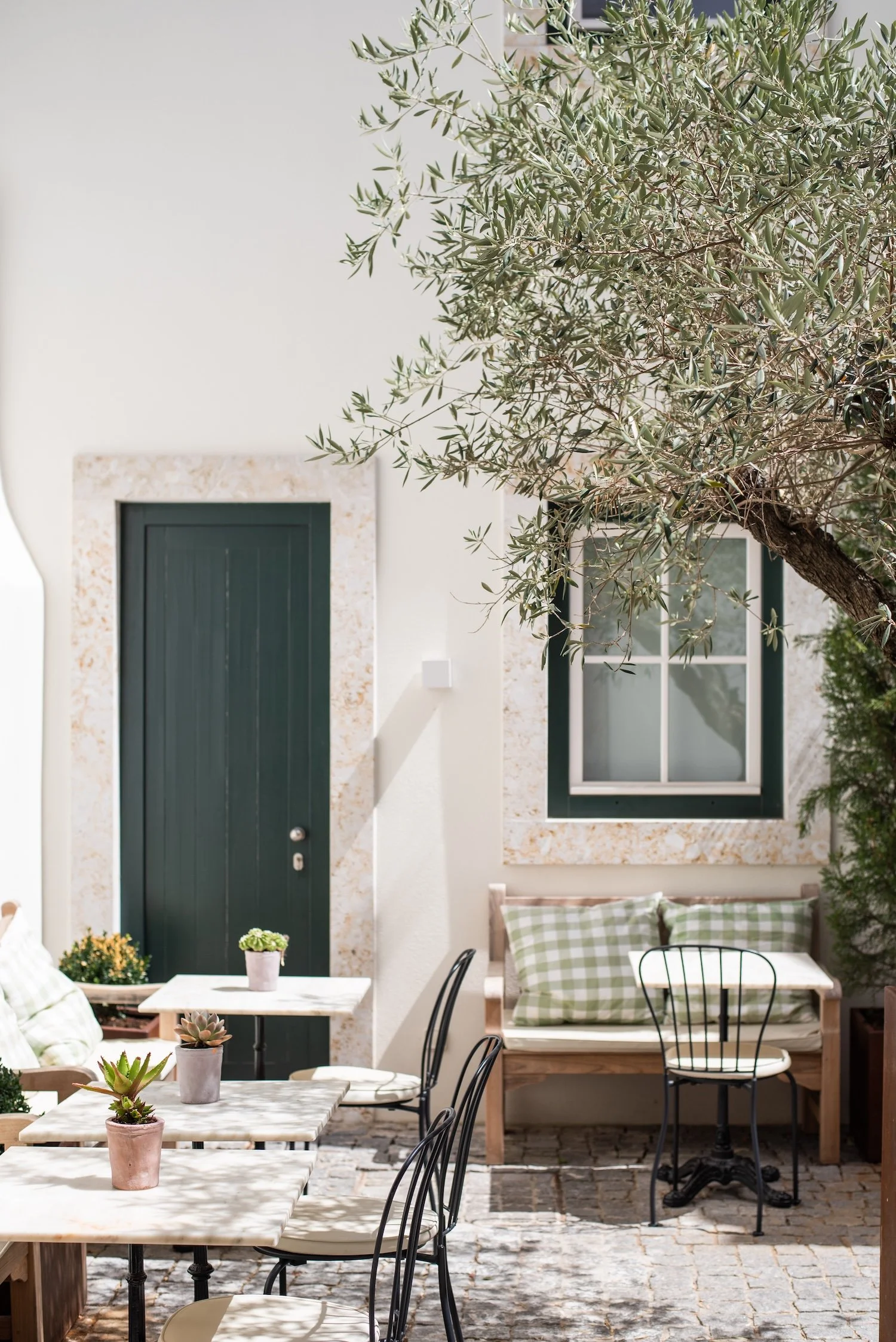
The white-walled and green-tiled facade is balanced by warm interiors that showcase deft personal touches, including a painting by Pedro’s father in the reception and an original James Bond film poster hanging above the well-stocked mirrored bar (ideal for ordering martinis, shaken not stirred). The bar flows into a cobbled, olive tree-crowned courtyard (where breakfast is served), overlooked by bedrooms decorated in soothing tones of caramel, cream and sage, and splashes of Portuguese marble.
Everything about Hotel das Amoreiras is designed to keep you idling over your morning café com leite, but joining the neighbourhood is much encouraged. Named after the mulberry (amoreira) trees that shade the square (planted centuries ago to help bolster the local silk industry), the paths of Jardim das Amoreiras twist around a kiosk that surely plays host to budding writers and poets. An imposing stone aqueduct frames the square on one side before funnelling into the Mãe D’Água das Amoreiras Reservoir.
When it comes to dinner, nearby foodie gems include Michelin-starred vegetarian restaurant Arkhe and Pica Pau, where the menu lists classic dishes you’d commonly find at a Portuguese picnic – think green eggs (hard-boiled eggs mixed with vinegar and coriander and finished off with a coating of crisp batter) and phenomenal tempura green beans. The restaurant’s eponymous pica pau (small pieces of marinated beef served in a garlic-forward sauce) is a flavoursome must-eat. All that remains is to stroll back up the hill for an impeccably-mixed cocktail at Hotel das Amoreiras, your home away from home.
Silent Living - Santa Clara 1728
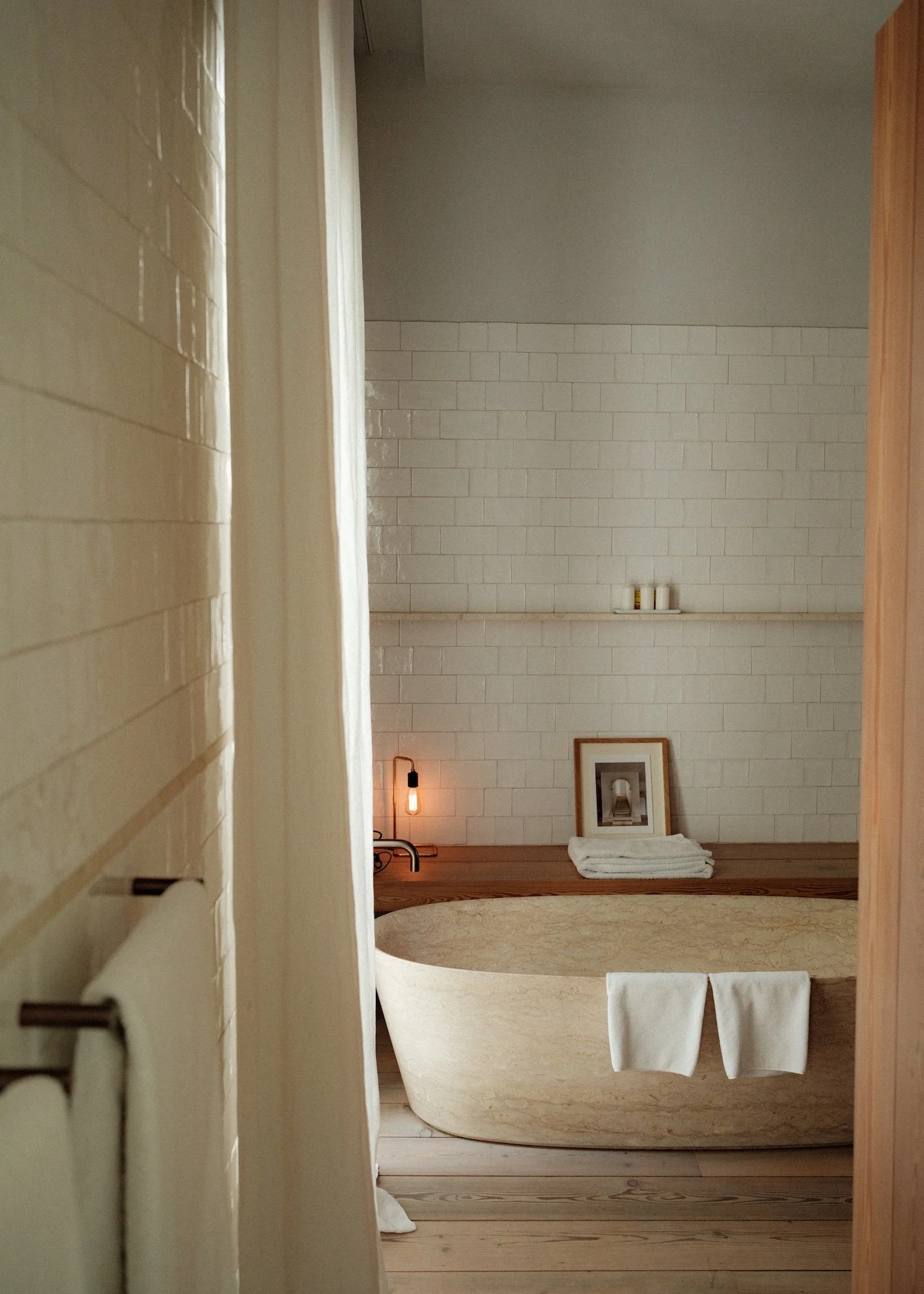
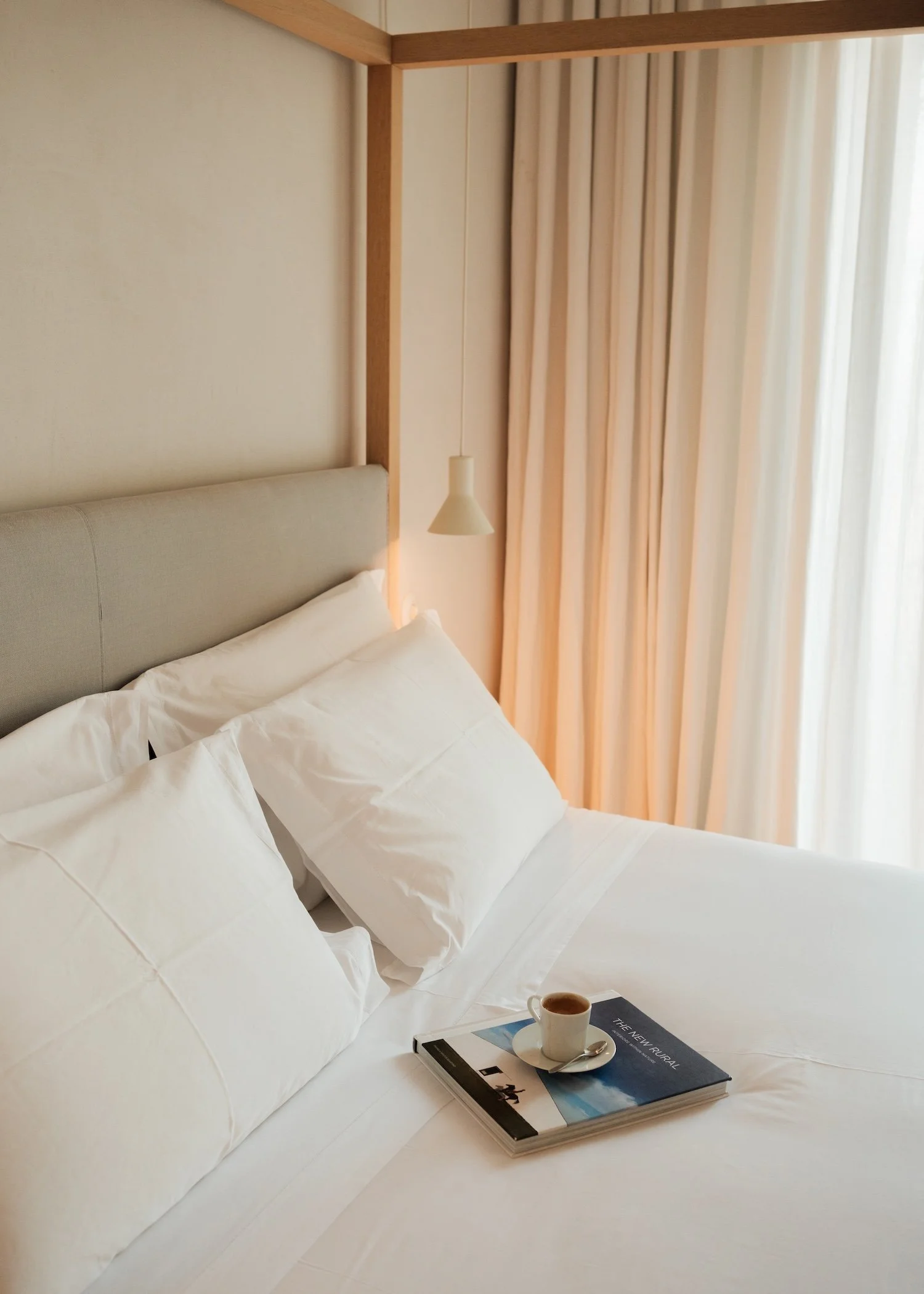
Arising from a marble bath overlooking a citrus-tree-filled private courtyard, I’m too blissed out to do anything but sink into my cloud-like, four-poster bed. Through the open window, I can see the dome of The National Pantheon and just make out the sounds of Feira da Ladra (a flea market that takes place every Tuesday and Saturday) setting up.
Crafted from natural materials and holding court in a revamped 18th-century building (the original limestone staircase is a thing of beauty), this apartment-meets-hotel is ideal for lovers of refined minimalist design. Here, every detail has been carefully considered, and each cornice, light feature, oil painting and adornment comes with a story.
This six-bedroom abode was created by hotelier and TAP pilot João Rodrigues, and is one of his five Silent Living ‘houses’ found across Lisbon and Alentejo. All began life as family residences and have retained that sense of warmth, along with strong ties to the regenerative farming community. Some ‘houses’ have their own working farms, while Santa Clara focuses on showcasing how delicious super-fresh ingredients can be.
Meals in Santa Clara’s restaurant – which goes by the names SOLO at lunch and CEIA at dinner – are served at a communal table, with conversation flowing the moment you’re handed a welcome drink. Dishes are paired with Portuguese wine or non-alcoholic concoctions (like homemade ginger kefir), with the menu highlighting the importance of sustainability and the processes involved in bringing something this delicious to the table. During my visit, one course was made with sea urchin, an invasive species, while another featured algae, a remarkable carbon sequester. As you eat, the doors to the kitchen remain open, and you’re encouraged to wander in and ask questions whenever curiosity takes hold. And inquisitiveness is surely guaranteed – I can’t reveal all the theatrics and alchemy involved in a dinner at CEIA (this is something you need to experience for yourself), but know that it’s a moveable feast in more ways than one.
For additional Portuguese inspiration, check out our guide to Lisbon and its surrounds, and Cascais, star of the Portuguese riviera.
Silent Living - Santa Clara 1728
Hotel das Amoreiras
Tarabel Lisbon