

Back to the Pembrokeshire Coast
Celebrating 10 years of the Wales Coast Path.
words by Liz Schaffer & photographs by Angela Terrell
I fall in love frequently. It’s addictive - that wonderful rush, the sense of being entirely at ease, of finding home. But to be head over heels is a rarer occurrence. This particular form of infatuation seems to come from nowhere, but once you’re smitten there’s little else you can think about. You’re obsessed, enamoured, over the moon. This is the love I feel for Pembrokeshire.
I first ventured here one dark and broody December to escape the greys of a London winter. Craving salt air and space, my friend and I packed the car with wellies and walking gear, and travelled as far west into Wales as we could possibly go. As we crossed the border into Monmouthshire and continued through the Brecon Beacons (send two Australians on a road trip and they’ll never take the most direct route), it was clear this journey was set to be something special. Everyone waxes lyrical about Welsh landscapes, yet to be moving through them, even this late in the year, is something else entirely. You’re enveloped by a patchwork of olive, sage and bronze; the hues softened by the cold and flecked with hedgerows, drystone walls and whitewashed cottages that stand sentinel in the folds of hills. Stops had to be made - at the perfectly wonky Capel-y-ffin, the bookshops of Hay-on-Wye, for a feast at The Felin Fach Griffin, and for a slow drive over the Black Mountain Pass.


Given our circuitous route, we arrived into St. Davids, Britain’s smallest cathedral city, under the cover of darkness and, being a touch road-weary, could do little more than tumble into bed at Twr y Felin Hotel. Once a windmill, temperance hotel and U-boat lookout (rebuilt at various points using materials foraged from a shipwreck), it is now a lush, contemporary affair and our wander to breakfast the following morning revealed the hotel’s greatest attraction - its art collection. Oh, to have made off with the Pop-Art-esque portraits of Wales’ theatrical greats (Catherine Zeta-Jones, Anthony Hopkins and Richard Burton), or Cherry Pickles’ deliciously vivid paintings capturing the hedonistic exploits of Dylan Thomas.

I could feel my love for Pembrokeshire grow when we visited St Davids Cathedral, found in a hollow above the site where St David, Patron Saint of Wales, built his first monastery in the 6th century. Admiring the ornate stone and woodwork - made all the more charming by flooring and pillars that appear slightly askew, said to be cast out of place by an earthquake centuries ago - you can feel the weight of history, the presence and passion of those drawn here for more than a millennia. It’s little wonder two trips to this cathedral were deemed as worthy as one to Rome.
However, it was the marriage of myth and the wild that had me truly besotted. St Davids sits beside the Pembrokeshire Coast Path, a hallowed, 299-kilometre walking trail that can be braved as one big adventure or, as we did, in short, scenic sections - the first being our ramble to St Non’s Chapel and Well. Located in a field by the sea, these ruins are all that remain of the chapel where St Non gave birth to St David as a storm raged; the moment coinciding with the appearance of a holy well, which still flows with water believed to have curative properties. Pausing here, I was again overcome by a feeling of reverence, a sense that history, lore and the modern day remained entwined.


St Govan’s Chapel, a weathered and wonderful outpost, is another spiritual gem - Celtic this time - found along the Coast Path. Tucked into a cliff, this petite, 13th-century chapel stands upon an earlier hermitage, built as thanks by St Govan (a mysterious character said to be a Knight of the Round Table) after he sheltered here, having been set upon by pirates.
For more artistic offerings, walk from Abereiddi to Porthgain. Abereiddi (the Blue Lagoon) is an abandoned, flooded slate quarry famed for its vibrant waters and the ruins of an old wheelhouse, used as a diving ledge by the dauntless. The walk itself takes in jagged cliffs, rock-strewn beaches and the relics of an industrial past - the sea breeze a constant, calming companion.
Our destination, the petite fishing village of Porthgain, was nearly lost to history, put up for sale when the brickworks beside the harbour closed. All looked dire until a group of residents and the Pembrokeshire Coast National Park Authority raised the funds to save it. Today many hike here for The Shed, a homely bistro with creaky floors, whitewashed walls and fabulous fish and chips. Should you fancy a post-meal tipple, stop by The Sloop Inn, which has remained largely unchanged since it opened in 1743.
Equally picturesque is Tenby, a pastel-hued seaside town boasting Georgian architecture, castle ruins, an iconic lifeboat station and a sweeping sandy beach. It inspired George Eliot and Beatrix Potter, was the childhood home of artists Augustus and Gwen John, and - if the tides are right - is where you depart for Caldey Island, which is home to a community of Cistercian monks.


Our final stroll began in Solva - following an Australian-style ‘detour’ to Pentre Ifan, a Neolithic burial chamber built from the same locally quarried bluestone as Stonehenge. Seemingly frozen in time, Solva is delightful. Lime kilns line the harbour, smugglers once ran amok and it was from here, in the 19th century, that many began their journey to America. The star attractions today are MamGu Welshcakes (connoisseurs when it comes to these butter-slathered delicacies) and the landscape, which we admired en route to nearby Nine Wells as the sun descended. This was the first proper sunset of our adventure, the clouds giving way to a glorious, glittering blast of rose and tangerine, a ribbon of gold dancing upon the water below. The wind had dropped and I was left with only the calls of gulls and crash of the waves. The camera in my hands was suddenly useless; capturing such a moment didn't feel right. Instead I stood, in awe, alone with my thoughts - save for the flock of sheep behind me, who were entirely unfazed by my presence. I was brought back to myself by a salty sea dog (out walking his even saltier sea dog) who called out a cheerful ‘Happy New Year’. This was the last sunset of 2019.
I saw in the New Year beside St Davids Cathedral as the bells chimed midnight and continued my merrymaking in The Farmers Arms … or was it The Bishops - I was a little too overwhelmed by my love for Pembrokeshire by this point to commit much to memory. It was impossible to predict then, elated and enamoured, what 2020 would hold, but I never could have imagined that these Pembrokeshire memories would be as treasured as they are; reminding me, when travel seemed distant and the world small, of just how much lies out there. Magnificent, mesmeric, waiting.
I’ve always had a soft spot for words with no English translation; poetic reminders that our most complex thoughts and emotions can be easily defined, and that almost everything we feel is shared. My favourite is the Welsh word hiraeth, which describes our longing for a home we can never again visit - a place lost to the past, or perhaps one that never really existed, yet is steeped in nostalgia nonetheless.
For me, this is Pembrokeshire - a lore-drenched corner of Wales that I think of and immediately feel calm. I close my eyes and I’m standing by the Atlantic once more, spending a star-spangled night in a restored castle hotel (few abodes are more magical than Roche Castle, high on its volcanic outcrop), or diving beneath the waves at Whitesands Beach. So, when I returned to Wales this spring, I was excited, but perhaps a little nervous that my beloved walkers wonderland would not quite be as remembered. But reader, fear not; within moments of arriving (after yet another deliberately circuitous journey) it was clear that Pembrokeshire remained glorious - and that the spring weather gods had decided to put on a show.


On this Pembrokeshire pilgrimage, I retraced familiar steps - Tenby and Abereiddi are impossible to visit just once - but as the Wales Coast Path was celebrating its tenth year, I decided to spend much of my sun-drenched time walking. My base was The Little Retreat - a sustainability-focused, luxury glamping site in petite, estuary-framed Lawrenny. Surrounded by bluebell-scattered woodland, and watched over by the town’s stone church, it was a hideaway that set the tone of the trip; which was all about slowing down, celebrating the natural world, and pondering the mysteries of the universe from an outdoor, wood-fired hot tub. The fact that Matt Powells’ Annwn restaurant is on site (a must for lovers of foraged fare) made me adore The Little Retreat all the more.
There was a morning of antiquing in Narberth, and an afternoon spent lost in thought as I tramped from Broad Haven to Barafundle Bay - where I struggled to understand how the water could be quite so blue. I watched guillemots natter on Stackpole Rocks (promising myself I’d return once more to see the puffins on Skomer Island), and waited for the tides to shift at Marloes Sands Beach, entranced by the curves and folds of the rock face above me. I looked on as those braver than I leap into the sea at Porthclais (picturesque but far too cold in April), ate fish and chips by the sea, and couldn’t resist the urge to buy a woven blanket at Melin Tregwynt.

It’s amazing what a few days spent walking somewhere wonderful can do. Your body may be tired but your mind is clear - and such clarity is worth celebrating. So, full of sea air and endorphins, I stopped for a libration at The Dyffryn Arms. Found in Cwm Gwaun Valley, this pub has been run by Bessie Davies for more than six decades. Quaint and character-packed, drinks are served from a window in her wallpaper-covered living room, which is fittingly adorned with portraits of The Queen and Prince Edward. Kate Wickers wrote about Bessie’s (the pub’s affectionate moniker) for our Wales magazine, describing it as” ‘Like discovering a time capsule, the items inside may be a little dusty and rough around the edges … but a pint taken at Bessie’s is to be savoured as a glimpse into the past, free from gimmick or pretension.’ It was wonderful to see that The Dyffryn Arms’ charm remains.
In Pembrokeshire, as with much of Wales, the past is etched into the land; present in the remnants of mining villages, in Iron Age forts that are being slowly devoured by the earth, in windswept ruins and in sleepy pubs that have become the beating heart of a community. You’re aware of all that has come before, of how the terrain has shifted and changed, of everyone who journeyed here seeking solace and escape. To walk through such a landscape, well, that’s something worthy of adoration. Take yourself to Pembrokeshire, hike the Coast Path, and prepare to feel the love.
For more Welsh travel ideas, check out the Visit Wales website - or pick up a copy of our Wales magazine.


Roger Deakin's Suffolk
Wild swimming and nature writing.
Words by Joe Minihane & Illustrations by Marina Marcolin - first published in our England magazine.
“There was a time for us too when Suffolk and the whole of the Waveney Valley was terra incognita, like the hills, woods and ponds around Thoreau’s cabin at Walden.”
Roger Deakin, Notes from Walnut Tree Farm
I walk across Outney Common, boots squelching through churned up mud, as a herd of cows throws me nonchalant glances from fifty paces. There’s the caw of invisible ravens, the twirling song of a skylark, the silent wingbeats of a kestrel on high, watching something unseen in the tall grass.
I am here to swim in the Waveney, a river that arcs in a deep meander around this open space. It’s late April and despite the spring sun burning off the dawn mist, a chill breeze lingers. Where the river forks and a row of timber steps are nailed into an overhanging horse chestnut, I slip into the cool water. Wavelets slap across my chest as I tack out into the deep, enjoying the frog’s eye view. This is my favourite place, on the trail of a man who made this valley, this county, his home. A man whose writing gave rise to a new understanding of the natural world.
Roger Deakin was a swimmer, writer, woodsman, filmmaker and eccentric. He made his life at Walnut Tree Farm, a once-ruined Elizabethan farmhouse in the Suffolk village of Mellis. Surrounded by a medieval moat and acres of unkempt fields and woodland, it was a base for his adventures both local and far reaching.
In the years since his passing in 2006, Deakin and his works have become cornerstones of a resurgent nature writing scene in the UK. 1999’s Waterlog, an ode to the delights of illicit swims in the country’s hidden waterways, is now seen as totemic, kickstarting a wider appreciation of wild swimming. The posthumously released Wildwood revealed Deakin’s deep knowledge of and adoration for forests and trees, such passions also evident in his diaries, released as Notes from Walnut Tree Farm in 2008.
My own connection to Deakin came through a shared love of wild swimming. Waterlog was, and still is, my bible. The author’s impish sense of fun, love of outing rules and understanding of the natural world spoke to me at a time when I was struggling with anxiety. I made it my mission to swim in all of the places Deakin had visited, a project which became my own book, Floating.
“The Waveney is a secret river, by turns lazy and agile, dashing over shallow beds of gravel, then suddenly quiet, dignified and deep.”
Roger Deakin, Waterlog

In the three years since the end of my journey, I have missed diving into Deakin’s world. Hence I am here, swimming in a pool on the Waveney that he described as “a perfect pike pool”, all submerged tree roots and uneven banks. The water seems like the ideal way to see the world as Deakin did. He speaks of becoming part of the scene when swimming in rivers, of being at one with the creatures that make it their home, of gaining a sense of perspective unattainable on dry land.
From where I swim, the banks look impossibly high, the only sights a distant mansion and the course of the channel where it twists its way towards Bungay, Geldeston and the North Sea beyond. Low to the water, the breeze has dropped and the sun warms my back as I swim a lazy breaststroke. Deakin called this “the naturalists’ stroke”, all the better for the swimmer to see their surroundings. I can hear the whirr of gold finches. The kestrel I saw earlier drops, hovers and drops again, rising once more without prey. I picture pike hiding in the depths, waiting to bite, and make for the bank.
“This was the Wissey, a river so secret that even its name sounds like a whisper: a river of intoxicating beauty that appears to have avoided the late twentieth century altogether.”
Roger Deakin, Waterlog
Across the county border, on the edge of Norfolk’s sandy Brecklands, I follow the barbed wire fence of a MOD ring range. The late afternoon light is filtering through Scots pines and humanity seems to be elsewhere, disinterested, unaware of this spectacular little corner of England.
At a humpbacked bridge, where the paved road fades to dirt, the Wissey emerges from what Deakin called “the never never land” of the adjacent ring range, pouring into a swirling weir pool. I wade over slick, shelving pebbles into the white water, turn, and let its force ease out the knots in my back, before sliding into the shallows, willing myself to stay beneath the icy surface.
Because the ring range isn’t troubled by intensive farming and agribusiness, the Wissey has retained a magical feel, that same “intoxicating beauty” Deakin observed 20 years ago. I wade out yet again as a tawny owl glides overhead. Deakin had an unerring ability to find and share sublime locations, especially those surrounding his Mellis moat. The fact that so many remain pristine feels like a rare gift, unchanging calm in the modern storm.
“I had come down the path along the disintegrating cliffs from the magnificent ruined church at Covehithe. Each year the path moves further inland across the fields because great hunks of England keep falling away in winter storms.”
Roger Deakin, Waterlog
The light patter of April rain echoes inside my hood. I turn my back on the mossy walls of Covehithe Church and follow the path around farm fields to where small cliffs slip onto the sandy beach. It is late morning, the day after my blissful Wissey dip.
Covehithe is the fastest eroding stretch of English coastline with around five metres claimed by the sea each year. As storms continue to batter Suffolk every winter, it’s likely the church and its 14th century ruins will be under the churning waves by the middle of the century.
Deakin writes in Waterlog of a ley line he drew from his moat to the coast just south of here. He stopped along its length to swim in pools near Eye and the lake in the grounds of Heveningham Hall. But instead I am drawn to this ethereal place, where Deakin swam in the now inaccessible Benacre Broad. Today, an electric fence tacked out around its perimeter protects ground-nesting birds. I walk along the beach, where fallen trees lay lop-sided, whitened by the sun, awaiting their futures as submarine habitats. As the rain intensifies, I give in to the water’s call and run towards the roughed up rollers.
Turning to look back to the shore, I see my first swifts of the year, their unmistakable whistle catching on the growing wind. The waves rise and a sharp slap of salty water brings me back into the moment. “One of the beauties of this flat land of Suffolk is that when you’re swimming off the shore and the waves come up, it subsides from view and you could be miles out in the North Sea,” writes Deakin towards the end of Waterlog. I feel that here, now, and wish he was with me to enjoy the dip, to bob as a seal, to revel in the water and light he so hymned.


Andros Lemon Cake
Recipes from Mèlisses.
Recipe by Allegra Pomilio & Images by Issy Croker
For as long as she can remember, Allegra Pomilio has been enamoured with food; this dreamy obsession eventually inspiring her - along with her parents - to transform a plot of land on the Cycladic island of Andros into Mèlisses (Greek for bees). At this antiques-bedecked guesthouse overlooking the sea, she hosts an array of workshops and retreats. Here, saltwater infinity pools beckon, veggie patches thrive and architects are likely to swoon - yet it’s the open, light-bathed kitchen that emerges as the hideaway’s beating heart. This is the space where Allegra, a graduate of the Alain Ducasse Academy, truly shines.
Mèlisses has grown organically over the years, calling to creatives and gourmands of every ilk, and has been shaped as much by Allegra and her Italian family as by Andros itself - a wild gem of an island dotted with Byzantine and Hellenic remains, and revered for its healing waters, monasteries and marble. It’s the sort of place where you can’t help but fall under the spell of cooking, Greece and island life.
In the Greece magazine, we shared a selection of Allegra’s recipes - and (with Christmas fast-approaching) it felt like the perfect time to share one here too!

ANDROS LEMON CAKE
Ingredients
- 250g sugar
- 250g flour
- 100ml mild olive oil
- 5 eggs, separated
- 1 lemon
- 50ml milk
- 1/2 sachet of baking powder
Method
1 - Separate the eggs and whip the whites until soft peaks form.
2 - In another bowl, whisk the yolks with the sugar until light in colour.
3 - Cut the lemon into chunks and remove the seeds.
4 - Blitz the lemon pieces in a blender until it becomes like a paste.
5 - Mix the oil and milk with the lemon paste and incorporate it into the yolks mixture.
6 - Sift in the flour and the baking powder until well combined. Incorporate a few tablespoons of the whipped whites to the batter to make it smoother and then gradually fold in the rest.
7 - Bake at 180°C for approximately 35-40 minutes.


To add the Greece magazine to your collection, click here.


Gothenburg Design
Photographing Scandi design …
In September, photographer Marioly Vazquez ventured north, travelling to West Sweden’s Gothenburg for a taste of the city’s design, interiors and culture - as a lover of pastel hues and all things Scandi, it seemed wise to head to the source.
Long synonymous with textiles, Gothenburg has evolved into a creative hub, a place where old meets new, a mecca for those seeking pioneering design and furniture stores, classic fashion, postcard-worthy Swedish scenes, museums, culinary wonders, street art and local handicrafts.
Marioly’s trip took her from the city centre to picturesque Borås, Lidköping and Bjertorp Castle, and her images, collected over a long weekend, have us yearning for Scandinavian settings and climes. Displayed below, these photographs act as a guide to this wonderful, lesser-explored region - and we hope they inspire a little wanderlust!


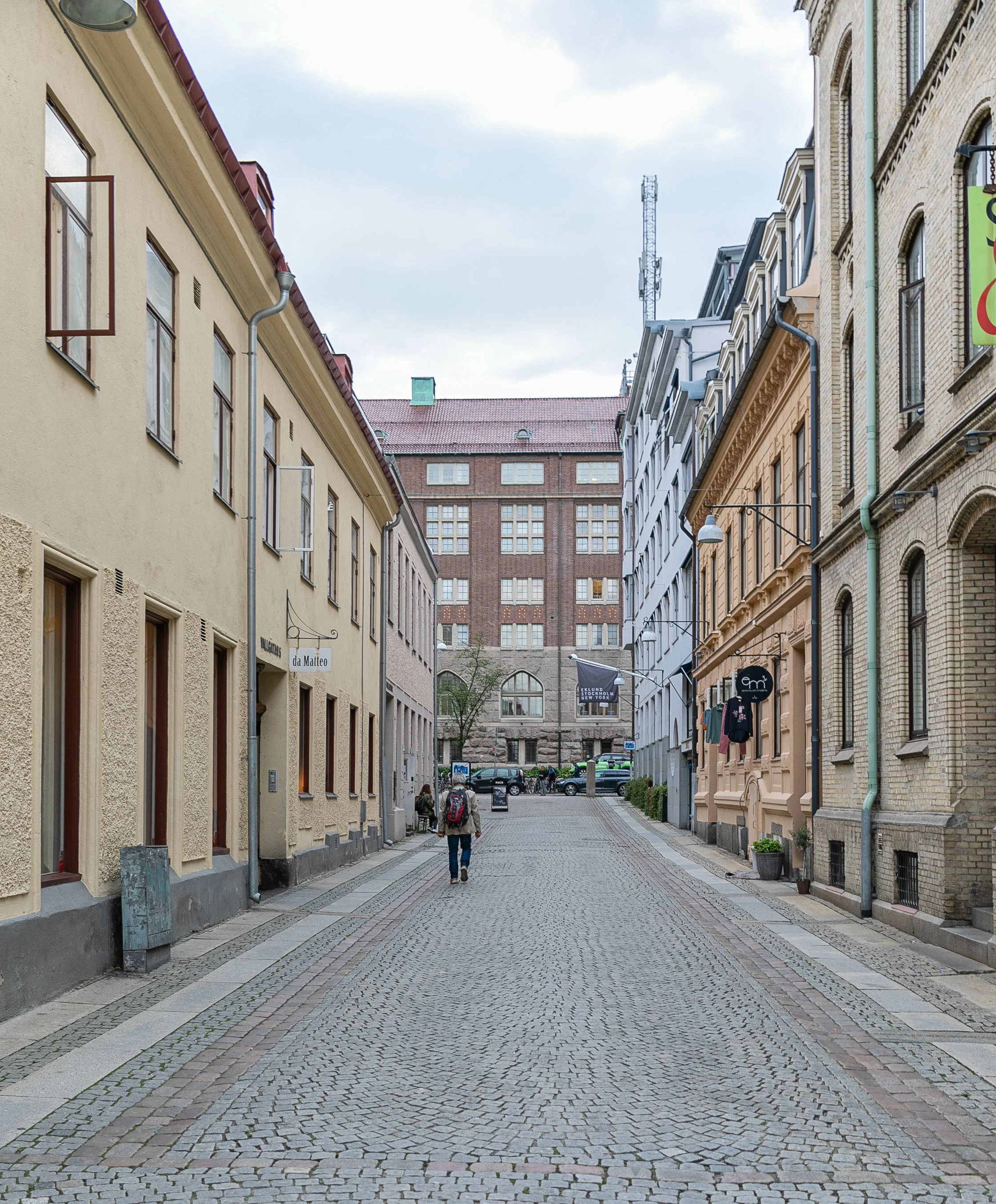
The above images were taken around the streets of Gothenburg, and capture a fika break (the act of taking time to reflect and re-charge with the aid of coffee and cake) at Da Matteo. Below are images of the architecturally-delightful sauna in Jubileumsparken park … the combination of hot, cold and natural material doing wonders for body and mind.


Below, Gothenburg’s utterly luxurious Hotel Pigalle, a boutique hideaway inspired by Paris’ more decadent abodes and boasting the utterly ornate restaurant Atelier and Bar Amuse - spaces designed for foodies with a serious passion for interiors.


Above, lunch at Michelin-starred SK Mat & Människor, where chef Stefan Karlsson’s creations are made using the very best local and seasonal produce. Below, Pumphuset, which is also sure to delight design-focused gourmands.


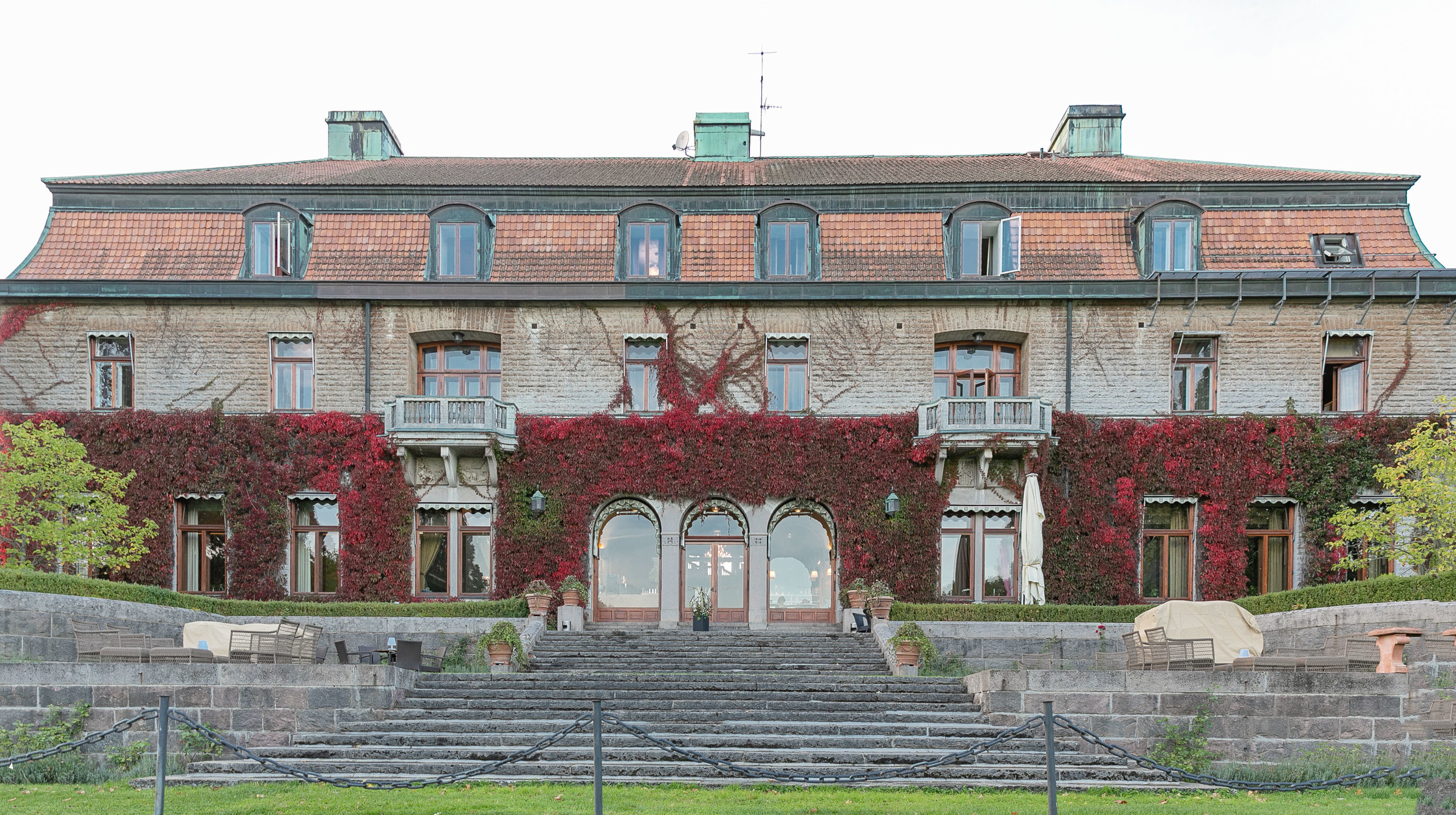


Above, Bjertorp Castle, Sweden’s youngest art nouveau castle, whose restaurant is praised in The White Guide (Sweden’s guide to the country’s finest fare) - best followed with a spot of apple picking and jaunt to the Rörstrand Museum, which is dedicated to Europe’s oldest porcelain factories.


Above, pausing for a final night at Naturum Vänerskärgården - Victoriahuset, one of Sweden’s chicest hideaways. Below, a wander through the Swedish countryside, ending in Lächö Castle Garden, tended by Head Gardener Simon Irvine. Clearly there is much to adore when venturing to West Sweden. To find out more, be sure to pop over to the Visit Sweden website.


Brilliant Basel
The joys of a Swiss city break.
Words by Liz Schaffer & Photographs by Basel Tourismus
I always return to Switzerland, a petite nation whose borders are dictated by mountains, glaciers and lakes. It is the homeland of absinthe and sweet chocolate; a place of espionage and escapades, debauchery and flair. There are noir overtones, healing waters and landscapes that rob you of words. Stunning and serene, it is a country that, no matter how frequently I visit, always takes me by surprise. In the past, I’ve swooned over pristine ski fields, artistry and wine. But on my recent jaunt to Basel, I learnt anew just how refreshingly glorious a city break can be.
A city break requires a few key ingredients. You need somewhere fabulous to rest your head, at least three faultless restaurants, a gallery where the curation and setting are equally mesmeric, lashings of history, and a body of water that soothes the soul. While this may sound like a tall order, it turns out Basel fits the bill swimmingly.


On the hotel front, you have the swish Hotel Märthof Basel. This welcoming bolthole (which boasts a turreted exterior, paired with a contemporary interior design) overlooks Basel’s market square, which is filled most mornings with stalls laden with local produce and guarded by the fresco-adorned Town Hall. While cloud-like beds are a treat, and the roof terrace is perfect for sundowners, I must tip my hat to Märthof’s breakfast - the best part of any hotel stay. Indeed, I would roll out of Restaurant Bohemia each morning feeling blissfully over-indulged.
Which brings us to the second city break ingredient: food. There are few places more scrumptious than Restaurant Krafft. Elegant and light-filled, the indoor dining room looks a little like a ballroom, complete with herringbone floors, arched windows, river views, and covetable chandeliers. Most of Krafft's ingredients hail from the surrounding countryside, and their dishes are vibrant, flavourful and fun. I’m still thinking about the marinated char paired with dill and pickled onion - the combination so delicious it may just bring a tear to your eye. The Swiss trout and cauliflower was a colourful joy, and when sampling the famed apple tarte tatin, I understood why patrons plan their entire trip around this dessert.
Alchemist is equally inviting. At this restaurant, you’re encouraged to play with your food, and entering the herb-filled, gold-splashed space, you feel like you’ve stepped into a cabinet of curiosities. Cocktails come together at your table and the daring dishes (inspired by recipes from across the globe) are designed to be shared. Those after a delectable vegan or vegetarian feast should make for Restaurant Lauch (German for leek), where ingredients are local, sustainability is key, and natural wines round out the ever-changing menu.
In many Basel eateries, you find that the calm, classic exteriors often hide a vibrant internal world - the amount of verve flowing within will constantly take you by surprise. This rang true at Neue Alte Markthalle, a buzzing collection of international food stalls, and KLARA Bar, where I’d like all future nights out to end.

Ultimately though, the most vital city break ingredient is a certain joie de vivre … which Basel has in spades. It is the Swiss epicentre of art and architecture, and home to almost 40 museums - many of which were initially built around private collections. Basel is an undeniably wealthy city. For more than two centuries it was renowned for its lucrative silk ribbon production, and the related knowledge of chemicals and dyes saw it evolve into a pharmaceutical powerhouse. Yet since the 19th century, there has been a conscious desire to invest this money in art, architecture and innovation. Indeed, it has not only helped galleries flourish, but has made projects like Smart City Lab Basel possible too.
Found in an old SSB building (the train company co-founded the enterprise), Smart City Lab is a collection of sustainable start-ups dedicated to saving the world through up-cycling, recycling and finding the best ways to use a city’s space. It is a hub of knowledge sharing and environmental problem solving, with companies releasing solar panels that follow the sun, sensor operated street lights that measure noise pollution and air quality (because knowledge is power), and a long-distance, super-smart bicycle highway. There’s even an architectural group specialising in structures created from reused building materials. Each project is a reminder that every action, no matter how small, has the potential to change the planet.

And then there’s the landscape, which is entwined with art and design. You can cycle, hike or tram through Basel and the neighbouring German countryside as you tackle the Rehberger-Weg route, which links Fondation Beyeler to Vitra Campus (a design-lovers nirvana), and is peppered with 24 sculptural ‘waymarkers’ from artist Tobias Rehberger.
Few places make me as happy as the garden-framed Fondation Beyeler, reached via a short, bucolic tram ride past a sea of allotments and smatterings of sunflowers. The gallery is dedicated to Classic Modernism, and a Mondrian exhibition was taking place during our visit - but the permanent collection brims with works that are easy to get lost within. In fact, I was so caught up in a Rothko that I barely noticed the wall of glass behind me, which revealed a swath of orchards, fields and German mountains.


Despite being the country’s smallest Canton, Basel punches above its weight on the cultural front. It was the site of Switzerland’s first university and home to Erasmus of Rotterdam, and history remains ever-present. Some streets follow the wends of Roman roads - which were built above paths likely carved out by the Celts - and Baroque, Renaissance and medieval buildings keep perfect company. But when you turn your attention to Basel’s modern structures, you’ll spy creations from 12 Pritzker Prize-winners - from Frank Gehry to Herzog & de Meuron. Rooftops host bars, summer sees locals float down the aquamarine Rhine and festivals fill the calendar. There is joie de vivre indeed.
For centuries travellers have come to Switzerland in search of the divine - to walk in the footsteps of those they adore, scale improbable peaks, seek decadence and debauchery, grand hotels and great escapes. I first glimpsed the country’s grandeur when putting together the Switzerland magazine, and it was wonderful to savour it anew, all these years later. Crossing Mittlere Brücke on my final Basel morning (a bridge first opened in 1226), I took a moment to appreciate the unexpected joys of a city break - how wonderful it is to be caught up in art, food and life, and to feel that you truly belong … even if it’s just for a weekend.
To plan your own city break, check out This Is Basel’s brilliant suggestions - and for more Swiss ideas, there’s always the Switzerland magazine.


Under The Cover - Holly Farrier
Meet the photographer.
Our Q&A with the brilliant Holly Farrier, the London-based, wanderlust-fuelled travelling photographer behind the rather dreamy photograph gracing the cover of our Switzerland magazine.
What do you adore about photography?
Being drawn to something beautiful or captivating about a place, person or dish and then taking the time to carefully compose an image that relays that through a camera is what I love about photography. I also feel so grateful for the experiences and lifestyle that my job as a photographer has brought me, such as travelling to places around the world and working for myself - I always wanted it to happen but never thought it actually would!
Can you remember the first time you picked up a camera?
Not specifically but my Dad studied photography at college so he was always taking photographs when we were younger and showed me his college work book one day. From really young, I was always interested in art and knew I wanted a creative job but somewhere along the line I decided I wanted to be a photographer. I desperately pleaded with my parents for my first camera for Christmas one year, and that was it! From then on, every choice I made in education and jobs was geared towards being a photographer.
How would you describe your style?
I love shooting with a clean and minimal look and have a huge appreciation for simplicity in photography. I tend to focus on quiet moments of beauty, whether that be design, landscapes or natural lifestyle scenes. With travel photography, I always use the natural light and colours of a place to create a genuine portrayal of what that location looks like, using my lens to focus on the areas I am drawn to. I have never seen the point in faking a perfect sunset in the edit, when a cloudy, moody sky can be equally as charming. With food photography, I want the dish to look fresh and appealing, and often use negative space to draw the eye right into the dish. After working with a real variety of clients and genres over the years, my style has evolved a lot. It used to be a very muted colour palette, and slowly I am introducing more life and colour into my work.
You've done quite a lot of food photography - what do you enjoy most about this?
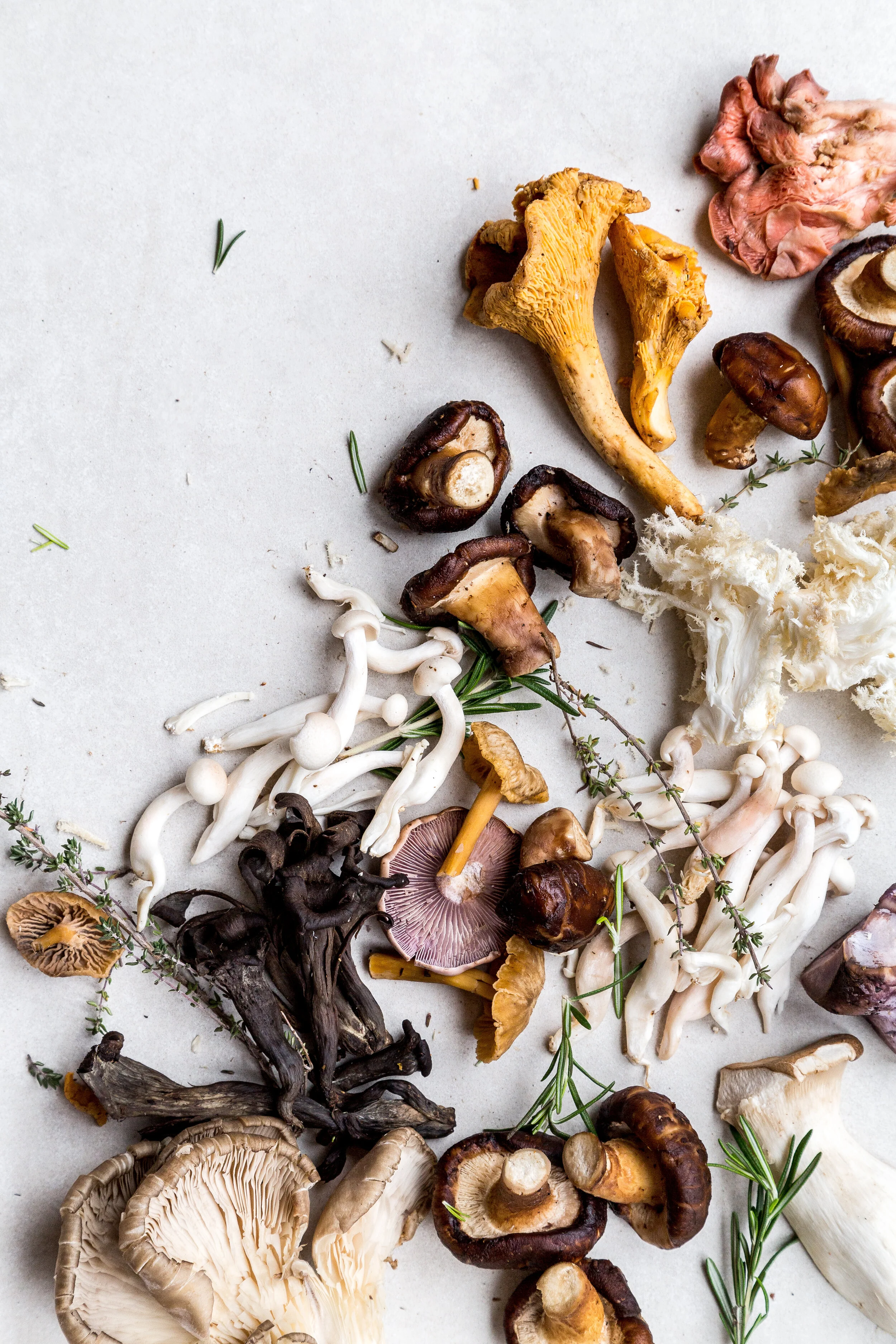
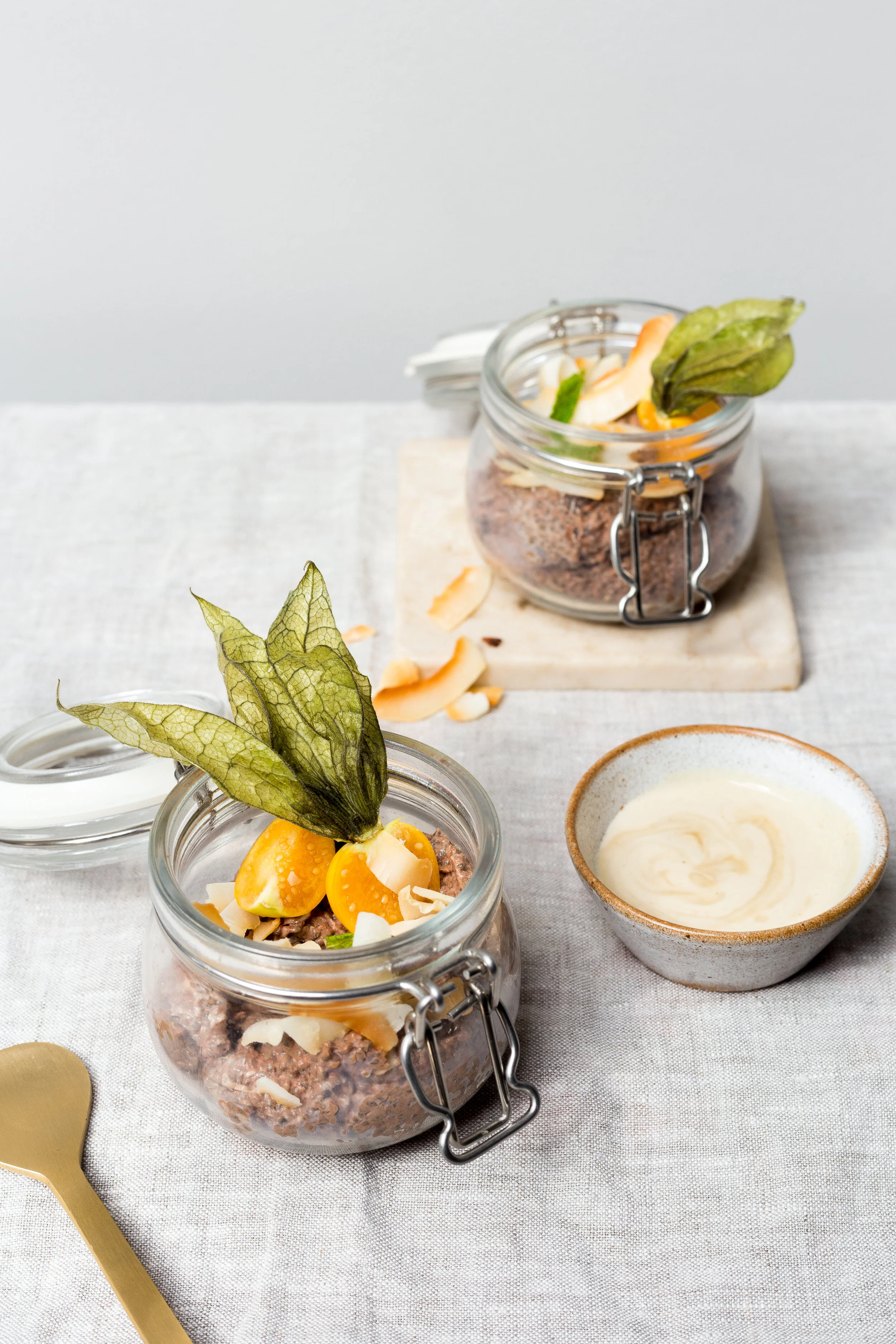
I am obsessed with everything about good food, the ingredients, where it comes from, and therefore shooting it (and getting to eat it afterwards) is always a dream job for me. Working with people who take the time to consider sustainability and source local ingredients in their restaurants or food products is also really rewarding. The clients that I work with are so passionate about their food and what makes it different and I love that I can highlight that for them with photography.
Has there been a particularly memorable shoot over the years?
My most memorable shoot so far would have to be this Switzerland shoot for Lodestars. There is something about those mountains in Mürren which are so awe-inspiring and we were so lucky with the weather while there - it was cold but clear and crisp, allowing for perfect sunny days in the valley. On the one day that it was cloudy, we took the cable car up even further to the Schilthorn Piz Gloria and the mountains stood tall with the clouds beneath them, creating the most memorable scene. I was told before I arrived that I had the opportunity to photograph the via ferrata, a harnessed climbing route where you climb across the edge of the mountain through waterfalls, forests and dangle off of sheer cliff faces. Not being amazing with heights I was hesitant but agreed and it truly was an unforgettable experience. Our guide, Rahel, was lovely and encouraging and it was just the three of us climbing the side of this enormous mountain while paragliders flew down into the valley beneath us. Having to physically push myself outside of my comfort zone while working was something I had never done before, but it was incredible!
Can you tell us a bit about capturing the Switzerland cover image?
The cover image was shot the very first day we arrived in Switzerland. We had taken a multitude of planes, trains and cable cars to get to the tiny mountain village of Mürren and were pretty tired by the time we checked in. We wandered around photographing the village late that afternoon and sat down outside (to the surprise of the staff) in a traditional restaurant for a beer, as we wanted to be as close to those mountains as possible. As the sun went down, this incredibly fiery sunset lit up the mountain and I began to photograph it. It was a great welcome to Mürren!
It was your first time in Switzerland - can you tell us a bit about your first impressions?
I feel very lucky that this was my first time in Switzerland as I got to experience many quintessential Swiss traditions such as fondue, green valleys, chocolate box villages and bell ringing cows. Although I was expecting these things, the reality of the natural wonders of Switzerland definitely surprised me. The sheer size of the mountains and height of the village, when you looked down into the valley below, was better than I could have ever imagined. One surprise was the huge emphasis on adventure sports in the area, as you walk through the village there are people base jumping and paragliding down into the valley all day! Then there is of course the via ferrata and skiing in season too. Everyone who guided us on our trip was also heavily involved in adventure sports and personally inspired us to carry this on when we got home.
What is your dream project/collaboration?
Any time I get to travel to a new destination for my work is a dream project for me. To work with a tourism board or hotel in a country that I have never visited before and see it through the eyes of local experts would be incredible. I also have a real thing for off grid locations and tiny cabins in the middle of nowhere, so going to somewhere far away like ‘Eco Camp’ in Patagonia and shooting for them would be my idea of a dream project.
What's your dream travel destination?
An absolute dream of mine is to free dive and see the humpback whales in Tonga. Although, next year from January I am taking time to do four months of travel to visit places I have been obsessing over for years, including India, the Philippines, Japan, New Zealand and back to my beloved Sri Lanka. I can’t wait!!!
Holly’s work can be seen in our Portugal, Switzerland and (updated) Japan magazines, which you can order by clicking here.
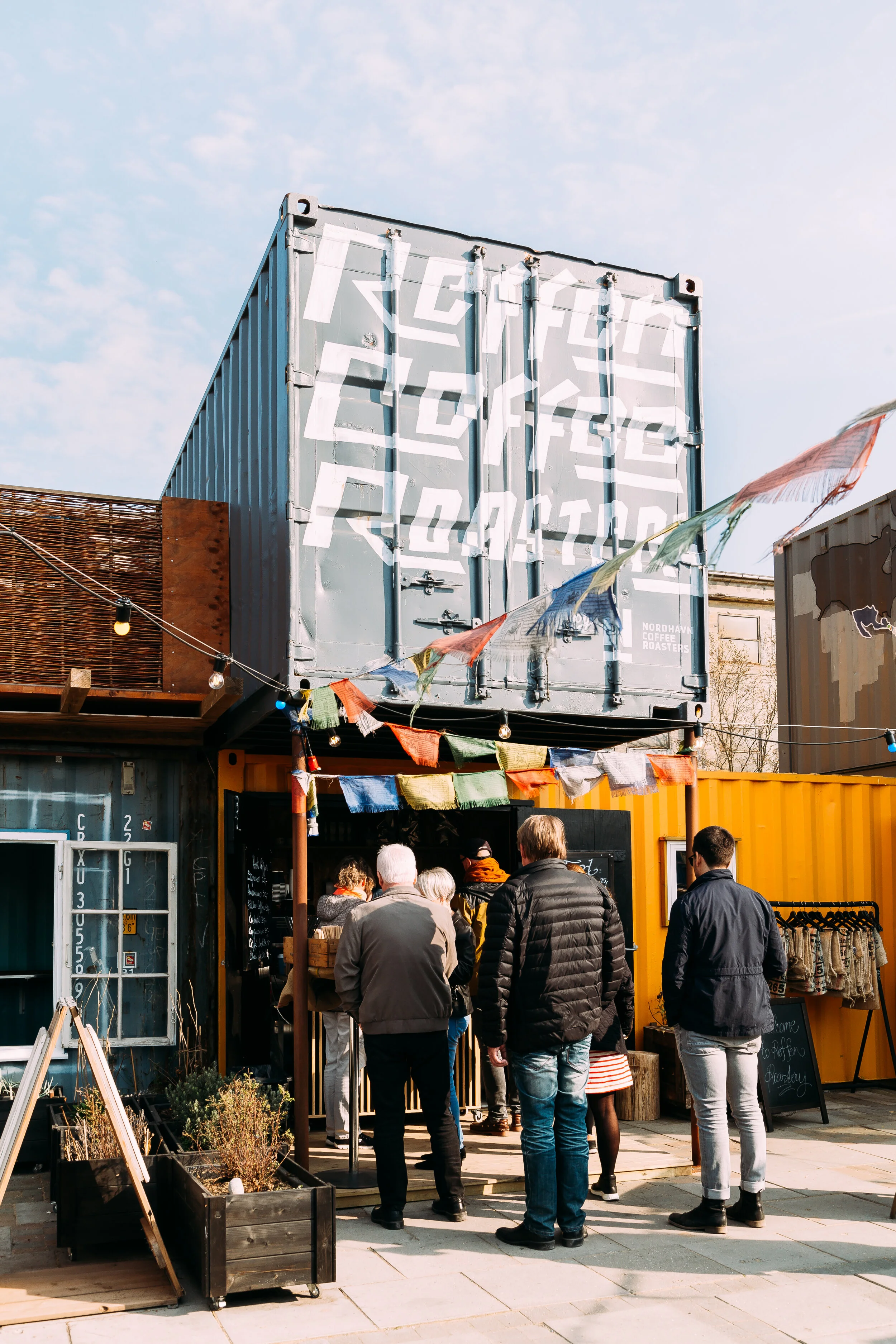
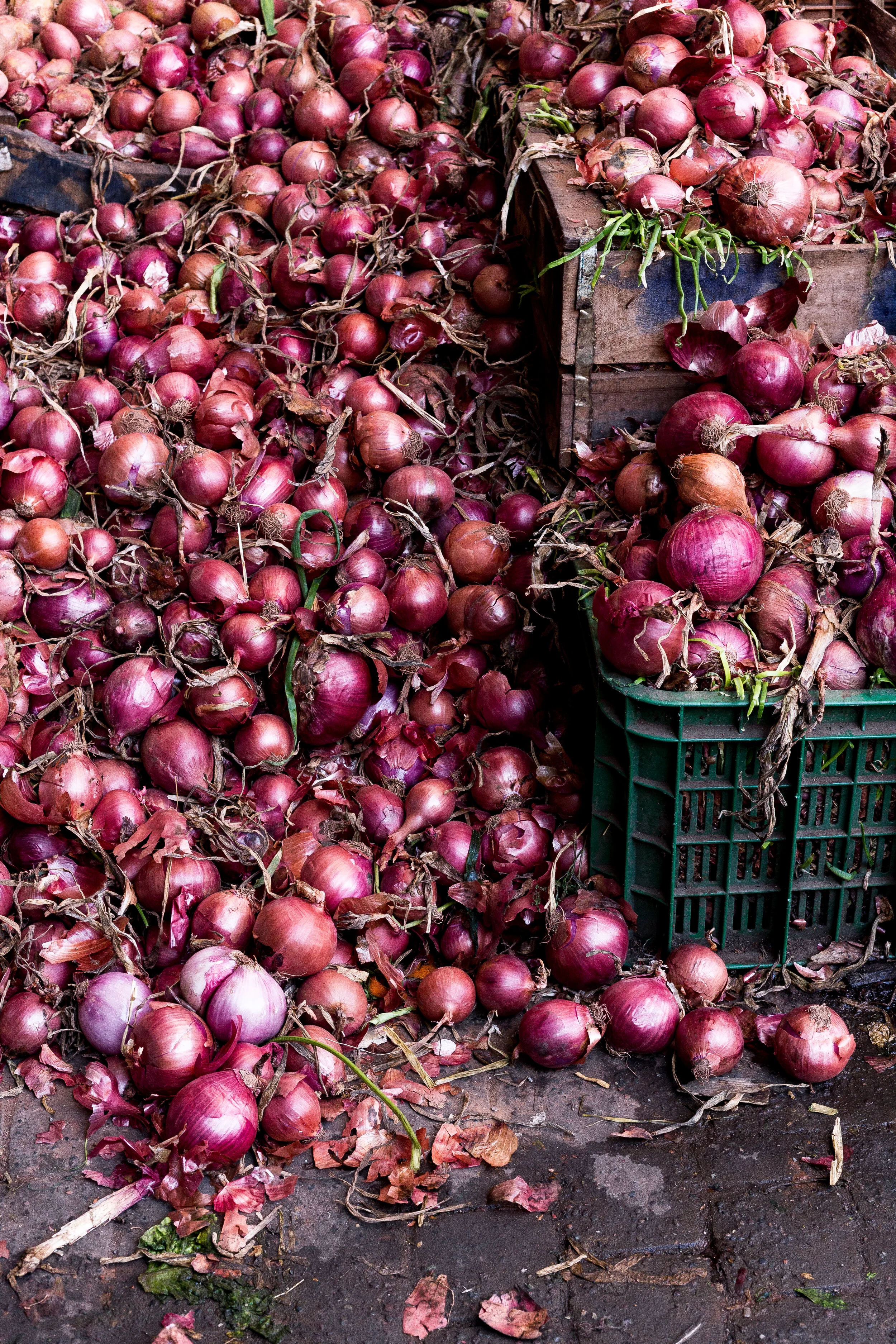
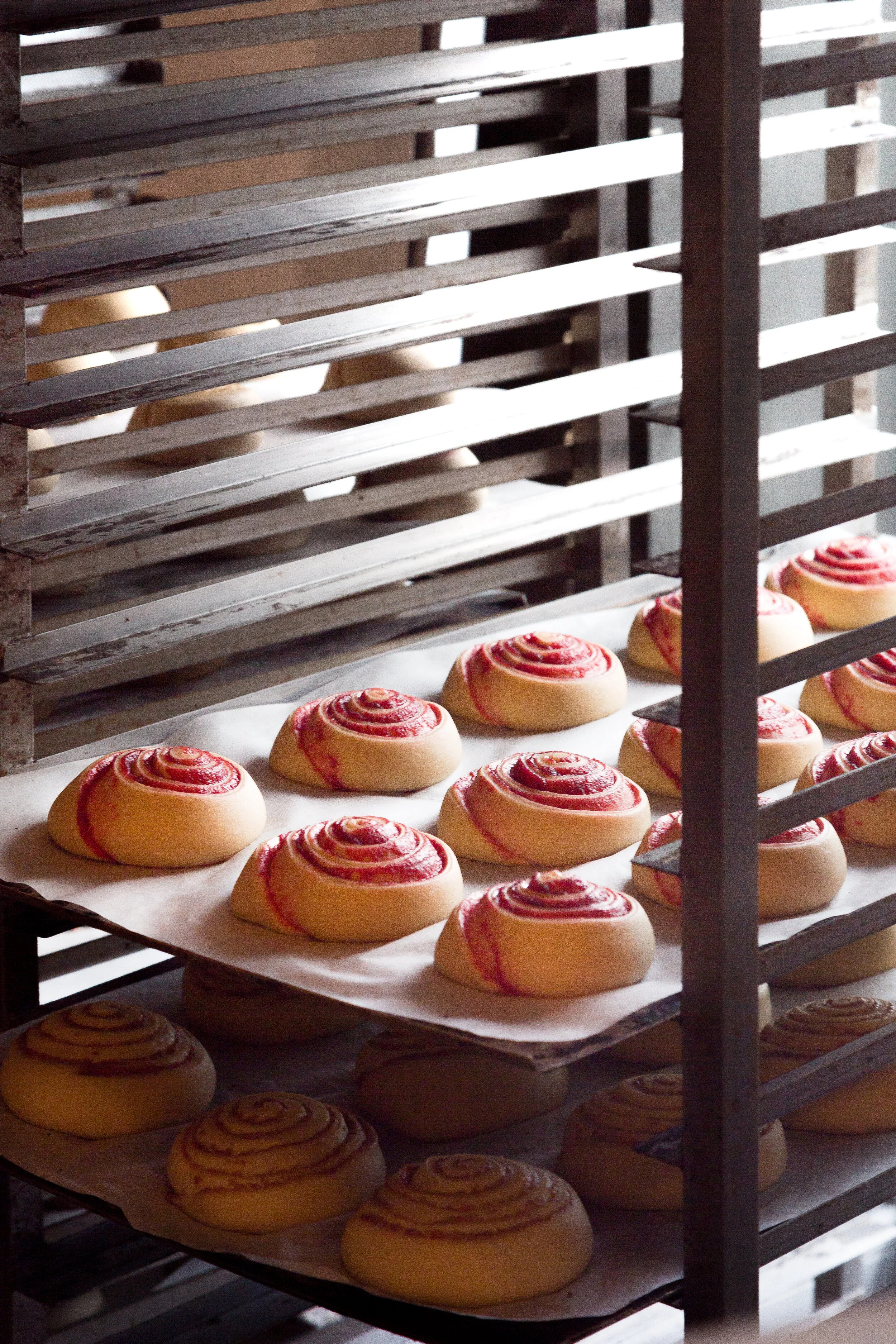
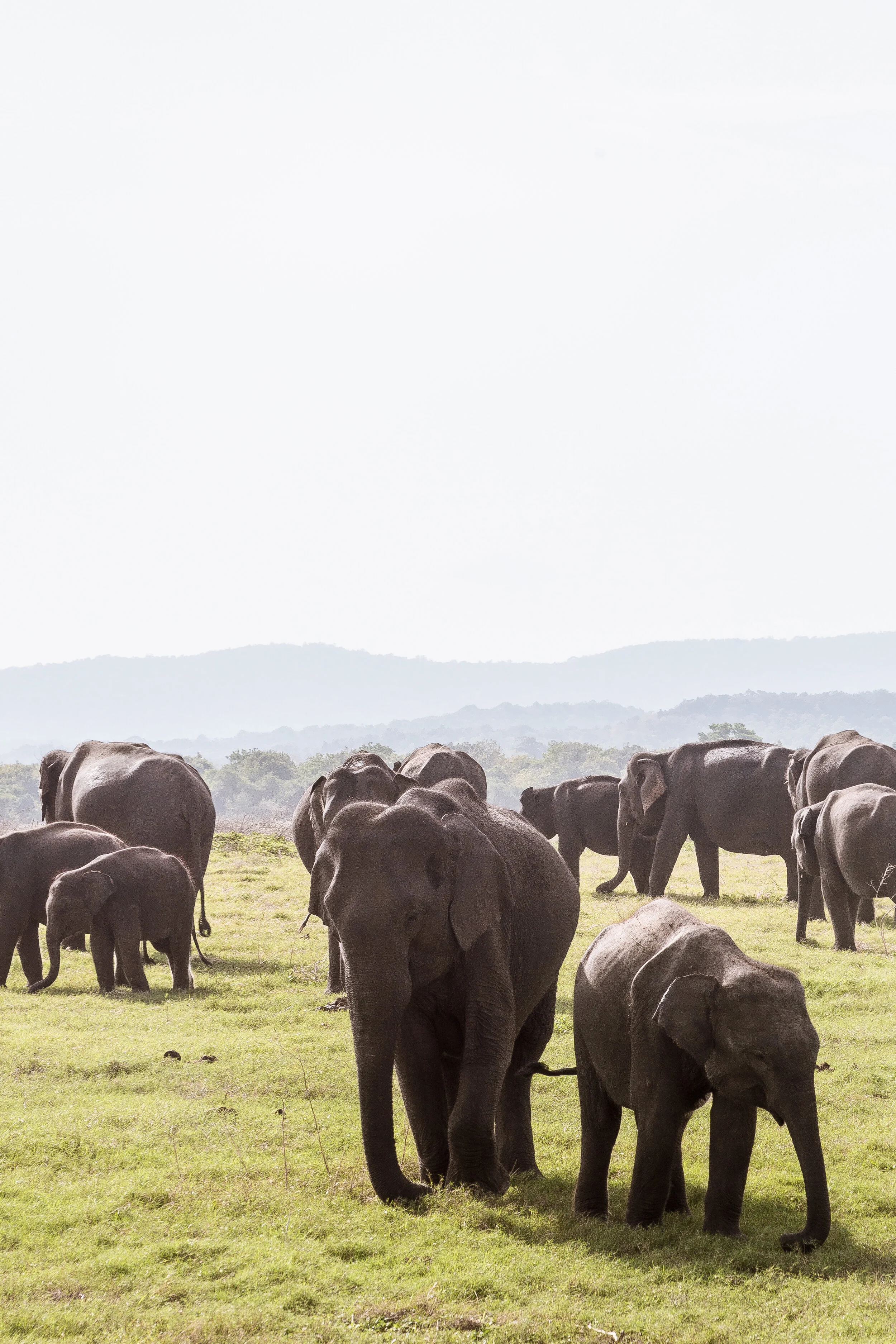
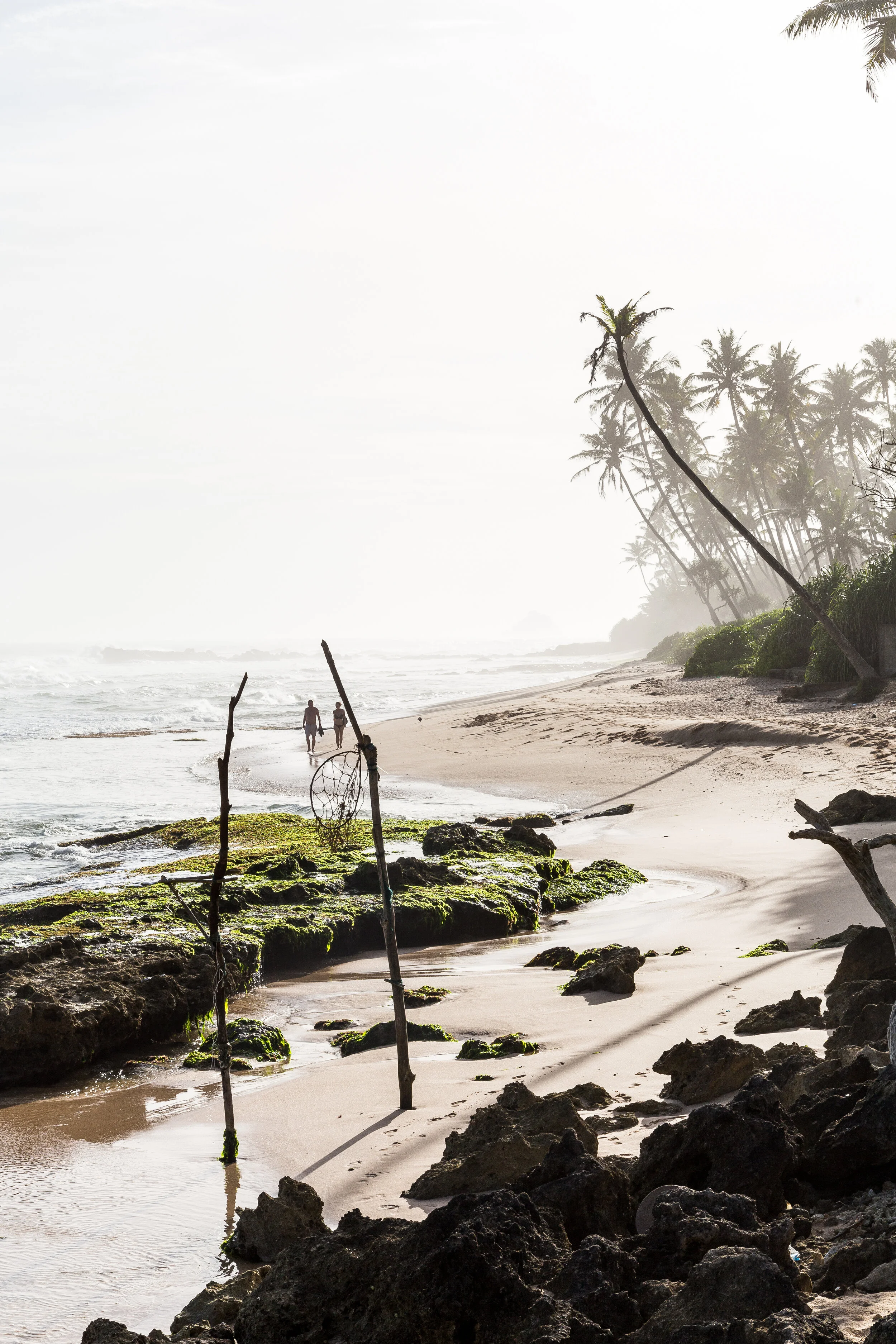
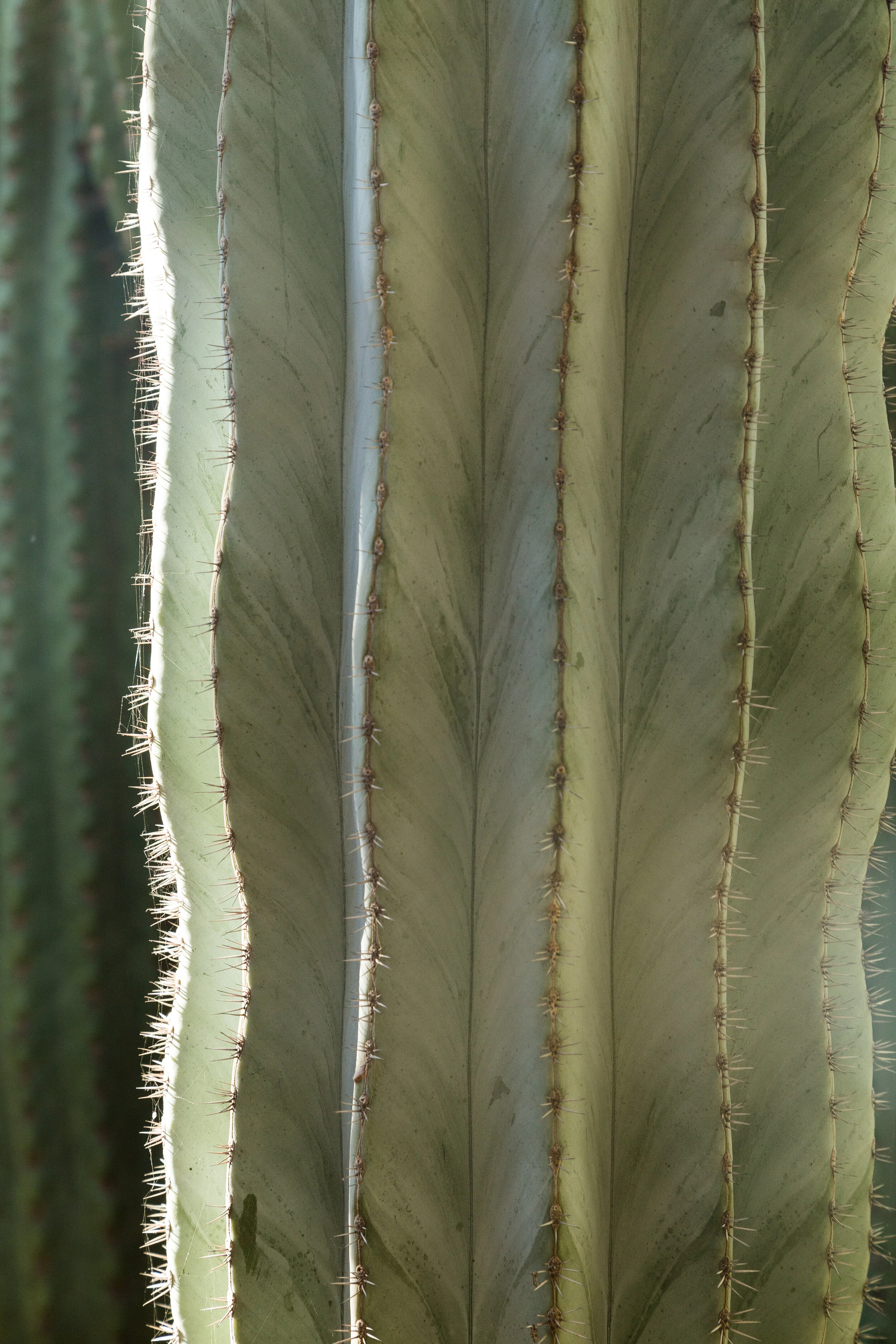
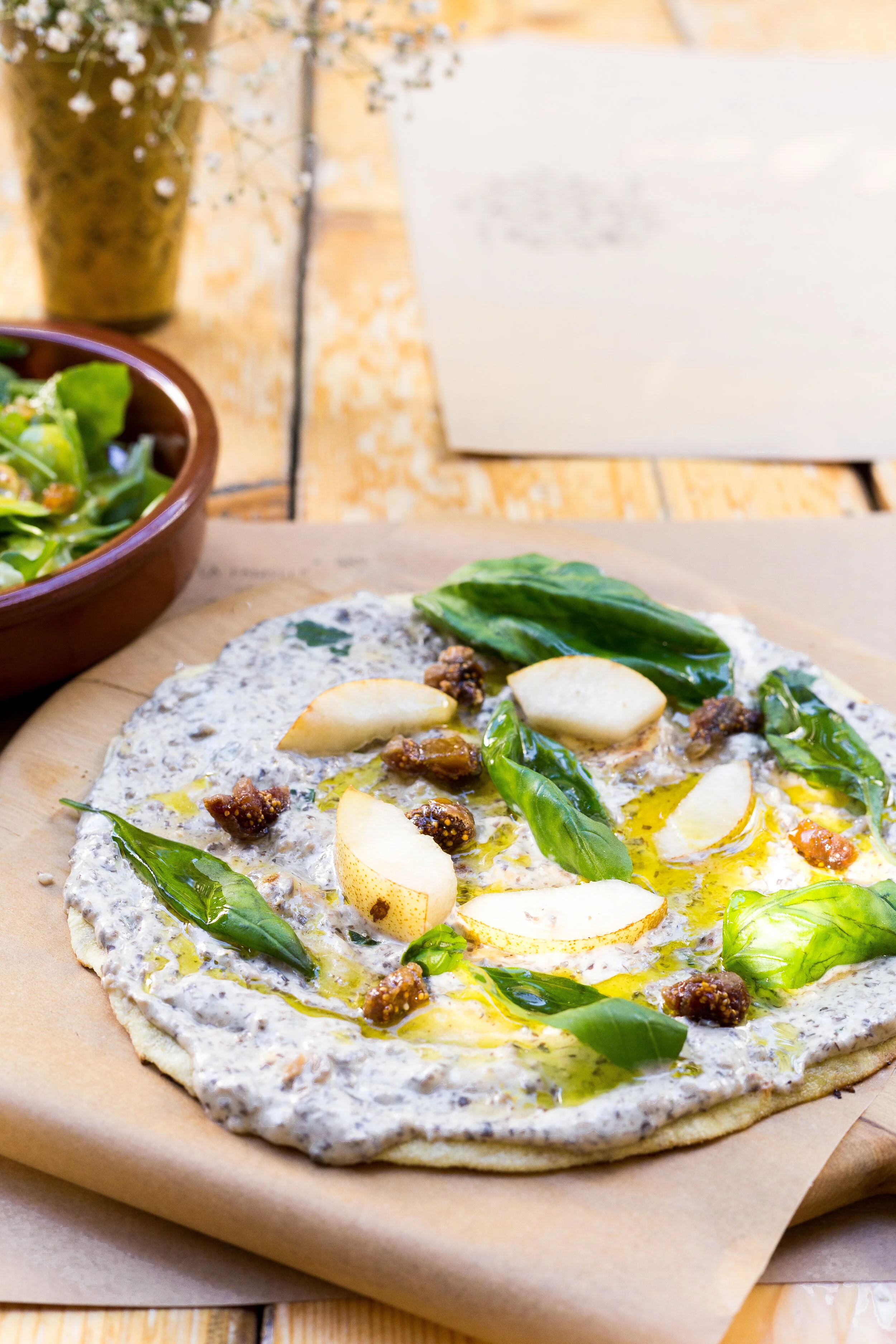
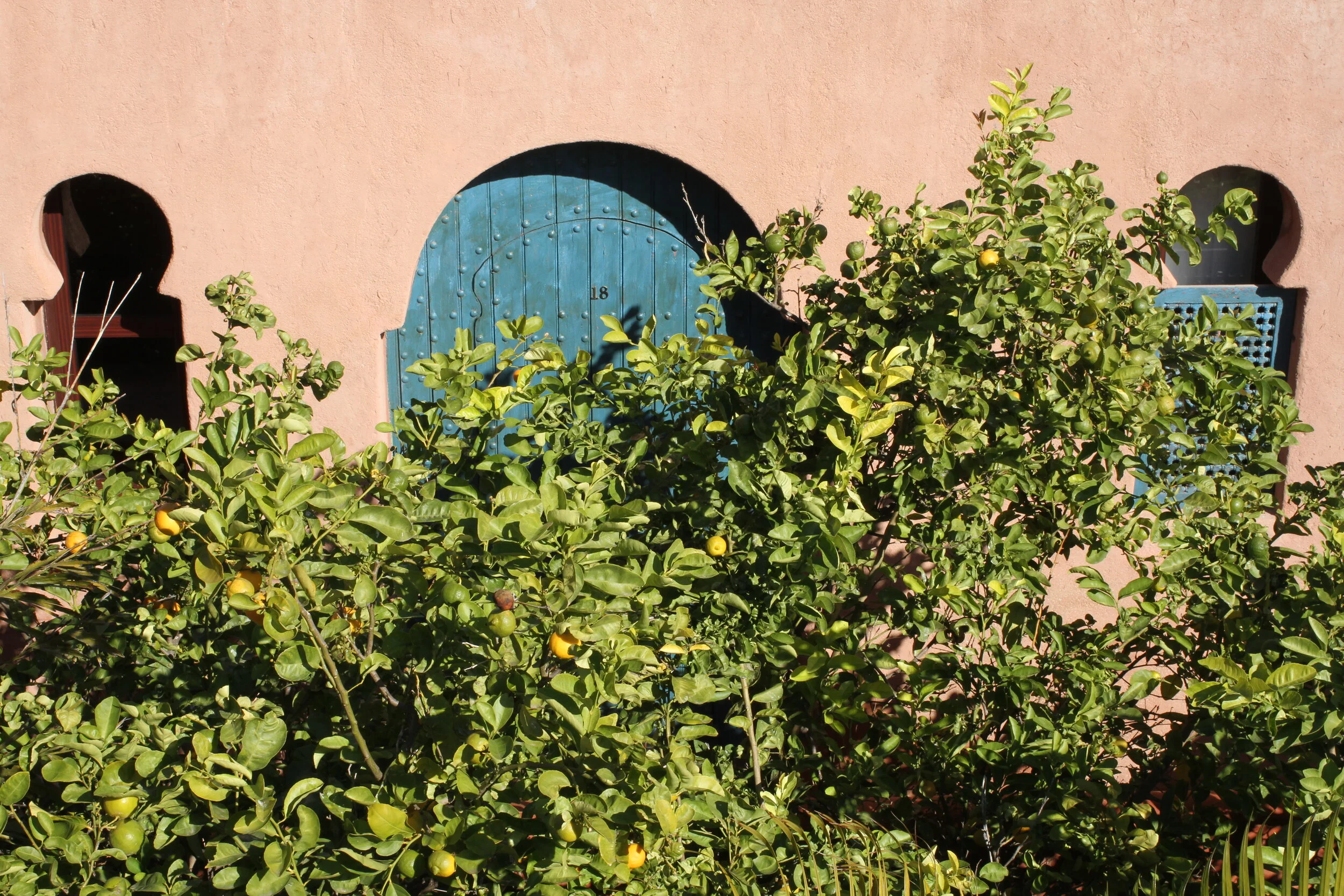
Le Jardin des Douars
A sunny winter holiday in Morocco’s Essaouira.
Words & Photographs by Isabelle Hopewell.
One of the most glorious things about winter is that there are wonderful ways to escape it - sunny destinations a few hours flight away that will remind you just how glorious it is to feel the sun on your skin. Being in the market for a winter getaway, desperate to unwind somewhere dreamy and bougainvillea-bedecked, lusting after a leisurely dip and rather heavenly hammam, I set my sights on a secluded, family-friendly and just-a-little-bohemian Moroccan hideaway.
A short drive from the port city of Essaouira (famed for its medina and Atlantic sunsets) is the blush-hued Le Jardin des Douars. Design-centric and immediately welcoming, this boutique hotel is framed by rivers, sun-baked earth and argan trees. The grounds themselves abound in vibrant, bloom-filled gardens, domed rooms, palms, pools (one for families, the other for adults only), peacocks, labyrinthine pathways and a hammam you’re sure to fall in love with. Summer here would be a joy, spring a wonder, but in winter - when everything is sun-drenched and thriving - it was exactly where I wished to be.


I was at Le Jardin des Douars to calm my body and mind, to escape a London December and see just how many books I could devour - both by the fire (found in the main restaurant and in our room), or beside the jade-tiled, bar-accompanied infinity pool. In four days I numbered three, a personal record. For here there is no sense of urgency, and nowhere to be. A day in repose is perfectly acceptable - especially if you choose to indulge in the marble-adorned hammam, where treatments (that incorporate argan oil produced by local women’s cooperatives) leave you feeling silky, smooth and without a care in the world.
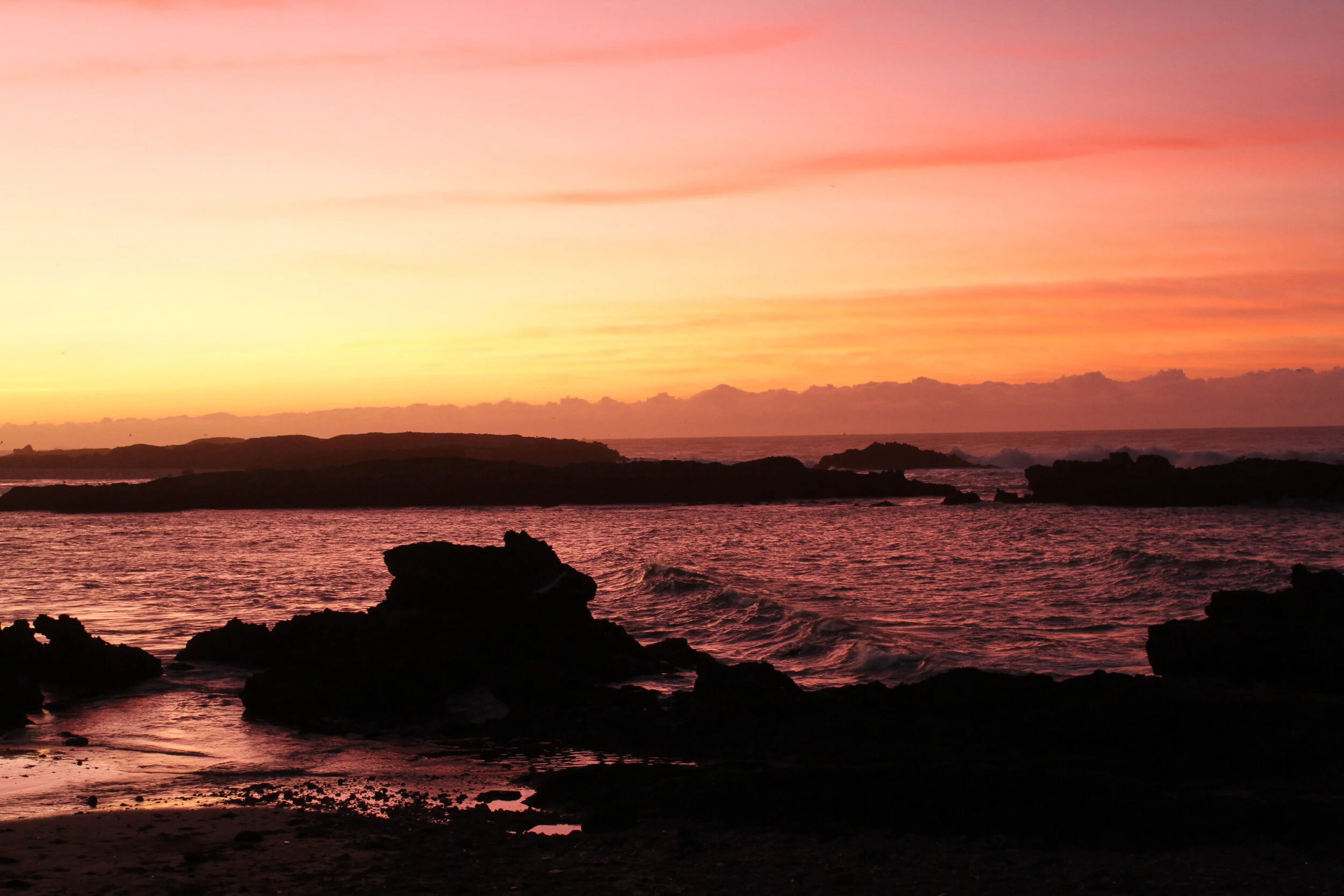
Of course, should you wish to do more than simply unwind, there are activities aplenty, all of which Le Jardin des Douars are happy to book/curate for you. You could horse ride or kite surf along Essaouira’s beach, bike, buggy or venture out into the nearby dunes; or - as we did - wander the city’s ramparts, feast in its restaurants (oh my word the seafood), peruse the food market, purchase an assortment of rugs and oils, and then watch the sun dip below the horizon as the sea and sky glow the most dazzling shades of lilac and indigo.



An astounding amount of time can also be spent admiring the Le Jardin des Douars’ decor. The works of local artist and makers are on display and highly covetable. Colour reigns - in water features, textured rugs, glass lanterns, hand woven soft furnishings, pottery and prints. These are made wondrous when set against terracotta, carved wood, ornate tiles, painted doors and wrought iron.
In this hotel, it’s about the detail - the subtle embellishments that make the space feel both luxurious and homely. There are quiet corners, hidden terraces, dappled sun lounges, sculptural objets d'art and - in the hammam - stars upon the ceiling.


And then there’s the food. Should the hotel be your base - the hideaway you have no desire to leave - then know that the restaurant has you covered. The menu is seasonal, fresh and perfectly spiced, and after a few breakfasts it’s impossible to depart without an addiction to their honey-like dates and improbably creamy goat cheese - the latter made spectacular by the fact that you can see local shepherds hearing their flocks over the hills just across the river. For something more secluded, their is an intimate, adults-only, mirror-and-art-adorned dining area, and a terrace perfect for breakfasts and leisurely lunches.
What’s strange about Le Jardin des Douars is that no matter how many nights you book here, the time will somehow disappear. You’ll lose yourself while warmed by evening fires, soaking in rose-petal-filled baths and bobbing in water surrounded by bougainvillea. This is a hotel to fall in love with, to unwind within, and to return to … in all seasons.
To learn more or book a room, click here.


To The Islands
Bakeries, sunsets and camellias - a journey to Japan’s Goto Islands.
Words by Liz Schaffer & Photographs by Angela Terrell
If it’s paradise you desire, travel no further than the Gotō Islands, a heavenly archipelago in the East China Sea. Here you’ll feast on farm-fresh fare, bask by salty beaches and spy sunsets that enrapture. Yet despite their tranquil splendour, these islands have a tumultuous history. For around 200 years Japan outlawed Christianity, an act that saw many followers - who were unwilling to abandon their faith - move to the Gotōs and continue to practice in secret. When religious persecution was abolished in 1873, the community celebrated by building a striking collection of churches that are UNESCO-protected and rich in floral motifs and pastel flourishes. They are backdropped by tropical forests, fishing villages, swathes of camellia trees and turquoise waters. Nature and design, belief and beauty - nothing here feels out of place.

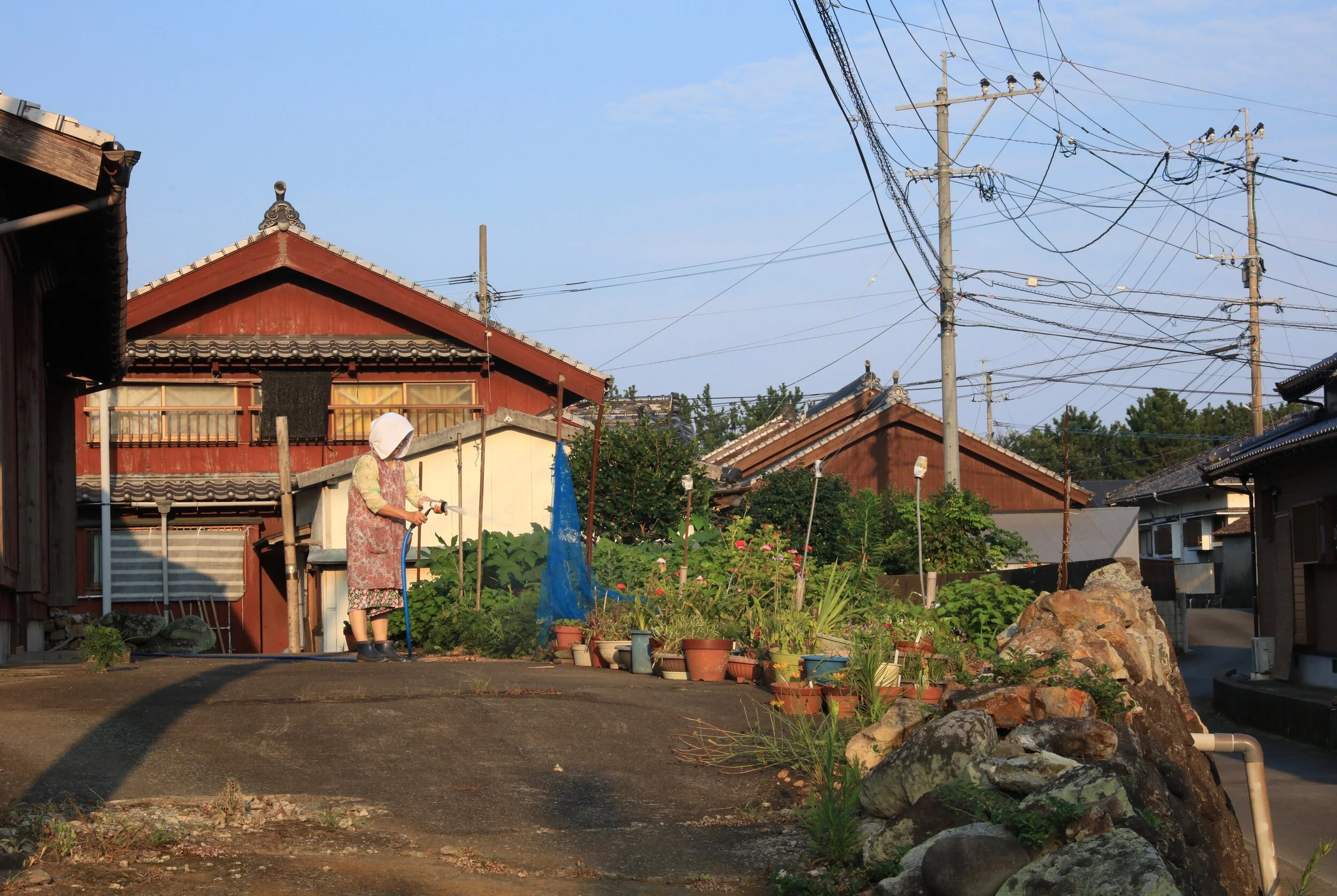
On my first night on Fukue, one of the Gotōs’ five main islands, I clambered up the volcanic, grass-cloaked Mount Onidake as the sun dipped below the horizon and colour faded from the world; the sky a dazzling pale mosaic, the earth golden, the only sound a chorus of cicadas. I’d climbed Onidake on the advice of Manami Onishi, who owns Oteragoto Hoshoin, a traditional guest room attached to a 200 year old temple. This had been her grandfather’s home and the restoration was inspired by her desire to share the island’s tales and treasures - which includes tableware carved from sugi and camellia trees, made by the artisans of Wan.

Rising from my futon the following morning, I found the garden awash with cerulean butterflies, hypnotically sprightly despite the heat. Even this early the humidity (a deliciously onomatopoeic mushi mushi in Japanese) was staggering, the sort of weather that leads you to crave soft-serve and sandy beaches, the flaxen-hued haze a photographer’s dream.
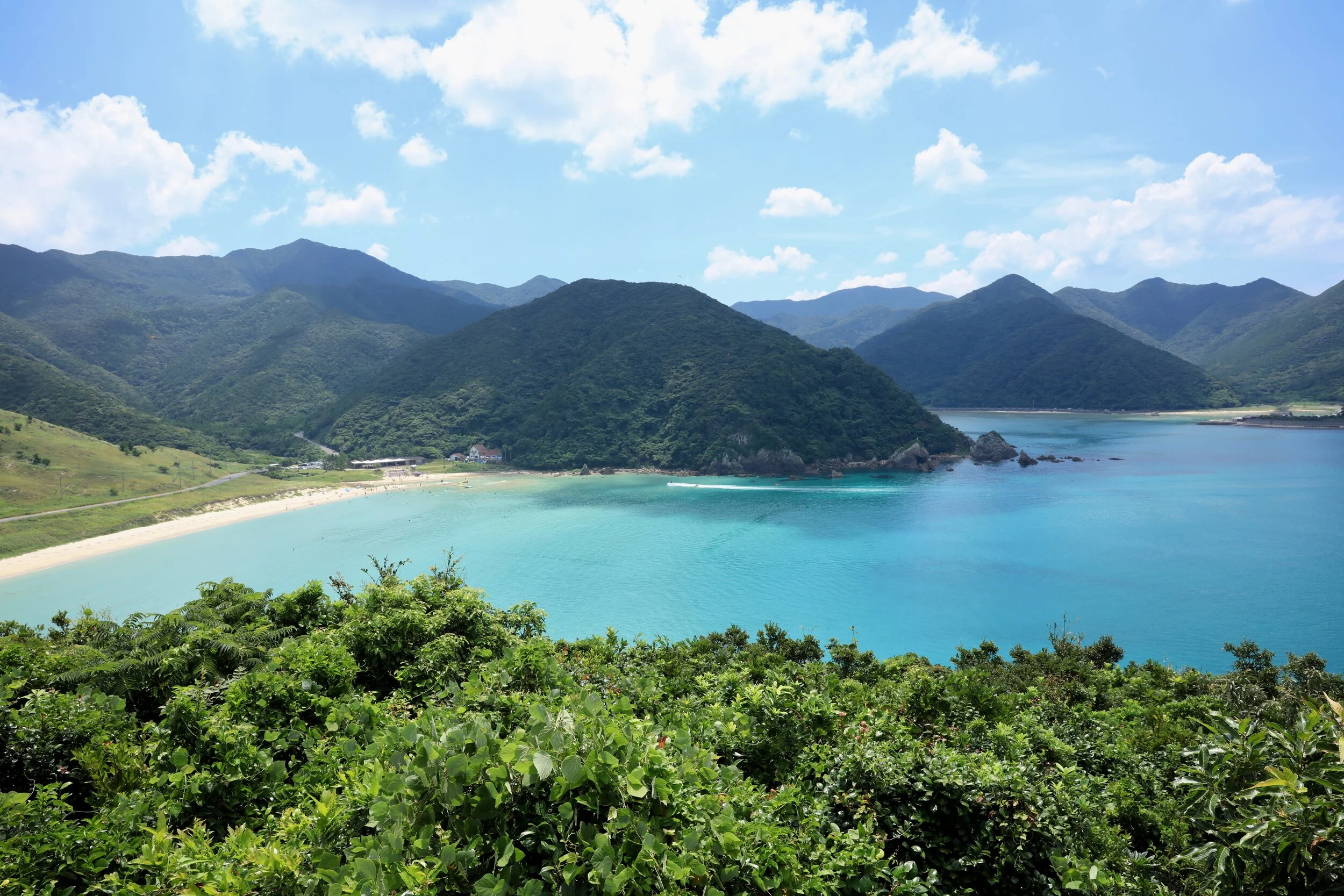
To escape the warmth I looked to the sea, supping at Ohama Beach, watching the waves at Osezaki Lighthouse and floating rather blissfully at Takahama Beach, before heading to the Tao Coast. The star attraction here is Tao Flat Kitchen, a restaurant found within a restored school building and surrounded by Nordisk Village (a Scandi-esque glamping site), paddy fields, meandering streams and tiny red crabs that scuttle over pathways and up the salt-faded walls of the neighbouring Tao Village. The menu showcases the island’s produce (some supermarkets here are stocked directly by fishermen and farmers) and includes culinary gems like sweet red snapper flavoured with Gotō herbs and fried mackerel that are drenched in vinegar and devoured whole.

Should you walk from Tao Flat back to the water you’ll pass the aromatic Wondertrunk Bakery. While the interiors are rustic-chic, a mix of stone, screens and ornate wooden panels, the fare is undeniably European - think chocolate croissants, mango brioche, lemon and cranberry rolls and baguettes that rival the crunchiest Parisienne creations.
For something more traditional there’s Konne Konne, an izakaya whose summer offerings include palm-sized oysters steamed in sake, al dente Gotō udon made with sea salt and camellia oil, and seared bonito that disappears to nothing on the tongue. More of a living room than a restaurant, the space is filled with an eclectic assortment of sofas, armchairs and wooden tables. The owner’s dogs doze in a corner, a guitar waits to be strummed and staff laugh with all who dine here. Such an atmosphere suits the island perfectly, for this is a place where time slows, people smile and visitors - lulled by the gastronomy, waves and warmth - depart feeling rather convivial indeed.
Our Gotō jaunt was curated by wondertrunk & co.
Copies of our updated Japan magazine, where this article appears, can be ordered here.




Timeless Landscape
Taking is slow in Palm Springs.
Words & Photographs by Taylor Simpson.
Once a respite for actors required to stay within two hours of their movie set, Palm Springs was the ideal getaway from the bright lights of Hollywood. Resting perfectly at the base of Mount San Jacinto, this desert town boats flawless weather for unwinding poolside. But today it is not just the sunshine and cocktail culture that attract travellers from around the globe. Iconic Mid Century structures past dot the landscape, making visitors wonder what life was like once upon a time in Palm Springs.
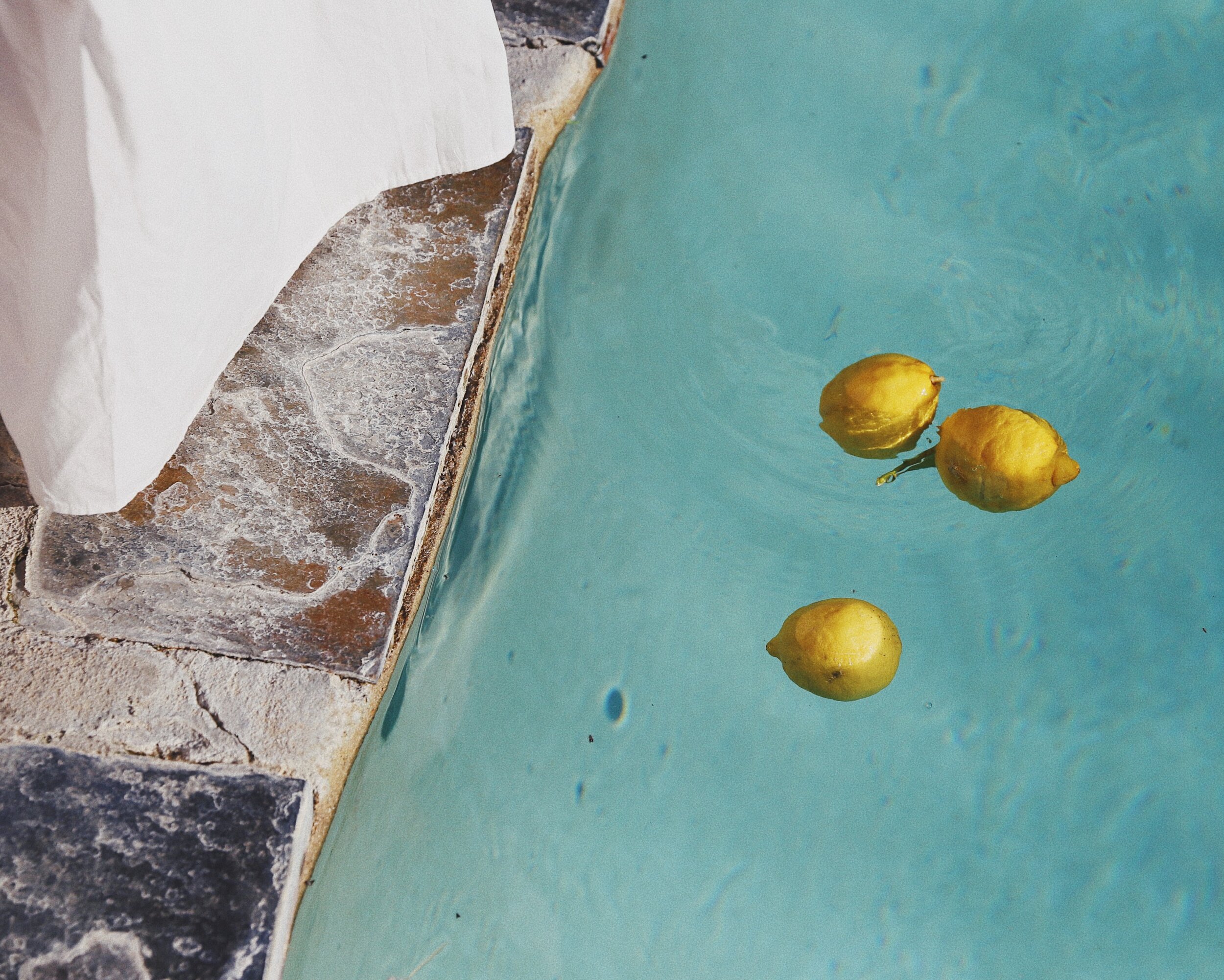
Over the past few years, I have been fortunate enough to find out for myself. When I first moved to this sleepy desert town, Slim Aarons’ famous photograph of two women having a poolside drink at the Kaufmann House was what I imagined life would be like. And against all odds, it turns out, that photo is pretty accurate. It is a place where you can completely unplug from the cares of the outside world and enjoy quintessential California indoor-outdoor living. Residents and snowbirds alike rarely know what day it is. Vintage stores line the downtown area, couples enjoy brunch on the patio and the options for outdoor activities are endless. But perhaps the most time honoured tradition in town is a walk through the original neighbourhoods.
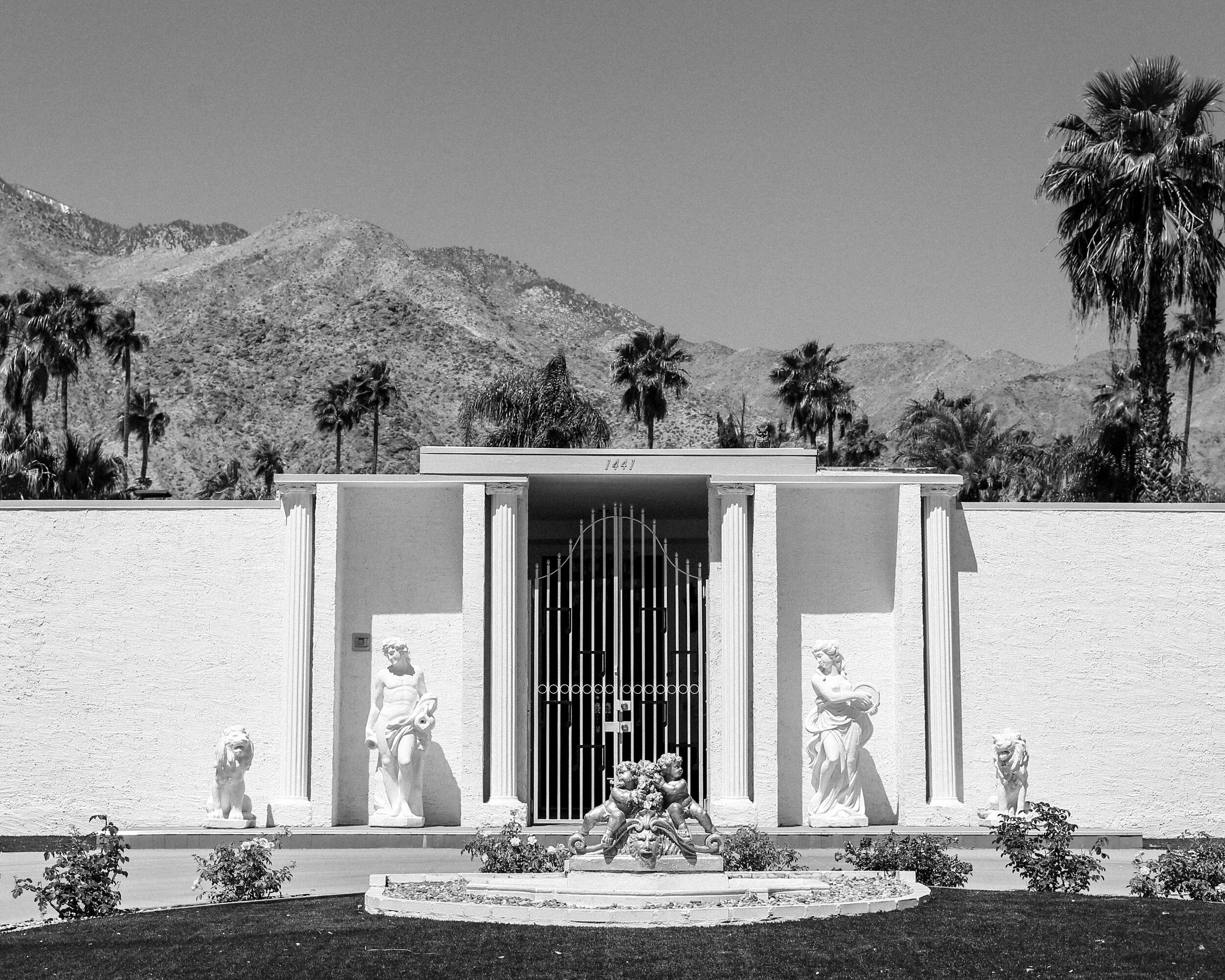
Stunning home after stunning home line the quiet streets. Landscaping is impeccable and everyone seems to have dramatic mountain views as their backdrop. Tall, skinny palms are seen in every direction, making you forget about the once barren landscape. Deserts can be a desolate and lonely place, but there is something about the timelessness of Palm Springs that makes it a beloved destination to this day.

Taylor Simpson is an American travel photographer and writer. Having travelled for months at a time through the Balkans, Southeast Asia and the western United States, Taylor believes in the art of slow and considered travel. Currently based in Palm Springs, California, she seeks out design focused destinations that celebrate human ingenuity and harmony with nature.


Meet M.Ou.Co.
A harmonious stay at Porto’s hippest hotel.
Words by Sarah Jappy
Want to feel alive? Take a dip in the Atlantic Ocean. “I’m a reborn prawn!” I shriek to my boyfriend, as we emerge pink-skinned and goose-pimpled following an icy plunge in the waters at Praia de Lavadores beach in Gaia, south of Porto. My internal organs feel like they’re defrosting: it’s a full-body reboot that Wim Hof would approve of. And it’s within easy reach of your Porto boutique basecamp…

We’re staying at M.Ou.Co.: the city’s coolest new hotel, located in the characterful, creative Bonfim district. We visited Porto once before, in a damp and grey January, spending a large chunk of time exploring the UNESCO-listed historic city centre, drinking fizzy vinho verde and sampling custardy confections in the excellent (and affordable) restaurants and bakeries. But this time, the sun is blazing and the ocean calls.

Rewind. When we first arrived in Porto, the throb of heat outside the airport took us by surprise. “I’m boiling,” my boyfriend gasps as we sit for lunch in a local Angolan restaurant near M.Ou.Co. (we’re two hours early for check-in, and fried chicken, tomato rice and cold drinks make perfect sense). Delicious food and some frosty beers do the trick, and a couple of hours later we return to M.Ou.Co.’s super-cool façade, emblazoned with the hotel’s motto: ‘Stay. Listen. Play.’. Reflecting its former life as a warehouse, the hotel’s honey-coloured architecture feels industrial and starkly beautiful, softened by blooming lavender and spiky succulents planted in the little gardens that fringe the steps spilling down to the entrance.
Inside M.Ou.Co., two ridiculously cool concierges in normcore beige uniforms, respectively adorned with piercings and blonde dreads, welcome us. They explain that this is a ‘music hotel’ (the stash of vinyls behind them collaborate the statement) and reveal that we have a turntable in our room. Stylish mid-century furniture is dotted around the reception and informal bar area. We sip hibiscus iced tea from a help-yourself jug and wander into the wood-panelled music library, where coffee-table tomes, vinyls, Persian rugs, leather armchairs and wooden boxes of Port signal cosy nights ‘in’. A little sign explains you can borrow up to five books and three records at a time, so we select a few treasures, swap them for the real thing at reception and head upstairs in the burnished brass lift.

The hotel smells amazing: herby, figgy and fresh. Corridors are ambiently lit with sensor lights that melt into soft pools of light as we walk by. Cute little graphics and artfully calligraphed numbers mark walls and doors. There’s a deliberate absence of paint throughout, natural materials a-go-go and sky views at every turn. The visual thrills continue in our ‘Voyage Voyage’ room: a sleek concrete space with an Iggy Pop-inspired artwork by artist Xan_Xan, whose works decorate each room. (M.Ou.Co. collaborates with an atelier in Porto called COISA to produce each piece, which guests can purchase from reception.)


Our room also has a tempting bed, the aforementioned vinyl player with a stash of records, and a neat, concrete bathroom with a rain shower and orange-scented Castelbel bath products. Rooms have been deliberately designed to feature up to three colours only, making for a calming, minimal feel. Tech flourishes include a GuestU Phone, professional sound bar system, sound amplifier with headphones, Chromecast and a USB charger. Sonic satisfaction: guaranteed.
It’s hard to peel ourselves away from the cool embrace of our firm bed but the swimming pool beckons. Yes, a city swimming pool! It’s more of a dunking pool, but it’s very welcome, its turquoise waters mirroring the cerulean, cloudless blue of the sky. We laze around idly like drunken seals, soaking up the rooftop city views, then flop onto sun loungers, soundtracked by the languid murmur of French chit-chat from fellow guests.
That night, we head down to the bar, a serene space with a sun-kissed outdoor area and a shady patio with colour-pop Acapulco chairs. Inside, there’s more highly desirable furniture (including two butterscotch-leather armchair beauties) and plenty of cosy corners for #DigitalNomads. We order cocktails and settle in for a night of edible debauchery ahead.
The hotel doesn’t disappoint. Downstairs in the spacious basement restaurant, a flawless soundtrack of tunes sets the mood; no awkward silences here. An amuse-bouche of sardines arrives with mango sauce and tapenade. Codfish carpaccio is dressed with heritage tomatoes and more moss-green, earthy tapenade. Heaped, stripy-shelled clams come swimming in a golden broth of garlicky wine and parsley, with a scattering of whisper-thin fried bread, delicately crunchy and golden. Breaded octopus arrives in two fist-sized meaty tendrils, and another dish of tomato rice (when in Porto…) with a silky poached egg. Somehow there’s room for not one but two desserts: apple tart with cinnamon dusting and nougat ice-cream, and chocolate soufflé in a bowl slicked with rich, nubby peanut butter, topped with a milky scoop of coconut ice-cream. Everything is served on whimsical wabi-sabi ceramics. The hotel has its own live music venue by the restaurant and there’s a heavy metal night on – but bed proves too tempting…


Of course we include Portuguese doughnuts in our breakfast feast the following morning. After all, the beach is on the horizon. During our stay, we explore a trio of local sand-and-ocean spots: Leça da Palmeira, Foz and Gaia. At Leça, we first feel the bite of the frigid Atlantic, and warm up with Francesinha lunch afterwards. For those new to Francesinha, it’s a proudly-Porto creation. Picture a double-decker sandwich featuring lofty layers of sausage and beef steak, drenched in melted cheese and a spicy tomato gravy, topped with an egg and (preferably) a tiny paper Portuguese flag. If it sounds diabolical, that’s because it is: diabolically good.
Porto’s beachy area of Foz is worth a visit for its silky sands and bougie boutiques – which make a sudden shift in weather, including a startling 10-degree temperature drop, more than bearable (as does coffee and caramelised croissant cake at Mademoiselle bakery). But it’s Gaia that woos us with the most oceanic abandon, partly thanks to its beautiful stretch of sand; partly thanks to the sweet, egg-yolk-yellow croissants with their custardy centre served at O Rei dos Croissants.


It’s not all golden-sugar sands and sugary confections, though. Whilst in the city, we browse art and enjoy the lofty treetop walk at the brilliant Serralves gallery and gardens. We sip Porto tonics in the pretty courtyard at Dona Mira bar near M.Ou.Co. (owned by two former musicians from Brazil), and have a wonderful meal at Tia Tia, run by a champion couple with a love of art, food and natural wine. Wife Cátia is in charge of the warm welcomes, the vinyl soundtracks (the selection rivals even M.Ou.Co.’s stash), the artworks, many of which are her own, and charming the guests. Her husband, Tiago, cooks up a storm in the kitchen, wooing with a compact daily menu starring dishes such as heritage tomato salad with brioche; mackerel with almond cream, apple and radishes; and line-caught hake with padron peppers and golden cherries. A pudding of banana mousse with nutty granola and shavings of S. Jorge cheese completes our indulgence.
The next day, we learn that on-loan guitars are available at reception. Five minutes later, my boyfriend is butchering mastering Fleetwood Mac’s classic hit, Never Going Back Again, currently the sole number in his repertoire. The impromptu jam session pauses for lunch at the hotel bar, starring M.Ou.Co.’s masterful Caesar salad and cuttlefish wasabi tempura, before we return to Gaia. Our last day unfurls here in a languid blur of sun and sea. A Calpol-coloured sunset ushers in the evening, and we savour one last supper at beachfront Mar-Us, feasting on garlic prawns the size of golf balls, pineapple-and-tomato salad, juicy steak and sliver-thin fries.
Our ears have been serenaded. Our tummies have been seduced. For the perfect Porto adventure, meet M.Ou.Co. – and the Atlantic Ocean.
For more Atlantic musings, check out our Portugal magazine.


Acropolis Views
A room with a view.
Words & Photographs by Liz Schaffer, Illustration by Nell Hugh-Jones
And extract from the Greece magazine.
Found amidst the antique stores and street art of Psyrri, The Foundry is an abode for lovers of history and design. Made up of 12 unique suites, this is a new breed of hotel; a homely sanctuary in the heart of Athens that tips it debonaire hat to the past. The building was once a font foundry - among Europe’s finest according to hotel manager Marios Koullouros - and the decor pays homage to this. Against a backdrop of vibrant wallpaper, mid-century-inspired furniture, vintage prints and greenery aplenty (the vertical garden is the first thing you notice), are immense Crittall windows, polished concrete floors and patches of exposed brick.
What makes The Foundry astounding though is its roof terrace, where swooning is unavoidable. Head here as the sun descends and toast the brilliance of the moment as you watch the Acropolis blaze beneath the last of the light, the modern city cascading out around it. The scene before you is so glorious - a resplendent, chaotic marriage of old and new - that you wonder how it can be real. The terrace is just as magical in the morning when you sit amidst grape vines and pomegranates, slabs of marble beneath your feet, and watch the city awaken, treats from your breakfast basket spread before you.

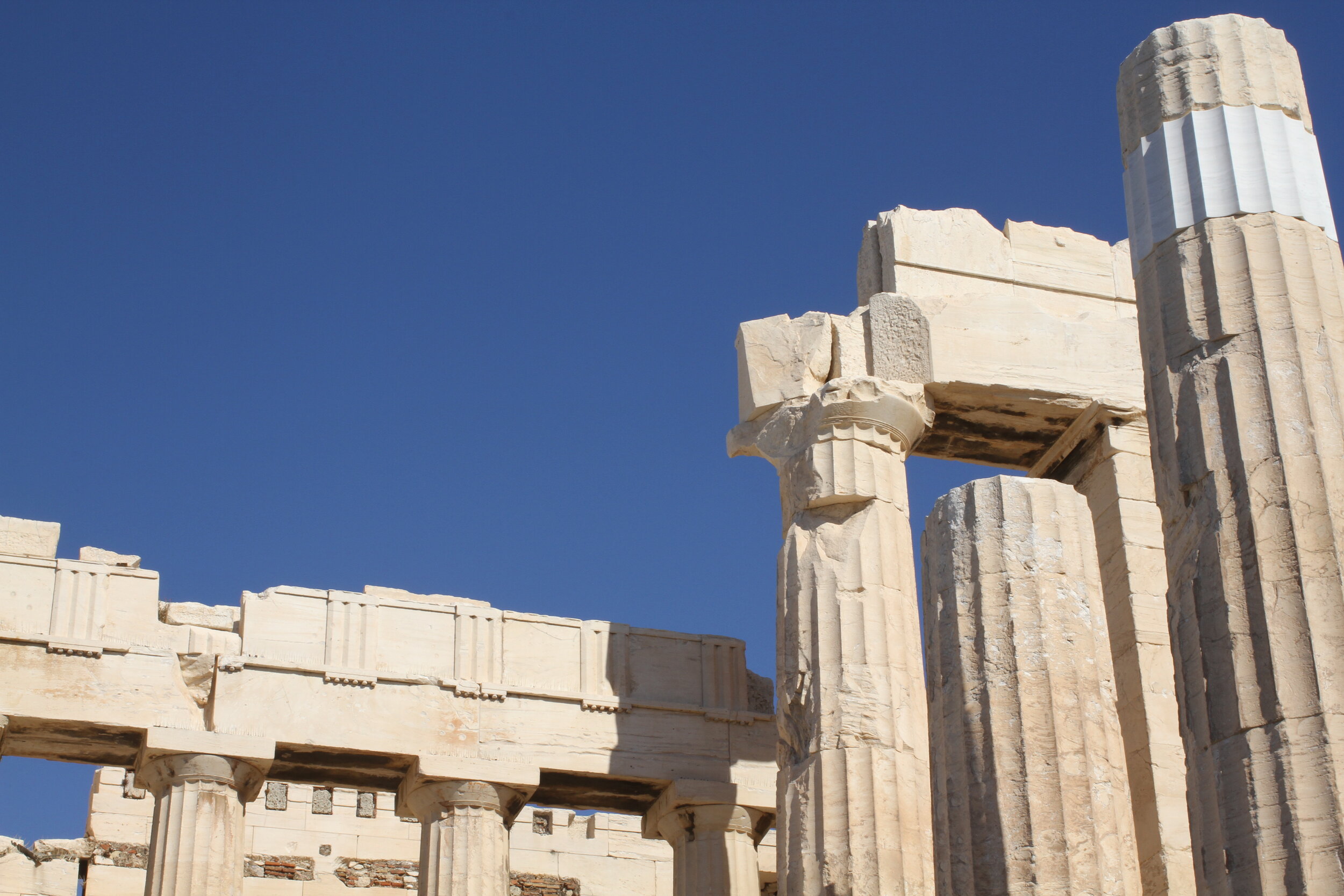
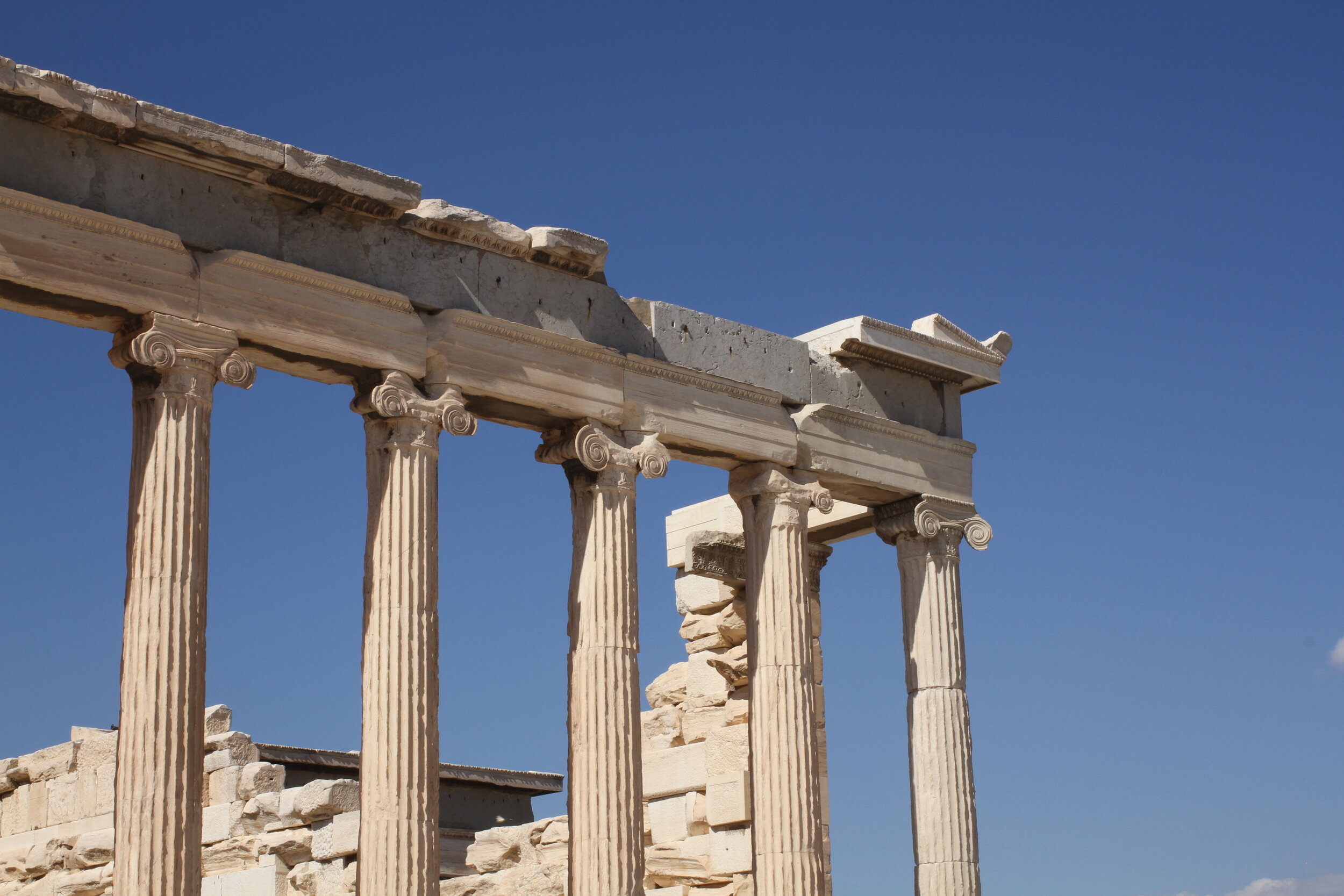
Having gazed adoringly at the Acropolis for hours during my stay, a formal introduction felt necessary, so I booked a private tour with Greeking.me, who offer an array of authentic guided Greek experiences. I met my Xenia, my guide, near the Acropolis Museum, which was built to house the site’s treasures and boasts a top floor made of glass and angled to mirror the position and proportions of the Parthenon - a conversation between the modern and ancient worlds.

A font of all knowledge, Xenia explained that the Parthenon - undoubtedly the most iconic Acropolis structure - was built in the 5th century BC to thank the gods for victory in the Peloponnesian War and show the world that Greece had not only survived but flourished. As we climbed the hill towards it, Xenia noted that Greek construction was smaller scale, kept close to us mere mortals who were seen as the centre of everything. Yet walking through the Acropolis’ marble entrance, Temple of Athena Nike glowing beside me, the experience was utterly overwhelming. I felt the weight of history and all that this site represents. Standing before the Parthenon, I wasn’t the only visitor who needed a moment. I wonder if the Acropolis has always inspired such awe. This site was built to honour the divine, as a reminder that the gods were with us, helping us find order in chaos, but it was also a political message, a statement about the might and skill of the Athenians of the Golden Age - who would have been formidable.






A Long Way Home
A New Zealand road trip.
Not only will this country soothe your soul, leave you speechless and make you yearn for more . . .
A Long Way Home
Words by Claire Nelson & Photographs by Lara Miller
Crossing Aotearoa’s South Island in search of whitebait, weather and a sense of connection.
The door blew shut on the ferry lounge, leaving behind the fragrant whiff of sheep from the livestock truck in the vehicle bay where, earlier, 100 woolly faces had greeted us onboard. Every pair of brown eyes had asked the question: where were we going? ‘South’, I’d winked back, which was about as much as I knew myself. For a New Zealander I was shamefully out of touch with New Zealand. Being Auckland-born and Wellington raised I’d traversed the North Island a thousand times over, while the South remained stuck on my to-do list - somewhere at the bottom at that. New Zealand’s grass was never green enough for me and I was bored, preoccupied with romantic notions of overseas. As soon as I could I emigrated to the UK, spending more than a decade revelling in ancient history and effortless travel until, in 2016, I became a British citizen. I reckon it was at this point my mother decided enough was enough - how could I be a certified Brit when I was still so uninitiated in my own backyard? It was time to come home and tackle that to-do list. So here we were, my mum and I, on the Cook Strait Ferry as it coasted through the lush valleys of the Marlborough Sounds, heading for the unchartered territory of my motherland.
The West Coast
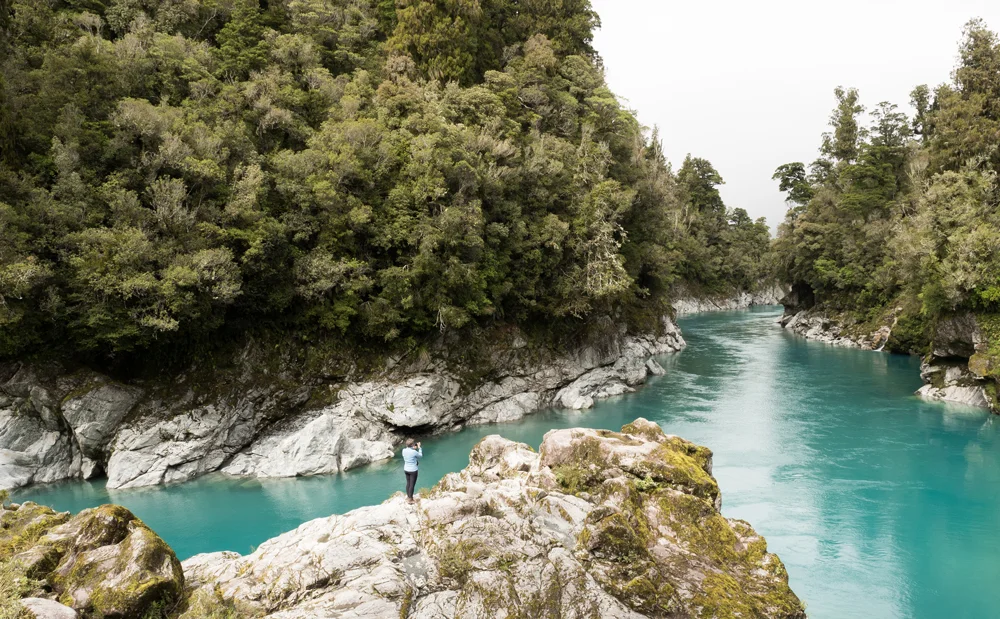
My sum total knowledge of the West Coast was that it had whitebait and weather, and plenty of both. Sure enough, we arrived to rain and thick cloud, my mother navigating the winding road through a complete white-out. This untamed coast is beautiful regardless; the wild churning sea, hills shrouded in mist, the road flanked by tall nīkau palms. Forget Lord of the Rings, this is Jurassic Park territory. We stopped in Punakaiki and followed a cliffcut trail through beds of flax to see the famous Pancake Rocks; ancient stacks of limestone born out of the seabed over millions of years and eroded by the elements. Continuing south we made a detour to Blackball, a former coal mining settlement turned backwater town renowned for two notable highlights: the local salami company (where we stocked up on snacks) and a grand turn-of-the-century hotel once called The Blackball Hilton. Although it was named after the bloke who ran the old mine, the global Hilton chain came knocking and demanded they change the name. And so they did. In a nod to good ol’ stubborn Kiwi humour it’s now Formerly The Blackball Hilton.


Avenues of tall kahikatea trees saluted us as we made our way to glacier country, the drizzle following us all the way. We arrived in Fox, a small town at the foot of the Southern Alps dedicated almost entirely to mountain pursuits, such as the glacier heliflight we’d booked for the following day. But the peaks above us were obscured by ominous cloud. “The helicopters,” chimed the woman checking us into our motel, “haven’t been up all week.” When people in the UK tell me that I must miss the weather back home, they’re confusing us with sunny Australia. For in New Zealand the only thing you can predict about the weather is its changeability. We were lucky then to wake up to blue skies, giving us the chance to witness the mountain ranges reflected in Lake Matheson’s much-photographed mirrored surface and keep our date with Fox Glacier. Our pocket-sized helicopter hovered up the great sweeping frozen river, pure white ice rippled with translucent blue, made all the more humbling for the fact nature almost didn’t let us in.
Having encountered all weather varieties we went in search of that ultimate Kiwi delicacy: whitebait fritters, fresh from the pan and served on no-frills, generously buttered white bread with a wedge of lemon. In Haast we came upon Otoko Espresso, a rust-brown, corrugated-iron cart serving hot coffee and whitebait sarnies on the side of the road. We ate where we stood, juices running down our chins, as proprietor Robyn rested her elbows on the counter and told us how she parks here for the summer holidays. “My kids are playing over there somewhere,” she says, waving an arm towards the park. “They’ll come back when they’re hungry.” Oh my word, if only we could do the same.


Otago
We ventured inland across the Alps, through the beech forest and rugged schist ravines of the Haast Pass - once an ancient Māori greenstone trail - emerging into what appeared to be an entirely different country. The moody greys and greens of the west coast had been replaced by sandy browns and bright blues of Lake Wanaka, backed by mountains beyond mountains and Lake Hawea, which is a startling shade of turquoise. Mum’s little red Mazda carried us over the Crown Range, the highest main road in the country and one hell of a scenic drive, golden valleys appearing at every hairpin turn. Having made it to the other side we stopped for a drink at the Cardrona Hotel, an iconic coaching inn dating back to 1863, which is seriously old when you consider that the country was only founded in 1840. Its wooden facade is original as is the vintage Chrysler parked out front, while round the back the rose-bordered beer garden is the perfect spot for a cold one.
We spent two nights in Arrowtown, set at a welcome distance from the summer crowds of nearby Queenstown and a place that benefits from a proper nosey. Retaining its gold rush charm, the main street is a cluster of heritage-style shops and restaurants, merging with a tree-lined avenue of original miners’ cottages. A horse was tethered outside the pub where a jazz band had people on their feet and dancing in the beer garden. Surrounded by all this it was easy to imagine the lives of families who’d emigrated here to make their fortune panning the Arrow River for gold. New Zealand may not have seen the rise and fall of empires, or had the likes of Shakespeare walk its streets, but our country has an intrepid history all its own, something I was only now beginning to appreciate.

Back on course, we followed the long straight country roads, passing Cromwell as we went, the town once drowned and rebuilt to make way for the great Clyde Dam. We were heading for Oamaru - a place I’d known nothing about and was pleasantly surprised to find contained beautiful neo-classical architecture of white stone, a preserved Victorian precinct and, most surprisingly, a quirky museum claiming Oamaru as the birthplace of steampunk. We strolled the avenues of the old town, browsing curiosities in ye olde bookshops and eclectic vintage stores before heading along the coast to neighbouring Moeraki, which is famous for its own curiosities. Here you’ll find oft-photographed circular boulders scattered across a small patch of beach, strangely otherworldly, as if some mythical giant had dropped his marbles long ago.
My favourite curiosity of all was Fleur’s Place, a seafood shack lovingly installed on the Moeraki harbourside by chef Fleur Sullivan. We arrived for dinner, the evening sun glinting off the ocean as gulls twirled above the ramshackle restaurant built from marvellous bits and bobs - old doors, pieces of boat, a spiral staircase rescued from a demolished hotel. We tucked into freshly grilled hoki and monkfish, while all around us the walls were covered in Sharpie scrawls from previous diners, love notes to a good meal. And then there was Fleur, with a cloud of white hair and a greenstone hung about her neck who, despite being in her seventies, was hustling through the restaurant with a steel tray of fish. Stopping for a chat, she told us how the ample supply of local food motivated her to open the restaurant in 2002. “I’d go out on the boats and see how much went to waste - they’d chuck the fish heads overboard. And I thought, that would make a bloody good stock!” Next thing I knew Fleur was tugging on my arm and mum and I were encouraged to come ogle another diner’s fish supper. “This bream was caught about two hours ago,” she announced, clearly as delighted as we were. Here was a woman who appreciated what was right on her doorstep. New life mantra: be more like Fleur.

Canterbury
We had arrived in lake country, passing Lake Aviemore, where ‘freedom campers’ congregated in their laundry-draped campervans, then the eye-wateringly blue Lake Pukaki, and Lake Benmore, with its colossal hydropower dam. Punctuating all this water are the Clay Cliffs, found just outside of Omarama. Five dollars in an honesty box beside the gate grants entry to what looks like the Australian Outback - a dry, arid landscape spiked with huge pinnacles of rock and riddled with walking trails. Then, it was back to blue for the rest of the day, our digs a tiny cabin on the edge of Lake Tekapo alongside the compact tents of committed cycle-tourers. Mum and I sat on the porch, sharing fish and chips with a family of ducks and waiting for nightfall; this place is a UNESCO dark sky reserve, the undiluted darkness a perfect opportunity for stargazing.
The morning brought a palette of colour as we hit the road through trails of lupins, an immigrant wildflower that mottled the roadside with watercolour shades of pink and purple. We were heading for Akaroa, a pretty port that the English and French had competed to claim in 1840. After a long and epic voyage the French arrived to see the British flag up on the hill. They were 48 hours too late. Nevertheless, the town still adopted a little French flavour, as evident in the street names and the boulangeries serving crépes and croque monsieur. From the pier, pint-sized catamarans come and go, taking wildlife-watchers to meet the little native Hector’s dolphins that play in the harbour. Then there’s the uniquely Akaroan The Giant’s House, the home of blue-haired artist Josie Martin, reinvented as a bonkers fantasyland of mosaics - a world of characters she created out of tiles, glass and chipped crockery and which has a je ne sais quoi all its own. Our road trip was meant to end in Kaikoura with a visit to Nin’s Bin, an iconic, retro caravan selling crayfish on the beachfront. But a few weeks before the region was rattled hard by a 7.8-magnitude earthquake, cutting off access roads and heaving up the seabed (decimating the crayfish with it). Here, quakes are a part of life. Kaikoura would rebuild and I would come back. In the meantime, we reset our route to Hanmer Springs, a splendid place to conclude a road trip, as it turns out. Hanmer has been an oasis of geothermal hot springs for more than 150 years and its steamy mineral pools are ideal for soaking weary bones and car-contorted limbs. It seems that with one hand nature may taketh away but it giveth back with the other.
On our last morning we hit the road early, the peaks of the Southern Alps striking against the pale sky. We stopped for fuel and flat whites in Springs Junction, possibly the only place to actually benefit from the earthquake. This little one-horse town was fielding all the rerouted traffic from Kaikoura and local business was booming. As I juggled our takeaway coffees a tattooed truckie smiled and held the cafe door open for me. I felt a long-overdue surge of affection for my little country and its people, grateful it had so warmly welcomed back its prodigal daughter. In Nelson Lakes National Park we made our final scenic stop, at beautiful Lake Rotoiti, where I wandered barefoot to the end of its creaky wooden jetty and felt the sun on my skin. And I finally got it. There really is no place like home. I’d just had to go to the other side of the world and back to get here.

Island Life
Returning to Lanzarote.
Spanish photographs from James Loveday
Amongst the pages of our recent Spain magazine was a story dedicated to Lanzarote, the largest of the Canary Islands. Photographs of this volcanic paradise - a destination dotted with unusual wineries, otherworldly landscapes, the art and architect César Manrique (who is largely responsible for preserving the island’s pristine natural beauty), golden sand and turquoise waters - had us smitten. So we were thrilled when photographer James Loveday shared his own images of Lanzarote (paired here with words from Mercedes Catalan), and we were able to travel vicariously anew. A winter escape to the Canary Archipelago may be very much on the cards…
To learn more about Lanzarote and beyond, check out our Spain magazine. For now, prepare to get swept up in the visual wanderlust.


“Famed for its black sand and glittering water, Lanzarote is cherished by those craving brilliant weather - and even better beaches - regardless of the season. But it also whispers to those hoping to glimpse something sublime; a place of art and splendour that somehow calms the soul.
The north-easternmost island in the Canary archipelago, Lanzarote is also the oldest, shaped by volcanic eruptions about 15-million years ago. Approaching from the air, you’re struck by the landscape’s drama. I spied almost 50 volcanic cones emerging from the rust and ochre earth, the Martian terrain dotted with white villages and contrasted by the dazzling blue of the Atlantic Ocean. It was a sight to behold - and I felt a connection the moment I landed.”


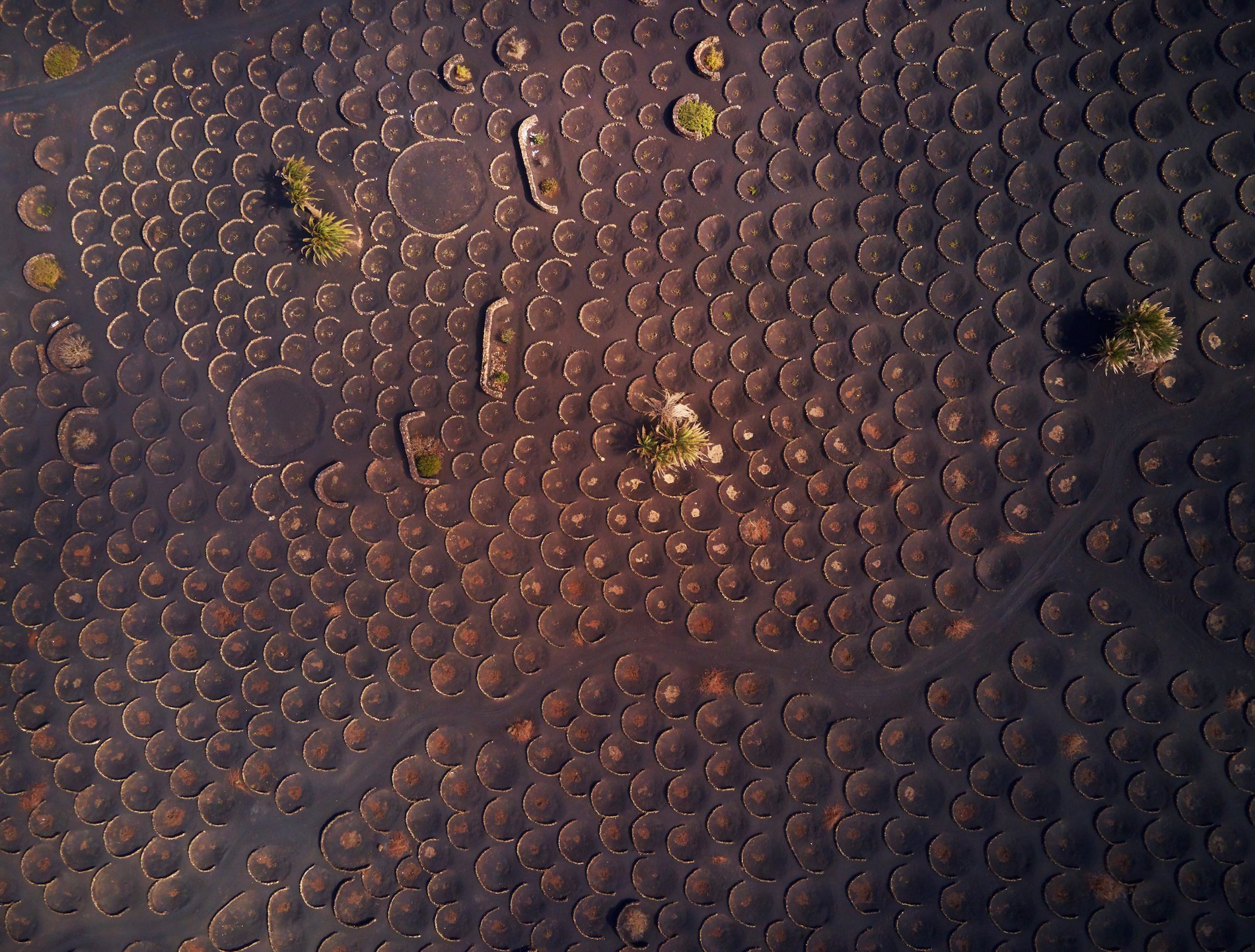

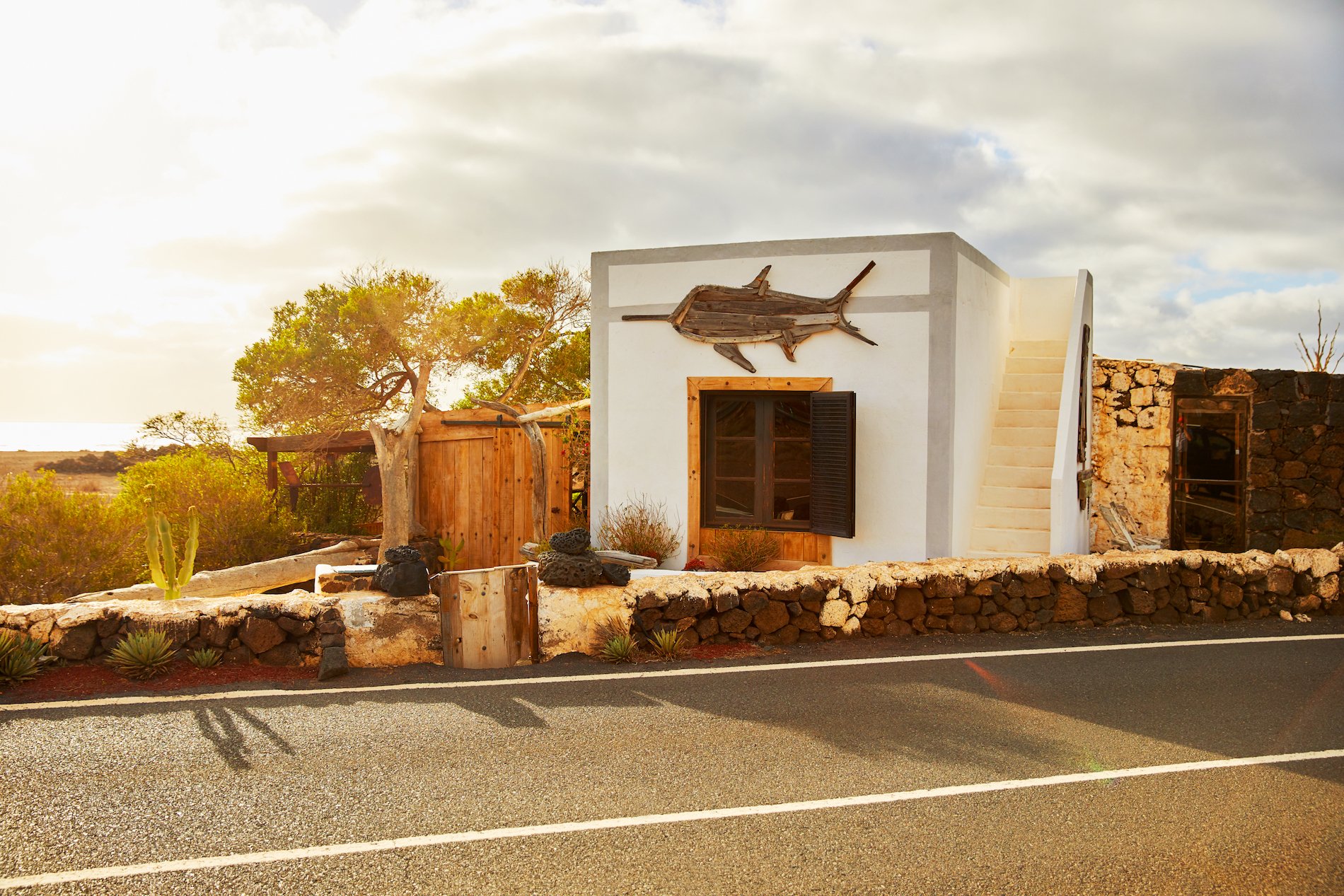
“Although the island has more than two-million visitors every (non-pandemic) year, Lanzarote still feels a little undiscovered. Local artist and architect César Manrique (1919-1992) had a lot to do with this. He shaped the tourism industry here, ensuring it remained respectful of cultural traditions and the environment. Thanks to César, the number of resorts is restricted, concentrated mostly in the busy coastal towns of Puerto del Carmen and Playa Blanca. Lanzarote’s other towns and villages haven’t grown that much, and many of the island’s most astounding wonders are a symbiosis between art and nature - as their creator César Manrique liked to describe them. Jameos del Agua, Jardín del Cactus, Mirador del Río, Cueva de los Verdes, the restaurant at Timanfaya National Park, and the artist’s two residences - his volcano house in Taro de Tahiche and the Palm Grove house in Haría - are extraordinary examples of how to combine volcanic elements with architectural form.”

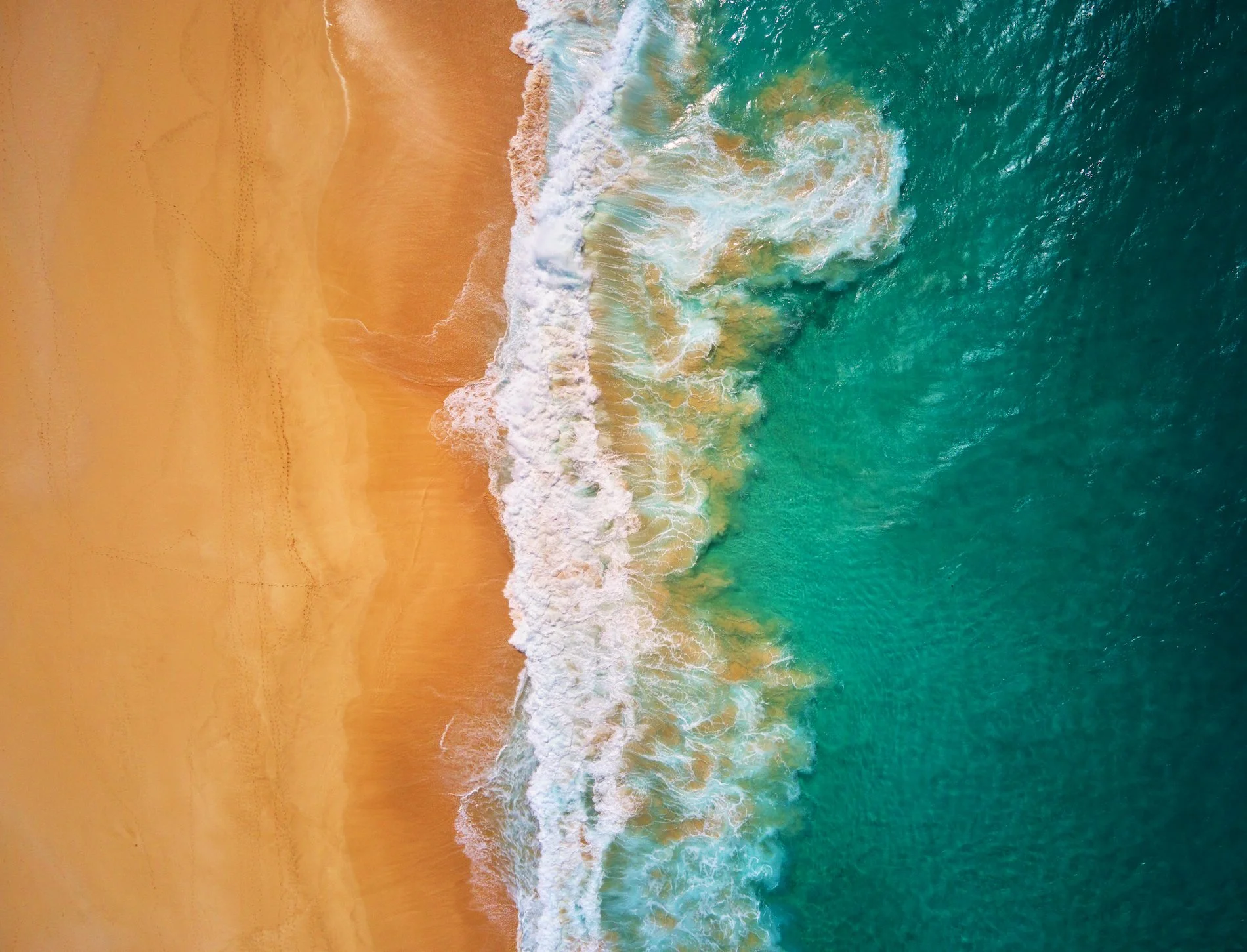
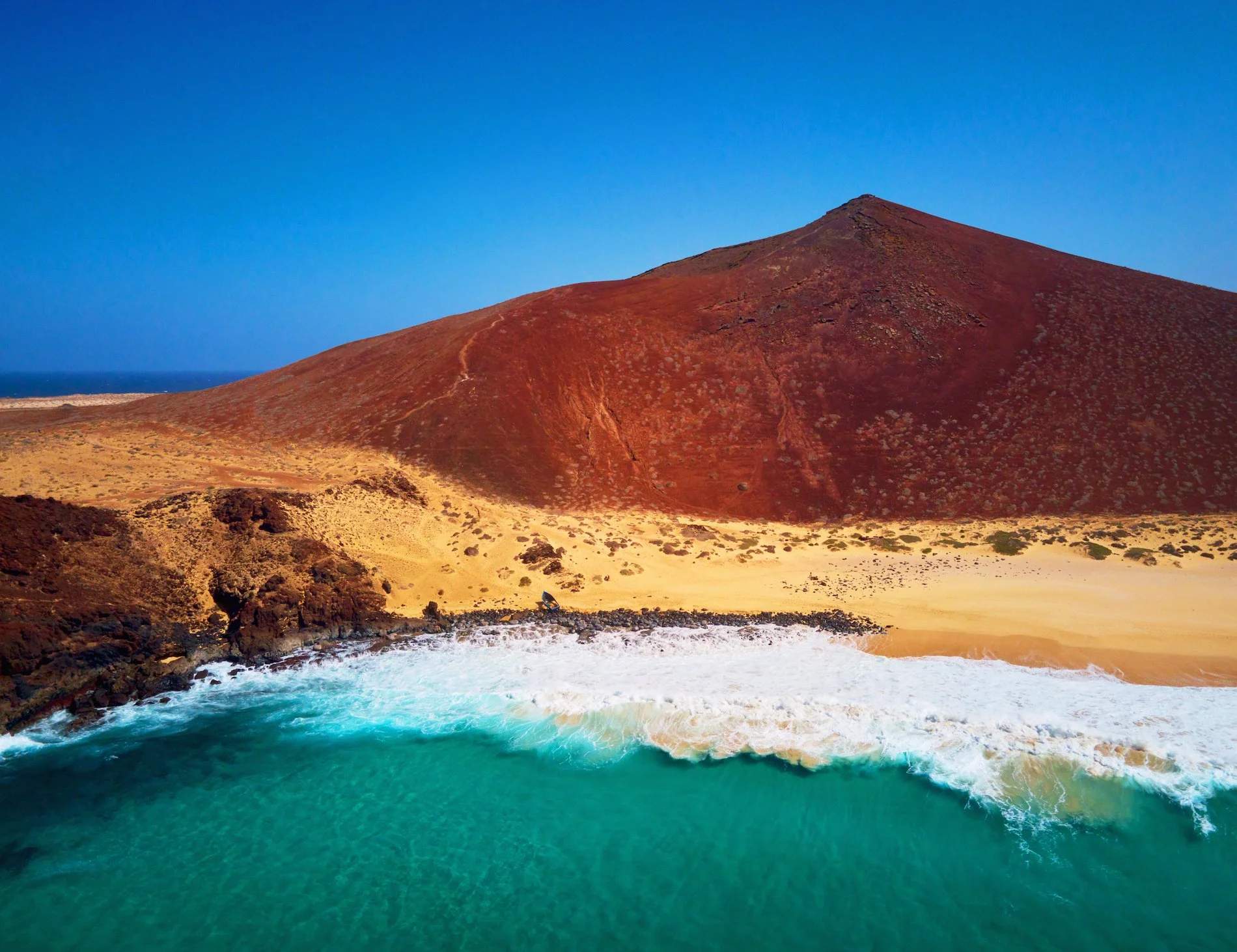


“Timanfaya National Park is the island’s most impressive natural attraction. Here the surreal landscape,striking sweep of volcanic cones, ancient lava fields and heat emanating from the earth make you feel as ifyou’re on another planet. It’s little wonder NASA used this terrain for training. And then there’s perhaps the best kept secret, Lanzarote’s rare and remarkable wine. Grapes are grown in La Gería - home to Bodega El Grifo, one of Spain’s oldest wineries - with delicate Malvasía vines planted in hollows of volcanic soil, dug into the ground to protect them from the wind and preserve the limited humidity.”


As a photographer, I usually plan my trips meticulously, looking for picturesque places and hidden spots to capture with my camera. But I confess that this time, I did not. Perhaps because I was simply hoping to relax for a week, recharging my batteries to endure the cold winter ahead. Or maybe because I had apreconceived idea about what I was going to find. Whatever the reason, I am happy I didn’t do much research. This way, I let Lanzarote surprise me. With my trusty rental car, I travelled to every corner of theisland, discovering otherworldly landscapes, meeting warm people, indulging in the simple but scrumptious local gastronomy, getting lost in sunsets and learning about the fascinating work of César Manrique. After a week in Lanzarote, I left the island of volcanoes with two thoughts: I want to continue exploring the smallest and least known islands in the Canary archipelago and, of course, return to Lanzarote to capture more of its secrets.
Mercedes’ words first appeared - with her photographs - in our Spain magazine.




Oh India!
A photographic journey through India.
Photo Essay by Thomas James Parrish
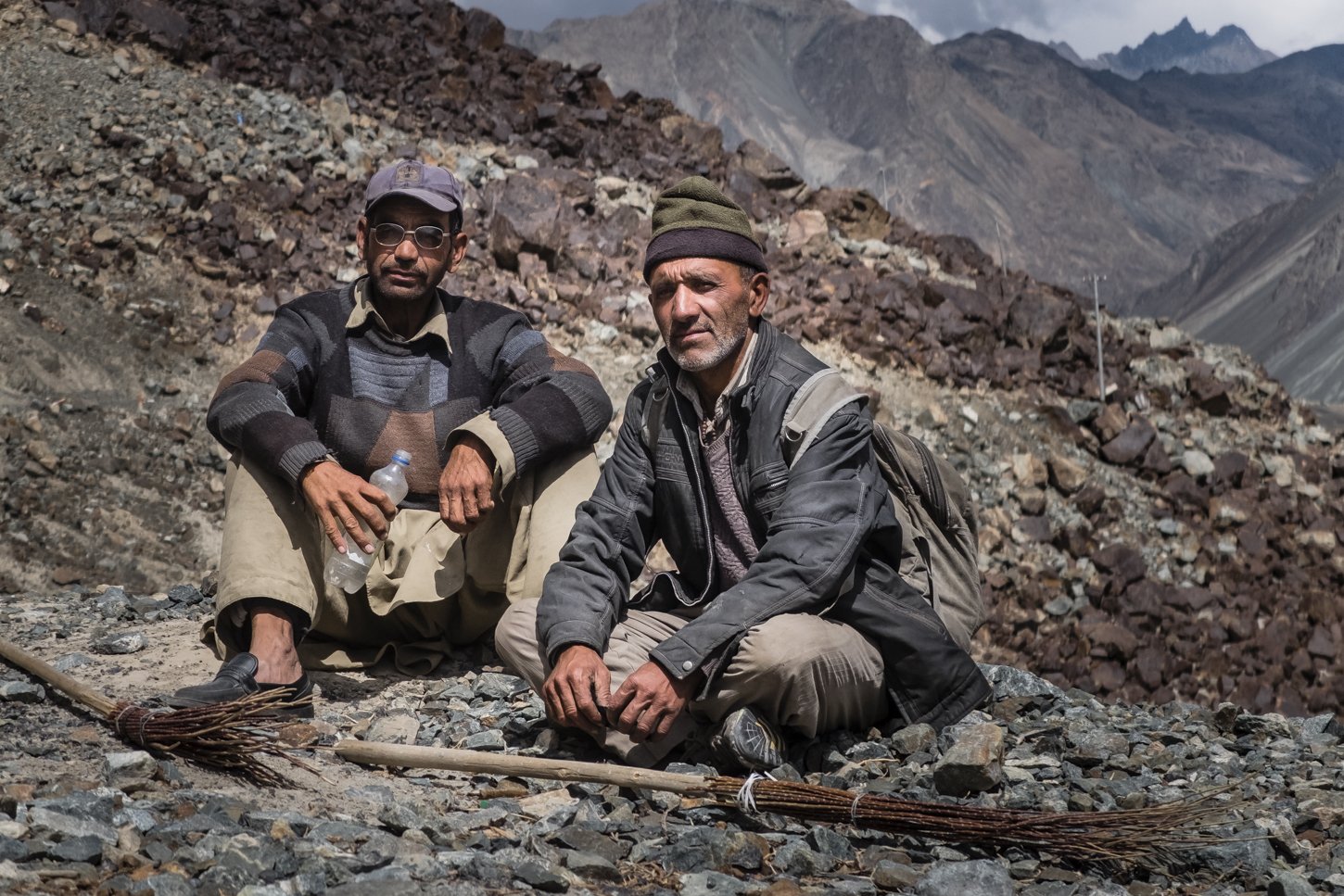
It wasn’t the five magnificent horses stirring up the dirt and dust beneath the snow-capped mountains that I noticed first. At that distance, it was hard to tell what these creatures really were. What caught my eye was the vibrant pops of colour they carried, which contrasted against the otherwise barren pallet of the far north Himalayan Road. Bright red chairs, orange and emerald buckets, deep-blue tarpaulins and sunshine-yellow satchels sang out as the animals trudged their way forwards along the crest of the pebbly ravine. Pack horses carrying seemingly far too many goods, telling a story of mountain tourism and how its demands are met in Leh, Ladakh.

The road to Leh was far from the most comfortable journey I’ve embarked upon, but what it lacked in elbow room and smooth tarmac, the 15 hours from Keylong made up for in visual masterpieces.
We were stopped at one of several passport checkpoints - on little more than a dirt track through the mountains - when the horses passed by and were ushered off the road and down to the stream some 50 metres below. They were shepherded by their guide, a weathered Indian man with deep set eyes, who used a thick stick to the rump to encourage them down the gully. When the lead horse became entangled in a guiding wire and panicked, it kicked chaotically on the steep and slippery surface and a dust cloud erupted from the bedlam. I help my breath, hoping she would not lose her footing as she ran on at full speed, with items falling loose from their confides on her load.
As I’d stood helpless and intrigued by the wild scene, I had captured an image that I feel perfectly represents my time in the Himalayas - and India itself. A scene of resilience, struggle, madness and beauty. It felt like an age before all six horses finally met safely by the water. As the dust settled, the only evidence of the near catastrophe came in the shape of a few red apples rolling gingerly down the hill.
This was India. Unpredictable and unimaginable.
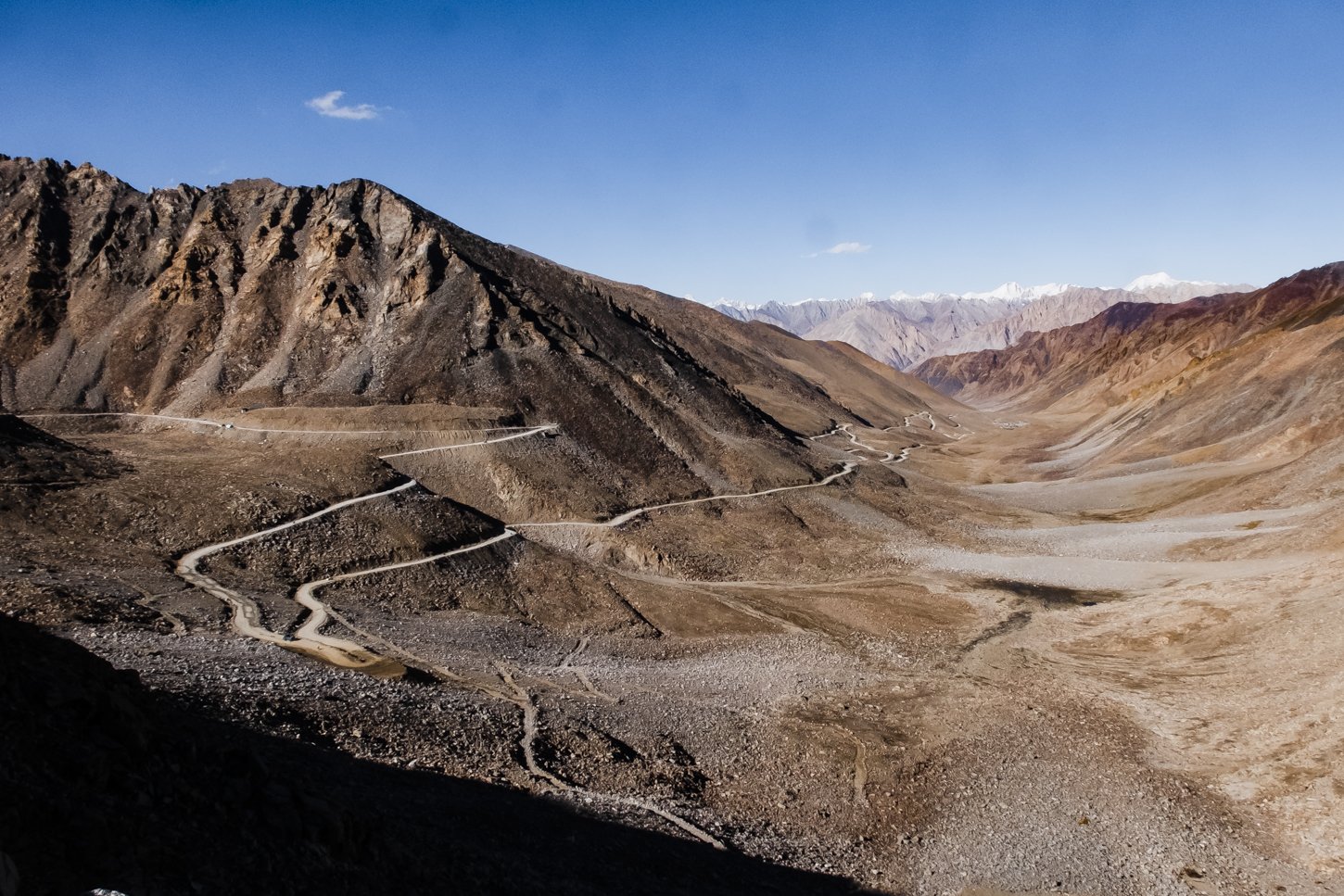
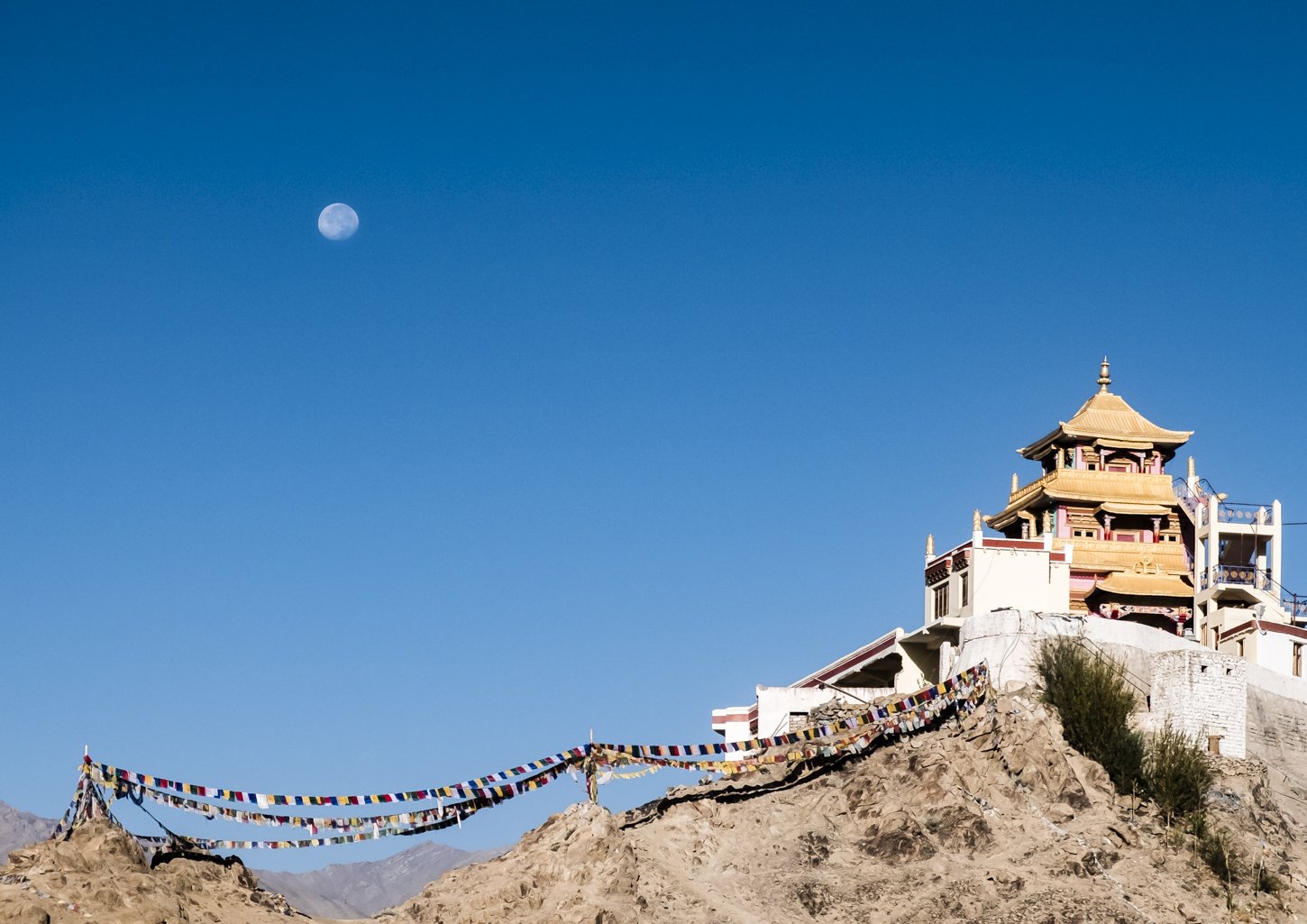
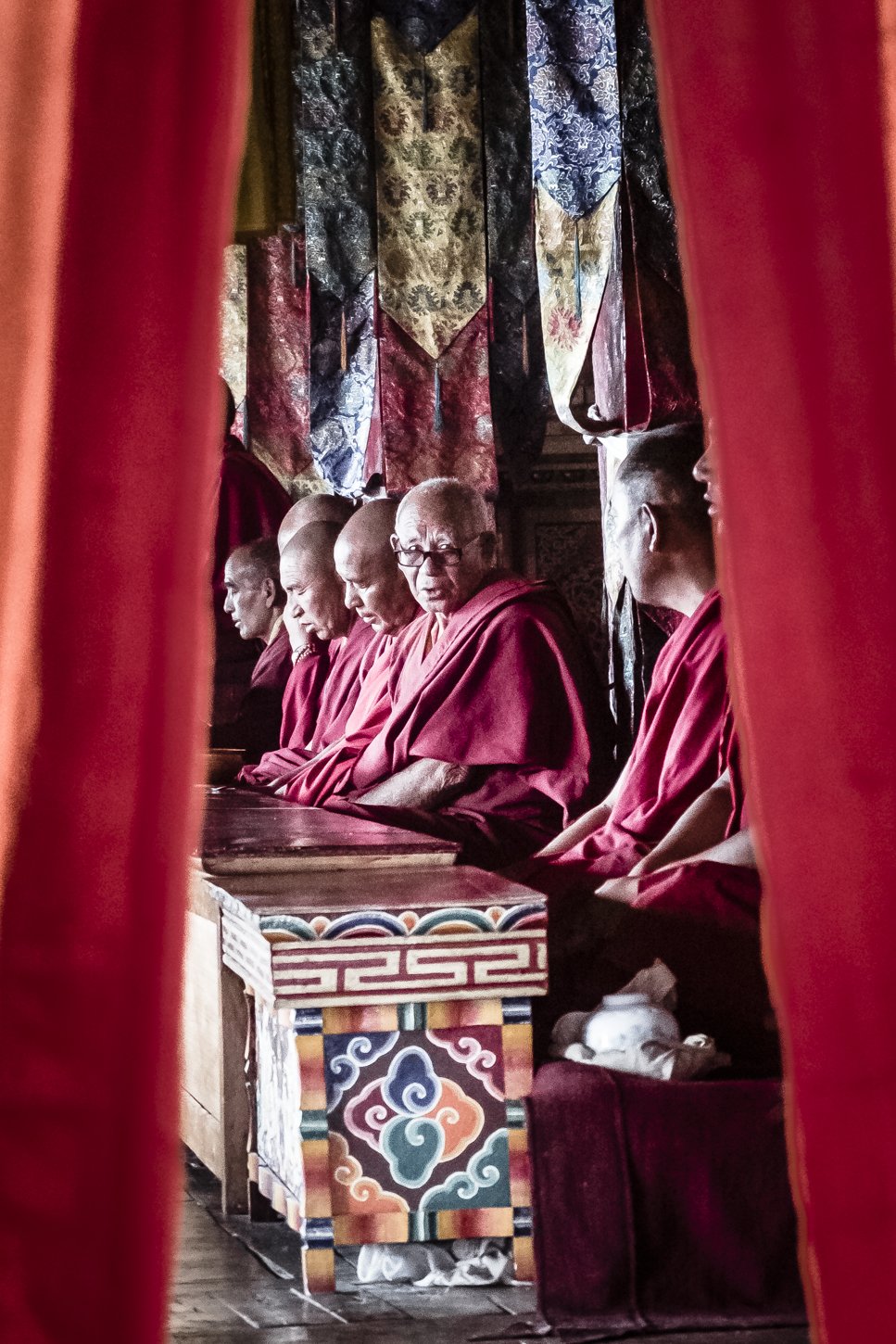
I spent six months travelling the far reaches of the country’s northern states. From the rainforests and tea stops of Singalila National Park in West Bengal, to the mountains and monasteries of the Nubra Valley in Ladakh. Inspired by my dad’s photography from the 1980s – which brought extraordinary lands and people into the living room of my childhood home – I’d gone in search of scenes and stories of my own.
A similarly memorable interaction came as I sat on the platform at Ajmer Station - the closest train station to Pushkar, Rajasthan - and was entertained by a group of children. The station was their playground. Jumping on and off idle trains, poking their heads through windows and chasing rats on the tracks, occasionally waving to me from all ends and sides of the platforms. One of them, however, was more interested in keeping me company than being caught up in the game. Assam sat with me for almost an hour until it was time for me to board. Exchanging broken English and Hindi, we learnt what we could about each other when we weren’t taking turns snapping each other’s portraits. His inquisitive eyes and innocence made this encounter one of my most cherished interactions, and this photograph is a reminder of the people we meet - and then leave behind - in the pursuit of adventure.

Many of my favourite travelling memories took shape aboard the Indian railway. Outside, the ever-shifting landscape danced by, as if winding on a roll of film from the past. Inside, the sapphire-hued beds of sleeper class offer a temporary home during the dozens of hours spent in transit. Here, responsibility and obligation drifted from my mind, as the only pressing issues became disembarking at the right time and securing my belongings. Having fleetingly let me guard down as we travelled west along the Ganges from Varanasi to Haridwar, these two matters saw me to leap from a moving train.
My alarm sounded at 4am in preparation for my estimated arrival into Haridwar at 4.30. As I awoke, I registered the train was idle, already at a station. Assuming that we were early and wouldn’t leave until the timetabled departure in 30 minutes, I began my now-ritualised, pre-getting-off-the-train activities. As I rolled up my sleeping bag, the train jolted and sparked into motion. With stations typically hundreds of kilometres apart, I couldn’t afford to miss my stop.
The train picked up momentum as I franticly gathered my belongings and made my way to where the cars were joined - where disembarking occurred and where the last length of the platform had become a fast-moving treadmill beneath me. I jumped.
The challenges of India are unrelenting. The joy that it promotes is unmatched and its seamless transition between the tender and the tranquil, and the vibrant and the chaotic needs to be experienced to be fully understood. In six months, I only scratched the surface of what this country has to offer, and I’d love to say I enjoyed every moment of my time here, but that would be a blatant lie. Travel isn’t always perfect - there are times we miss a familiar bed or crave a sense of stillness - but it’s the imperfections, the near-misses, and the utterly ridiculous that make it all the more dazzling and desired.






Cover Photographer - Dan Cook
A look behind the Spain magazine’s cover.
With the Spain magazine making its way out into the world, it felt like the perfect time to introduce you to our cover photographer, Dan Cook, who captured Ruta del Cares in Picos de Europa so magically. In his interview, Dan talks about the joys of the natural world, what the word ‘home’ means to him, and the power of a good photograph.

When did you first fall in love with photography?
It’s definitely been a gradual thing for me. I guess I’m of a generation where photography has always been easily accessible but it wasn’t until my mid-20s that I really started to appreciate photography as something to learn and practice. It coincided with me also rediscovering a love for the outdoors. Being able to pick up a camera and really pay attention to my surroundings while out walking just clicked for me and became the focus of all my spare time. I also started actively seeking out inspiration from photo books and exhibitions. The great thing with photography is that you don’t just take in the photography but you learn more about places, people and the natural world, so if you are curious then it becomes quite addictive.
What do you love about taking photographs?
It’s definitely being able to freeze a moment and bottle up an experience. It might be just for yourself as a way to document your experiences or to try and share a feeling. There are lots of artistic and technical aspects to photography and it can be very rewarding when you create something different in a deliberate way, but so many of my favourite photos are really just snapshots as I encounter the world. I also love that other people can take something different from your photos, and that they can just be the outline of a story that allow peoples’ imaginations to fill in the gaps. Leaving space for imagination will always be one of the great things about photography.
What is your favourite thing to photograph?
Broadly speaking it’s the natural world, anything from grand mountain vistas to a small patch of plants I notice while walking home. I think more specifically though I enjoy photographing journeys in the outdoors. My favourite collections of photos are usually from long walks in the outdoors, going from place to place and trying to tell a whole story of changing landscapes and conditions. I always think of photography as the secondary thing … it’s what you are passionate about at the time that’s more important.
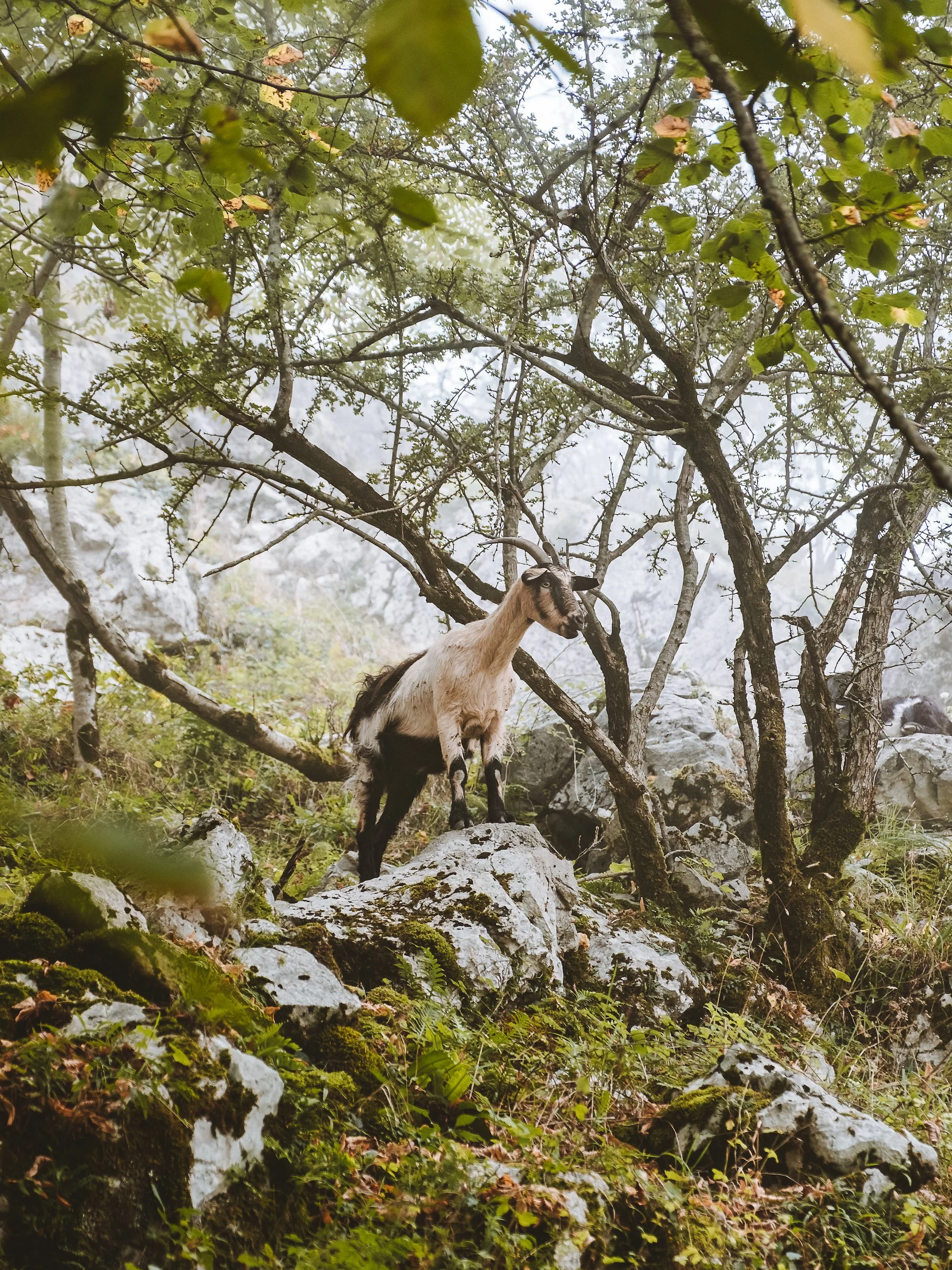
The Spain cover photo was captured while hiking - what makes this kind of experience such a wonderful thing to photograph?
For me, hiking is the root of my love for the outdoors. I would say it’s a result of family holidays when I was younger, walking all day in the Lake District in all weathers. I don’t think there is any other way to properly experience a place other than spending those hours in contact with the ground and slowly seeing the landscape change around you. My experience of trips where I quickly move from place to place is not the same. Even the difference between running and walking through a landscape is very different. Photography is often about having time to notice what is around you, to be able to linger and watch the light or back track and explore something that caught your eye. It’s taken me years to realise this though, and slowing down is always difficult when there are so many places to visit, but the collections of my work that people seem to enjoy the most are when I can share the journey and not just the postcard location.
What do you hope people feel when they look at your images?
I would hope people feel the same thing I did when I was creating the image. Usually I would guess that’s a sense of excitement and awe at the landscape or the conditions. I’ve never regularly worked as a photographer, so I’m generally creating and sharing images from things I’ve enjoyed and I am fascinated by rather than fulfilling a brief. Hopefully that comes through in the images. I suppose sometimes I also go out to the landscape as an escape from day to day life and in the past people have said there’s a calming feeling to some of my photography. I don’t really think about it too much at the time but there are certainly instances where focusing on photography is a way of finding calm, especially out in the landscape.

What does the word 'home' mean to you?
As someone who overthinks and worries about small things, then these days for me home means familiar and comfortable. A base where you can settle into a rhythm and make time for the things that bring you some peace or joy. Maybe that doesn’t sound too exciting, but for me having a certain amount of familiarity allows time to delve into new things such as photography and also gives the security to go out and enjoy new places. The ying and yang between having somewhere comfortable as a base to enjoy more adventures knowing you have that familiar place to return to when you are ready. Up to now I’ve always been fortunate to be able to take home for granted and I’ve always lived with other people who really create the feeling of home. I’ve felt at home in different places and there is definitely as aspect of it which comes from the experiences and memories you have of a place and the people you are with. Whenever I visit the Lake District in England, for example, I get a strong feeling of homesickness when driving away at the end of the trip. That’s definitely more to do with the memories made there than anything physical.
Can you tell us a little about the image on the cover of Lodestars Anthology Spain? Where was it taken and what was the day like?
It was taken on the Cares Walking Trail in the Picos de Europa. It was my first visit to the Picos and to northern Spain so I didn’t really know what to expect of the landscape. I had read about this walk online but the reality was way beyond expectations. I’ve rarely had a day so enthralled by the surroundings at every turn. The cover image was taken quite early in the day just as the sunlight was finally breaking through the clouds and the sun was high enough to begin climbing above the mountains. You can just see the light creeping down the valley behind the little red roofed building. As soon as I noticed the derelict old building I knew it would make for a great photo and it was just fortunate timing that we were passing at the right time for some gentle light on the mountains. I honestly can’t recommend this hike enough, along with spending time in the rest of the Picos.
What's the best piece of advice you've ever been given - when it comes to photography, life, anything really?
When it comes to photography I often find myself thinking back to hearing photographer David Hurn talk on a podcast once. He emphasised some of the things I mentioned earlier, that photography shouldn’t be for photography’s sake. You should find what you are interested in, learn about that and then use photography as a way to communicate your passion for that ’thing’ to the world. In some ways it’s obvious but I think this is the best advice if you want to improve your photography. Often - like I did - photographers go down the route of trying a bit of everything rather than really finding their own voice. In terms of landscape and travel photography, alongside my natural curiosity and enjoyment, I try as much as possible now to read about the places I visit either before or after I’m there. I don’t mean just factual guides and history but also if a place features in a novel or reading about folklore can really bring it to life and help spark your own creativity to shape what you photograph or how you edit the photos afterwards.
What would your younger self think of the work you're doing now?
I think my younger self would be amazed that I’m doing something creative with my time. I had no skill for art in school, didn’t really have any imagination for creative writing - so to have images and words published for other people to read would definitely be a surprise to young Daniel and his teachers I would think.
You can order the Spain magazine here, and see more of Dan’s work here.


White Sand & Paperbark
Getting back to nature on the NSW South Coast.
I began my dip in Currarong Rockpool’s still, sapphire water. With nowhere to be (my holiday schedule involved little more than saltwater and bush walks), I let the current carry me past the rocky opening and paddled lazily towards the sheltered curve of Abrahams Bosom Beach. And that’s when I saw them, a pod of bottlenose dolphins frolicking ever-closer. I floated there, awestruck, and in a flash they were around me, under me - impossibly sleek and surprisingly chatty.


Natural encounters like this don’t seem strange in Jervis Bay - a destination where sea-life is abundant, the water azure and the sunsets dazzling. Here, you can ramble through Booderee National Park, walk from Greenfield to Hyams Beach (said to have the world’s whitest sand), sip wine at Cupitt’s Estate and - if conditions are right - watch bioluminescent plankton put on a show. There’s Point Perpendicular Lighthouse, the crystalline Honeymoon Bay and a plethora of walking trails, such as the path from Currarong (past shell-strewn coves and the rusting wreck of the S.S. Merimbula) to the sandstone sea cliffs enveloping Gosangs Tunnel.


When Irena and Jeremy Hutchings first came to Jervis Bay, they almost missed it - largely undiscovered, there was only a tiny sign marking the turn off from the highway. They’ve since cemented it firmly on the map with Paperbark Camp, an off-grid glamping hideaway that celebrates the Australian bush. Found beside Currambene Creek, their 13 safari-style tents are surrounded by paperbarks and eucalyptus, with guests and gourmands coming together in The Gunyah (an Aboriginal word for ‘meeting place’), a restaurant nestled among the treetops.

It was hard to pick the Paperbark moment that felt most magical. Was it soaking in the outdoor bath as a summer storm descended, paddleboarding through mangroves or hiking around Murrays Beach while my mind wander and time began to feel a touch elastic. Perhaps it was the nap I took in my tent - on a bed I’m more than a little enamoured with - as raindrops pattered against the canvas roof and a chorus of birds serenaded the sky, the sound nothing short of delicious.

Clarity came while dining on Gunyah’s candlelit balcony (the evening had started with sundowner by the fire, and grown in decadence from there), when I couldn’t help looking out and getting fleetingly lost in the stars. That’s the wonderful thing about Paperbark Camp and Jervis Bay. No matter how glorious the setting, nature will always take centre stage.
To book your own Papercark Camp getaway, click here.
A version of this story first appeared in our Australia magazine, which you can order here.


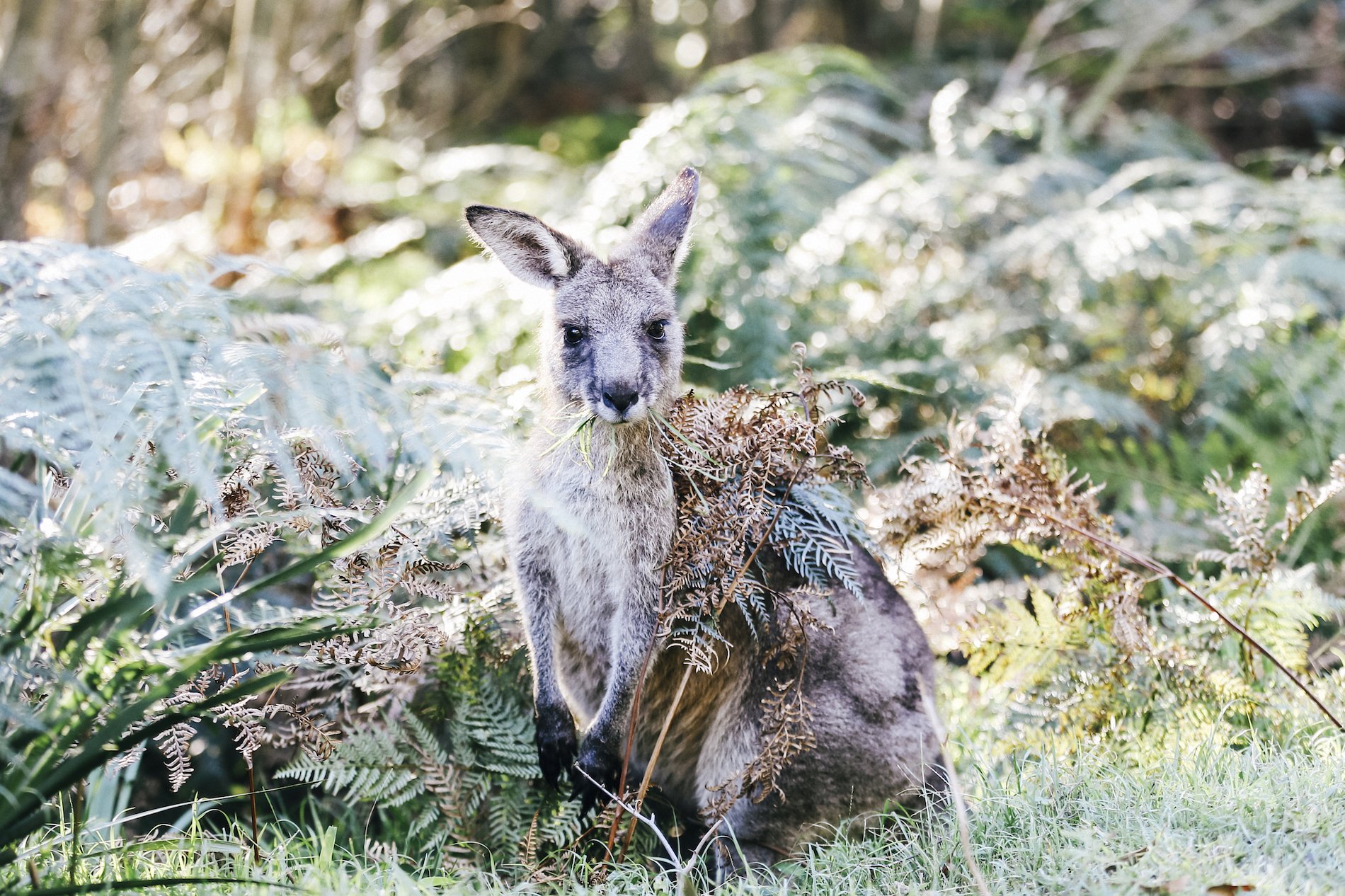


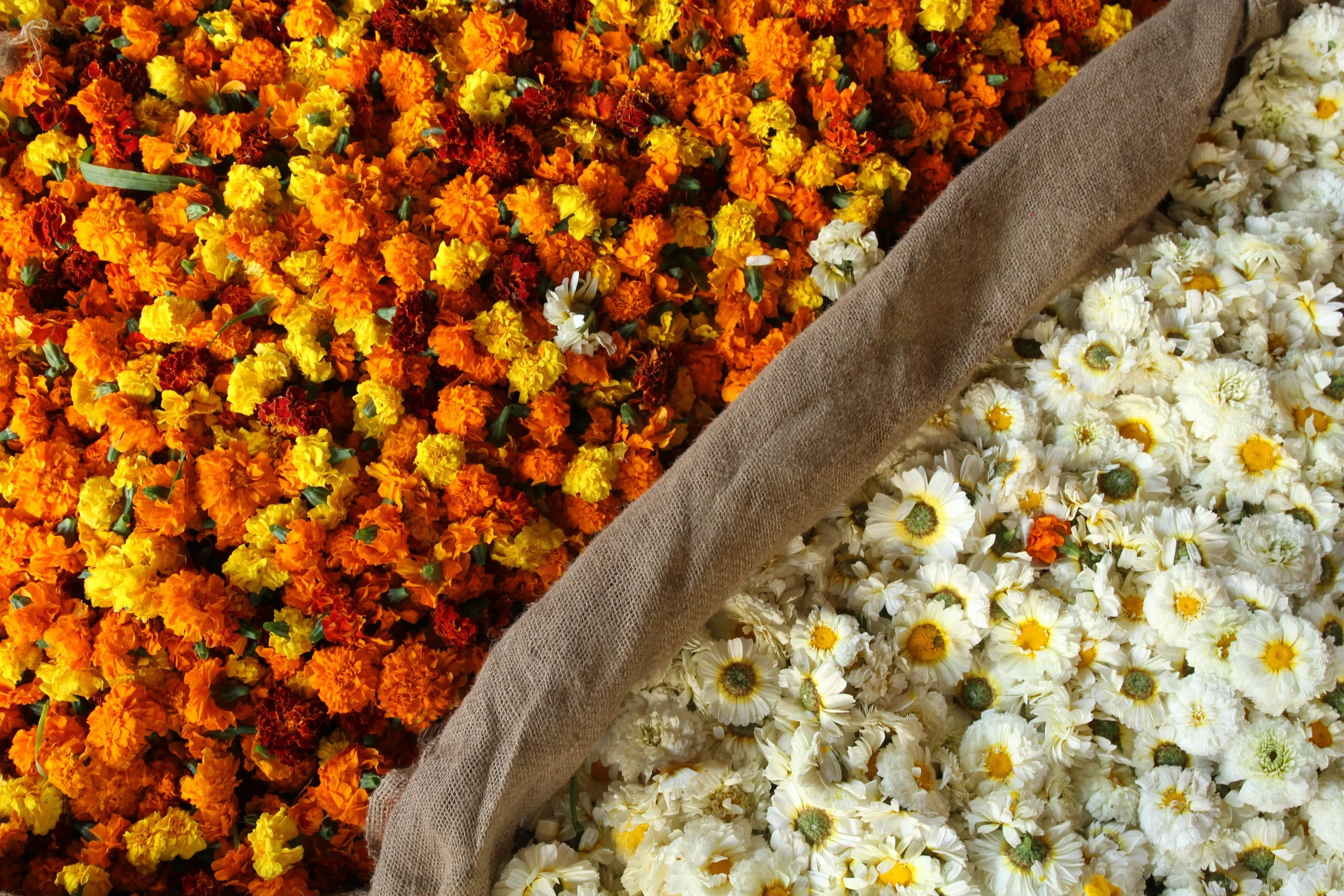
Delectable Destinations
An Indian odyssey.
In Feb 2023, I’ll be leading a tour with Delectable Destinations through India - taking in Rajasthan, Agra and Darjeeling. Please get in touch with Carol (here) if you’d like to come along … or want to know more about the adventures we have planned for Ireland, Italy and the UK. To get you in the travelling mood, I’ve shared part of the story I penned after my inaugural trip with Delectable Destinations, first published in our India magazine. Here’s to roaming the world once more. Liz x
In India, I highly recommend relinquishing control. You can read all there is, ask pre-travel questions, immerse yourself in a period of diligent cultural study, but nothing quite prepares you for the moment of arrival. India will defy all your imaginings. It will consume you, terrify you and leave you besotted, swept up in a romance never fully understood and almost impossible to explain. Having discovered all this on previous trips, I joined a group travelling with Delectable Destinations, who specialise in intimate culinary-focused tours.
And so I landed with little more than wide eyes, safe in the knowledge that there would be a guide to lead us along the Golden Triangle; someone who knew what to eat and where to eat it - encouraging wanderlust whilst reminding us that here there is no ‘correct way’ way to dine. Instead, it’s about savouring flavours and the moment, appreciating regional diversity and discovering just how much a country reveals itself through food. Control is a difficult thing to abandon, but the prospect of an Indian epicurean excursion with fellow foodies filled me with joy.

Old & New
Arriving in Old Delhi is like entering a movie set; a thunderous, fast-moving scene watched over by monkeys pondering discarded newspapers from power lines. On these streets people cook, converse and shave with the aid of mirrors borrowed from abandoned scooters.
We’re in Chawri Bazar, a hardware market since 1840 that, with around 30,000 stores, remains the largest in Asia. If you can imagine it, you’ll find it here. It’s the first full day with Delectable Destinations and we’re nervous, taking travel warnings far too seriously and anxious to see how our stomachs will fare. So when our guide offers us something from a street vendor I hesitate, just for a moment, before journalistic curiosity forces me to accept. It’s Daulat ki Chaat - buffalo milk and sugar that tastes like airy merengue and is only available for two months of the year. And with that, bliss written across my face, the culinary floodgates open. We enter a dimly-lit store hidden down a side street, pastries piled high by its entrance, for curried chickpeas eaten with puffs of lentil paste deep fried in ghee. We pass Paan sellers and the remains of forgotten havelis and ascend a flight of stairs to the flower market, a series of stone rooms overflowing with petals; marigolds, roses and jasmine scenting the air. Another stairway leads to a series of interconnected rooftops. From here we watch as sacks of spices are loaded onto bicycles, sneezing the entire time due to the crushed chillies lining the ground.

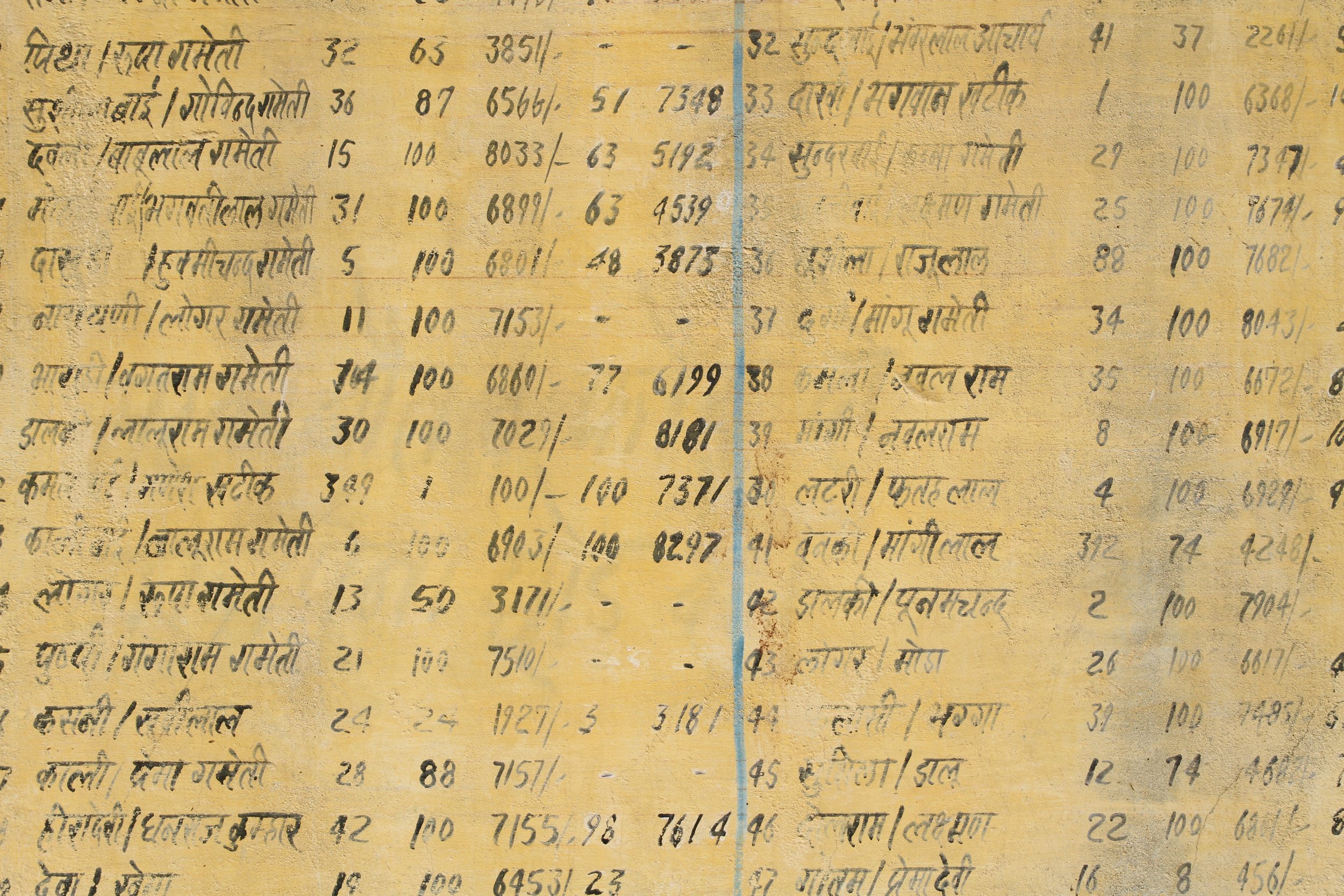
It is in New Delhi that you’ll find many of the capital’s landmarks, from India Gate and the 330 acre President’s Palace to Gurudwara Bangla Sahib, an ornate Sikh temple where thousands are fed daily, the kitchen filled with pots large enough to bathe in. There is much in this city to feast upon - from the creative re-imaginings of traditional dishes at Farzi Cafe to lengthy breakfasts amidst the grandeur of the Art Deco-influenced Imperial Hotel, and the Indian fusion of Indian Accent, our exchanges at the latter consisting of little more than “oh my god” and “I know”. But the most fascinating culinary excursion involved a visit to the INA Market with Neha Gupta of Saffron Palate - Delectable Destinations is all about working with and promoting local companies. Offering a mix of Indian, Western and Chinese ingredients (live chickens and goat heads sold alongside spices and pashminas) and named after the Indian National Army who formed to fight British rule, here we gathered ingredients before returning to Neha’s Hauz Khas home for her North Indian cooking class. We attempted to master jeera aloo (potatoes with cumin seeds), biryani, butter chicken and chick peas in tamarind sauce, yet her greatest gift was a recipe for a ubiquitous condiment, mint coriander chutney: blend 500g coriander, 250g of mint, 2 cloves of garlic, 1 green chilli, 1tsp sugar and 1/4 tsp salt with a little lemon juice and serve with yogurt.
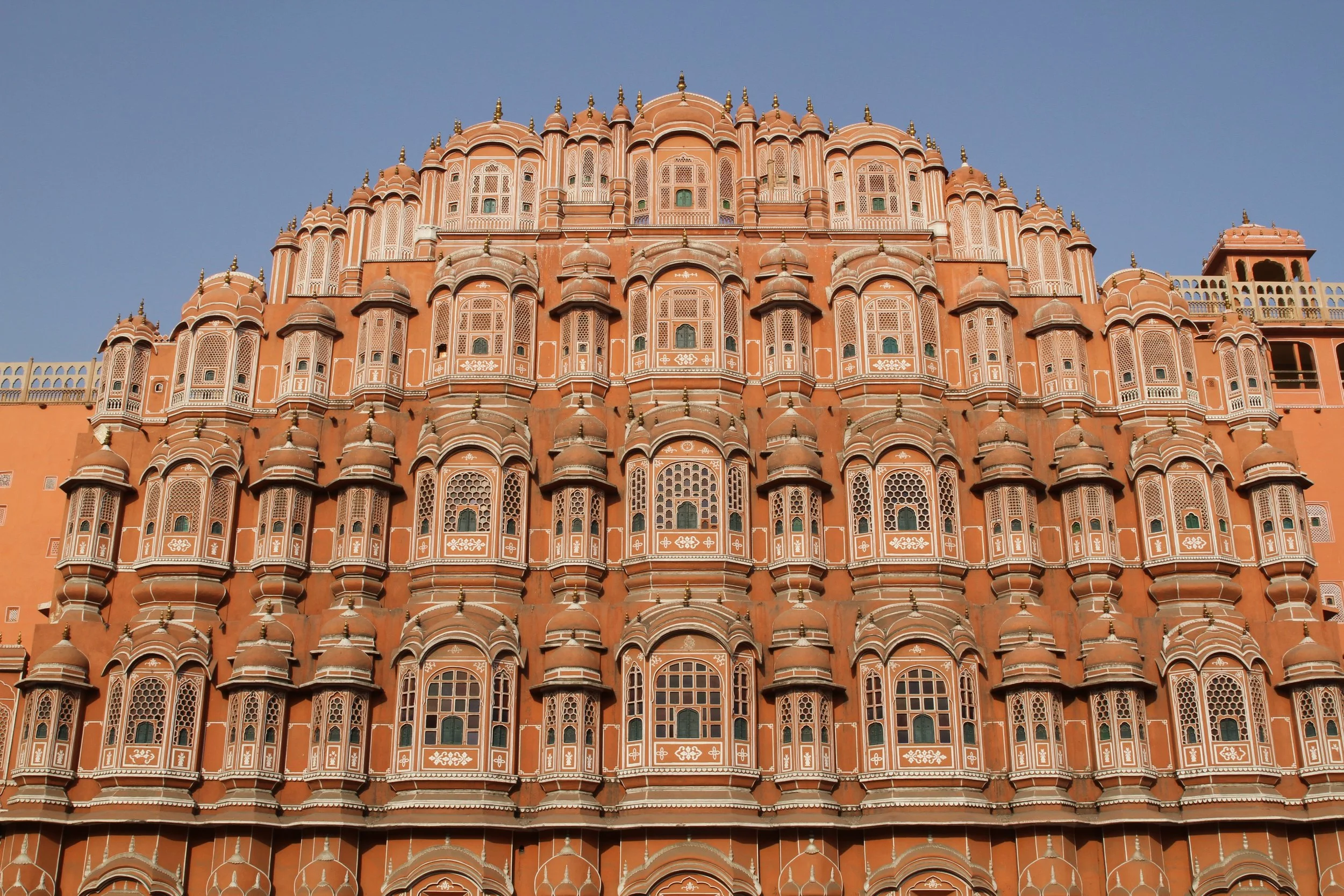
The Jewelled City
Jaipur is paradise, with added pandemonium, a place where pink is abundant - the shade first applied to impress Prince Albert on his 1876 Indian tour. Visitors flock here for the hue alone, yet delight in sites like the observatory of Jantar Mantar and Hawa Mahal, built in 1798 to allow women of the royal household to watch daily life unfold from behind veiled windows in this bejewelled wedding cake of a structure. And then there’s Amer Fort, a sandstone and marble marvel, framed by rose-tinted mountains, where there’s much to enchant - not least Chand Pol (Moon Gate), which separated public and private life, and Jai Mandir (Hall of Victory), which is adorned with mirrored mosaics designed to looked like the captured cosmos. Made from 42,000 pieces of Belgian glass, it’s inspired by Tehran’s Roseland Palace.
Walking Jaipur’s streets, you’re stuck by the profusion of jewellery stores, each as demure as the last. Famed for its rubies, emeralds and topaz, one in seven of the world’s gemstones is cut and polished in this city, which has been a centre for jewels for over 400 years. There are entire alleys dedicated to wedding cards, traditionally hand delivered by parents of the happy couple to anywhere between 500 and 2,000 guests, and temples, with stone elephants standing by their entrances. Watching over all of this are ornately decorated houses, no less magical for the marks of time they bear.
Jaipur’s street food has always attracted the curious, with families running the same stalls for generations. It’s inexpensive, regional and, as before, best sampled with a flavour-loving guide. I ate pakora (fried potatoes and aubergine) that had been prepared to the same recipe for 129 years and looked utterly unpretentious yet became spicier the longer you held it in your mouth, namkeen (flour, spices, lentils and peas) and lassi. Our wanderings ended with a stop at The Pickle Man of Rajasthan, a pastel purple store that’s been pickling and preserving for over a century, hand-painted signs announcing all that is on offer.
As if to remind us of the country’s contrasts, our second cooking class was held in the gardens of Relais & Châteaux’s Rajmahal Palace. Owned by Jaipur’s royal family, this hotel is known for the restaurant 51 Shades of Pink, and for building their menus around recipes on loan from the royals. It was lovely to see that even when surrounded by such lavishness, ghee, garlic and onions formed the basis of almost every dish and that spices were ever-present. Each of India’s 190 spices possess medicinal properties - turmeric is an anti-inflammatory, cardamom aids digestion - and recipes across the country are adjusted to fight particular ailments, a little extra fennel, chilli or coriander as needed.
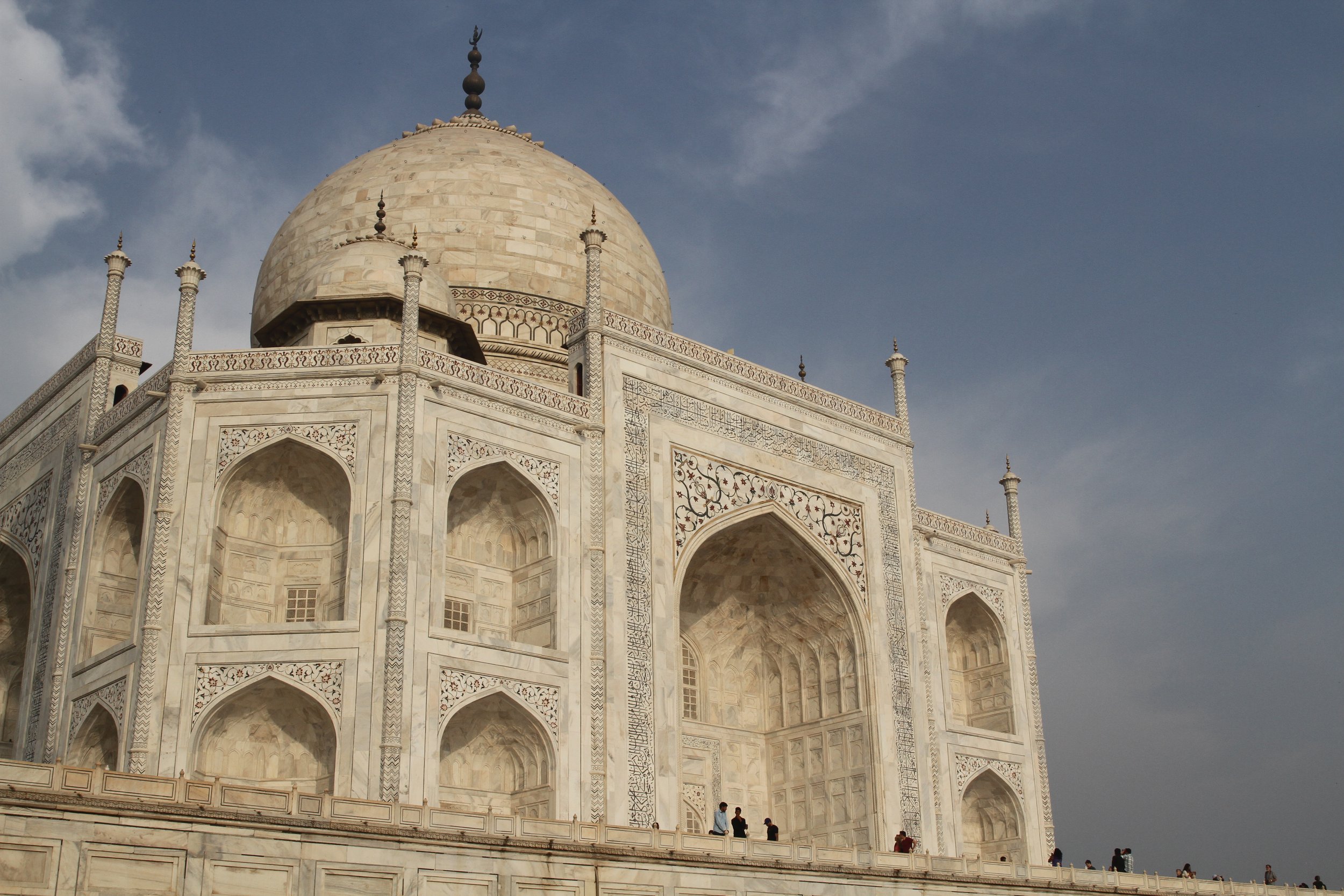
The Icon
Once known as the land of beggars and snake charmers, it was from Agra that five Mughal emperors ruled India, these master strategists drawn here by the region’s wildness. We were lured by slightly different desires - to dine on thali (a meal adored in the south made up of a selection of curries and sauces) at the Oberoi’s palatial Esphahan restaurant and to wonder at the magnificence of the Taj Mahal.
Built by Shah Jahan as the tomb for his favourite wife, Mumtaz Mahal, you can gaze upon the Taj Mahal innumerable times yet it will never seem entirely real, its symmetrical perfection difficult to attribute to human hands. Approaching it, white marble glowing gold in the morning light, our guide soberly reminded us that when talking about Taj Mahal legend the truth should never get in the way of a nice story … before rattling off a series of numbers. 3,000 elephants were used to transport the marble from quarries in Makrana, 300 kilometres away, carrying so much that the tomb could have been constructed 40 times over. All told, 20,000 people worked for 12 years constructing this architectural icon, which is adorned with 500 kilograms of gold, lace-like marble and unfathomably intricate inlay work, shards of onyx, jade, jasper and coral so minute they’re impossible to see with the naked eye.
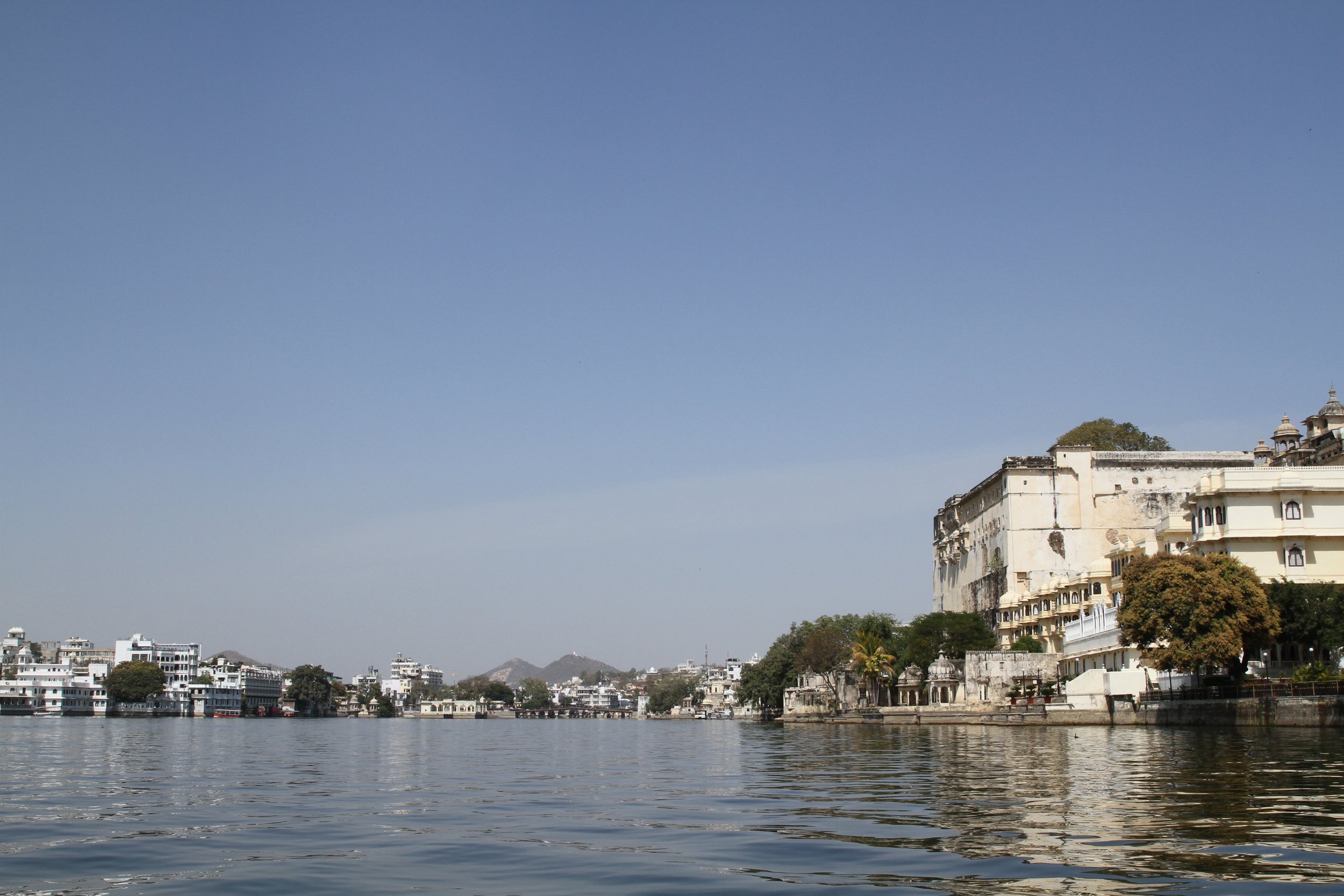
By the Water
Long adored by the Bollywood set, Udaipur is not entirely of this world. Built around the man-made Lake Pichola (which had a starring turn in Octopussy), Udaipur’s waterfront is dominated by the immense City Palace. A hotel, museum and private residence, its gates bear spikes to stop charging elephants, ornate turrets look as though they've been added at random, and stained glass, frescoes and mosaics fill the interior. Across the water is Jagmandir Island Palace. Built as an island for concubines, today it’s ideal for wedding parties and long lunches; stone elephants with trunks raised in welcome greet all who arrive, whatever they’re hankering for.
An artistic city, Udaipur is renowned for its miniature paintings, with contemporary practitioners working in places like Royal Art and Crafts taking up to six months to complete their incredibly detailed work, painting on everything from silk to camel bone. For those seeking an introduction to the region’s music, dance and puppetry, evening performances at Bagore-ki-Haveli are highly recommended. Nearby is Jagdish Mandir, one of the city’s 700 temples. Found up a flight of steep marble stairs, holy men pray by the entrance as chanting and the scent of incense wash over you.
It was here I was struck by the fact that, In India, spirituality means something. There is an energy to these temples. Young and old pray together in absolute devotion, giving themselves over to the moment. People talk about coming to India to find themselves, but I wonder if instead you travel here to forget yourself, to realise that you're just one of many, united by uncertainty and a desire for connection. Here life is a shared experience. You see it all, destitution and pain are public matters. But there’s also such joy and celebration. You lose yourself here because you’re reminded that life, sadness and elation are universal, and perhaps it’s right that none of it should be hidden.

Our journey with Delectable Destinations concluded at RAAS Devigarh, just beyond Udaipur. When we’d entered through the main gate, beneath a garlanded Vishnu, rose petals were thrown from above. Dinner was a multi-course celebration of local ingredients (the rose petal ice-cream a particular stand out), with much of the produce grown on site. In the blue distance the mountains glowed, frangipani filled the air and the stone houses of the town below, each a different shade, were festooned with washing. This palace-fortress-turned-hotel is an oasis, but one that cares for the communities within and around it; such aegis is exemplified in Delwara.
Referred to as the ‘town of gods’ Delwara boasts 1,000 temples, each dedicated to different Hindi and Jain deities, and walking through it you find a community far removed from the Delhi rush. Here cattle turn waterwheels, shepherds sing to their goats and women run the fields. Such moments, settings and scenes remain in the mind long after the tourist travels on, along with a dreamlike sense of unreality, the feeling of having been granted access to wonderful secrets. It was a fitting place to bid farewell. In a country this complex, so full of surprises and wonder, even given a lifetime, I don’t believe it would be possible to truly see it all. Perhaps you can only ever hope for a taste of India’s infinite feast.


The Pieu Scarf
An ode to cotton and silk - exploring art in Vietnam.
Story by TextileSeekers
Amid the dense forests and towering mountains of Vietnam’s breathtakingly beautiful northwest region, we find a distinct ethnic culture whose contributions to Vietnamese craftsmanship and visual identity cannot be understated.
The Tay community, who settled this region having fled their native homes in Thailand generations ago, have flourished to become the second-largest - and one of the most instantly recognisable - ethnic minorities in the country, bringing with them their unique handicrafts, colours, and ancestral silk production and weaving methods. By far the most iconic garment produced and treasured by the Tay tribes is the Pieu scarf. Typically 1.6 metres long and 40cm wide, this precious symbol of the community plays a significant role in several aspects of the tribeswomen’s lives, and seamlessly integrates the practical with the spiritual, the beautiful with the mundane, and the past with the present.
A Symbol of Community
Made from cotton fabric that has been repeatedly dyed, most commonly with indigo - which forms a cultural bedrock of southeast Asia - to ensure a deep and evocative hue, and embroidered with silk thread, the Pieu scarf is worn on a daily basis as an ancestral signifier of community life. It keeps the women cool in humid summers, protects from cold winter breezes, ensures their hair remains untangled, and prevents dust and pollution from damaging the skin.
As one might expect, the Pieu scarves worn while working and in day-to-day life aren’t necessarily elaborately-decorated and embroidered. Indeed, such scarves tend to be plain and practical, with the more spectacular creations reserved for courtship rituals, spiritual milestones, festivals, musical performances, and the renowned Thai Xoe traditional dances.

Ancestral Craftsmanship, Timeless Skills
Handed down from mother to daughter in an unbroken chain, the time-honoured methods of Pieu scarf production are treasured by the Tay people. While certain embroidered symbols and patterns are almost ubiquitous in the scarves’ design, each woman adds her own unique elements, which reflect her personality, wishes, aspirations and dreams.
Certain traditional practices are commonplace in Pieu scarf design, including stylising the edges of the scarf with interwoven green, purple, red, and yellow thread. Often, the women will decorate the borders of their scarf with iconic buds made from rolled pieces of red cloth that resemble fern fronds (a shape which holds special significance to the Tay people). Elsewhere on the scarves, geometric shapes ranging from squares to diamonds, triangles, and zig-zags are standard, adding to the symbolic idiom of their design.
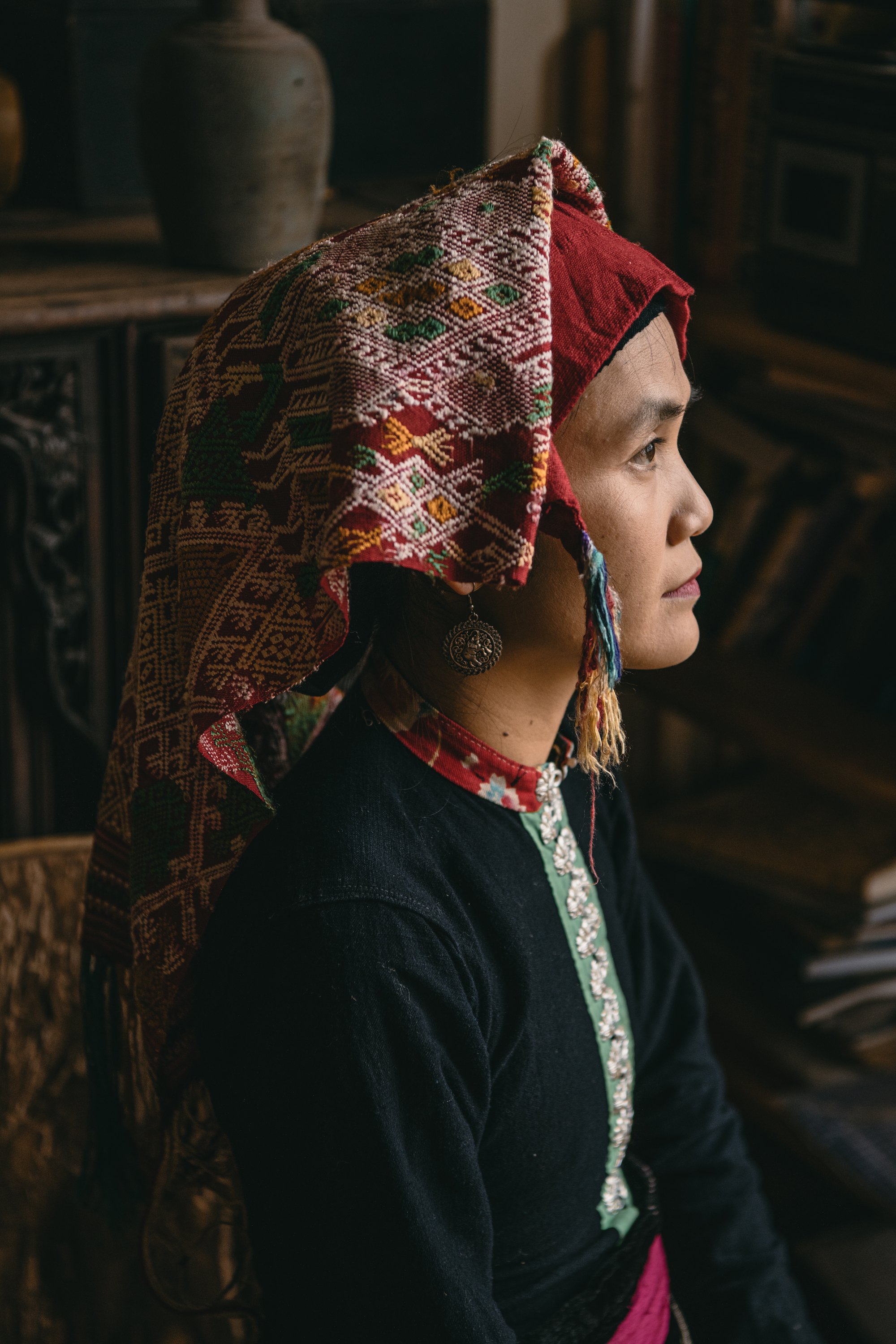
A Thousand Stories, Woven in Silk
As is so common in the handicrafts of this corner of the world, the symbols, patterns, and imagery found on Pieu scarves has its own stories to tell. The floral designs which are central to the scarves represent the high status of women in Tay communities, symbolising their empowerment and their central role in tribal life. They indicate not only their artistic vision and aspirations, but also their entire perspective on life and strength of perseverance - just as the flowers bloom year in, year out. Diamonds symbolise success and bring good luck, prosperity and longevity, and different animals and birds each have their own symbolic significance, too.
When it comes to love and relationships, the scarves also play a role. In an ancient tradition, men seeking to capture the heart of a tribeswoman will grab the cloth balls on the border of her scarf, and will exchange a silver bracelet or other item of jewellery for her scarf. Furthermore, men will carefully consider the quality and expertise of a woman’s weaving when seeking a wife, and the scarf itself becomes a symbol of the loyal bond between partners and their families.
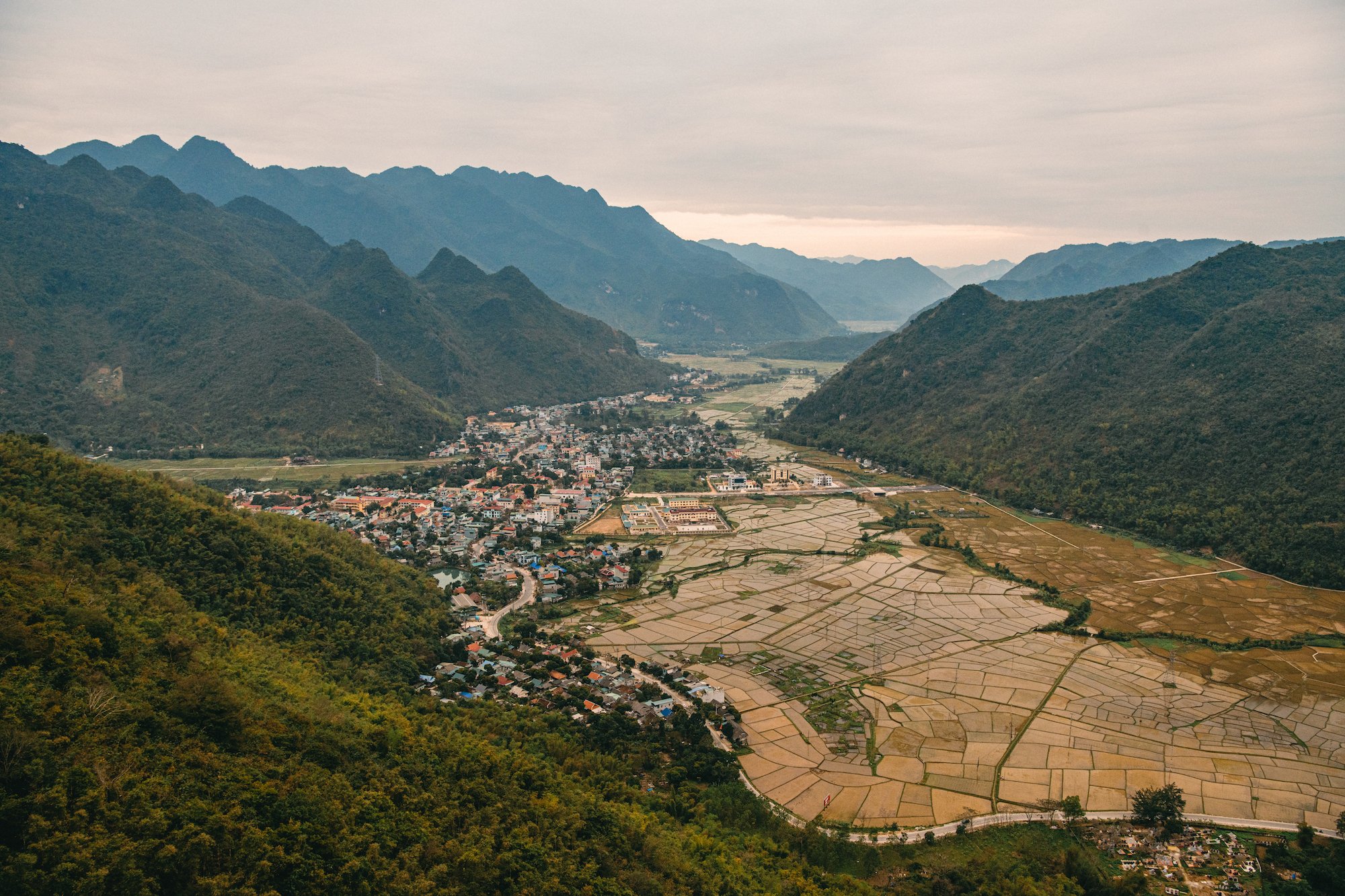
Even at the very end of life, the Pieu scarf has a role to play. The scarves are believed to represent one’s path from this world to the next, and numerous scarves are typically added to the funeral pyre to ease the soul’s passage to the heavenly realm. What’s more, when a husband or wife passes away, the wife’s scarf is cut into two pieces. One piece will cover the face of the deceased, and the other will remain with the surviving partner for the rest of their life, playing its role in their own funeral, when the time finally comes. This ritual, and the love and artistry which goes into the scarf-making itself, is one which connects the two souls and allows them to meet in the afterlife.
TextileSeekers curates experiences focusing on indigenous textile practices and highlighting the value of provenance. Founder Thao Phuong views TextileSeekers as a creative expression; one which allows her to carve out space for other like-minded women who wish to explore the heritage of traditional craftspeople. For her, it is the gathering of a tribe, one which bonds over shared values and forges deep connections with the communities they visit, while helping to ensure the survival of ancestral knowledge for future generations.
In TextileSeeker’s bid to promote sustainability in today’s fashion ecosystem, they have curated a collection of trips to Vietnam later this year. You can learn more about the experiences by clicking here.


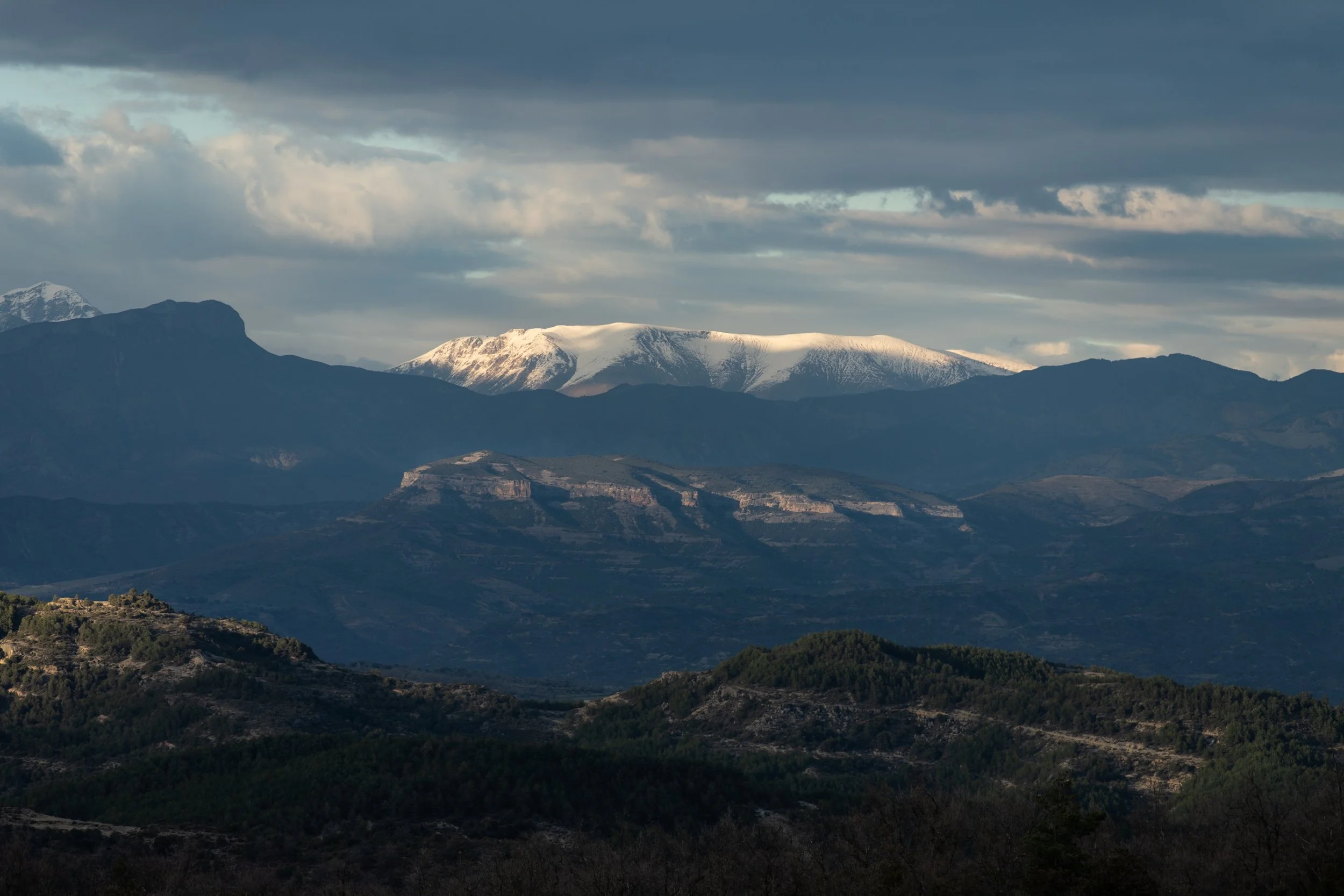
Canyon Echoes and River Travel
Adventure begins when things go wrong.
words & recipes by Kieran Creevy, photographs by Lisa Paarvio, climbing photograph by Adria Martinez
Scrambling down the steep slope, our heavy packs force us to choose our footing with care. At the bottom, the river mud is baked and cracked, yet fragile and insubstantial. Our first steps break through and at times we sink to out knees.
Leaving some essential snacks with the river team, I shoulder my pack and depart on foot to our planned rendezvous. Ahead of us lies the stunning Congost de Montrebei National Park. As I hike uphill, I can hear the whistling of air being pumped into paddle-boards. Dancing around the team is Eko, a massive branch clutched in his jaws. He’s desperate for someone to play with him.

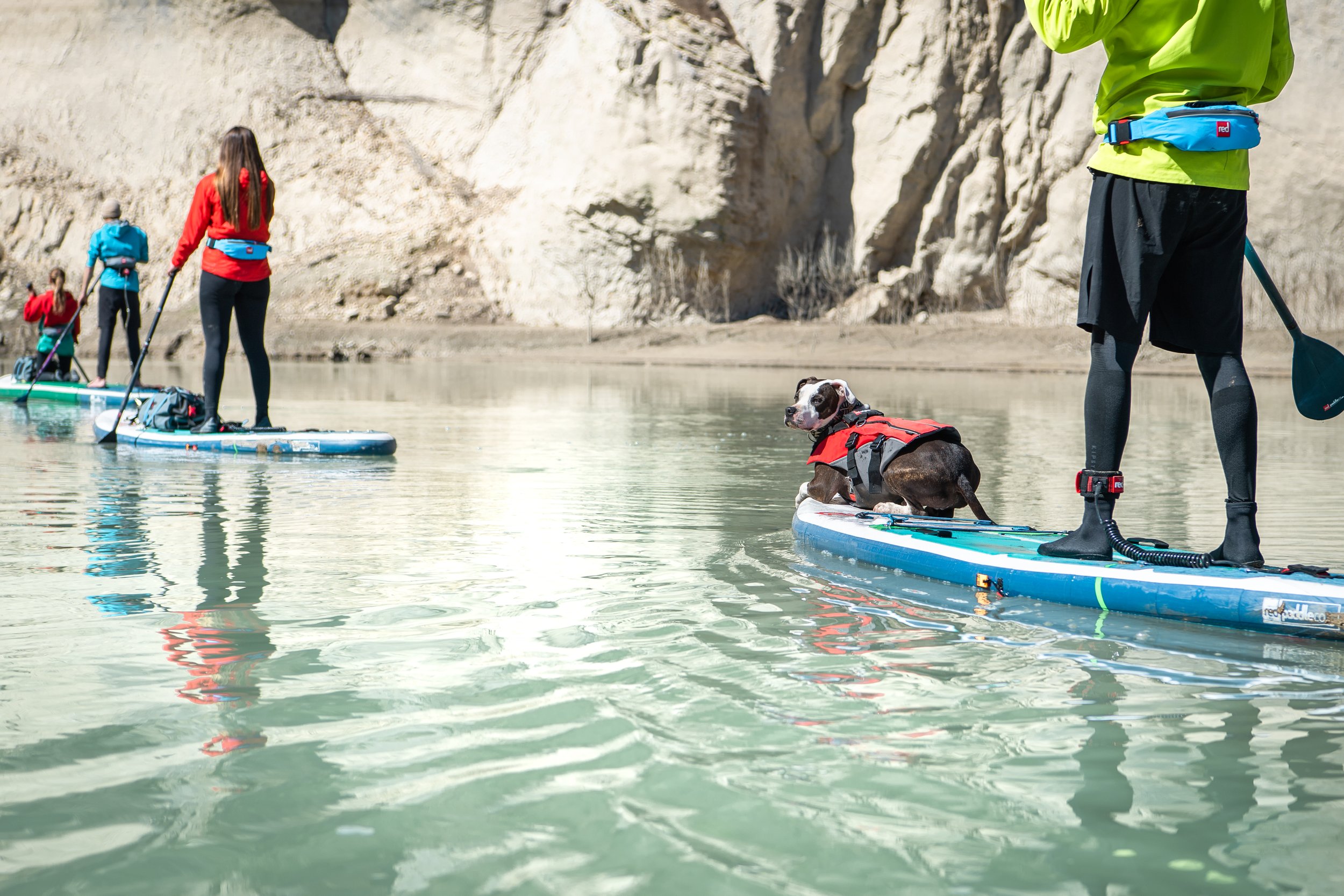
I’m barely at the edge to the canyon before I hear shouts of joy from high above. A hundred meters away, on the Aragonese side of the canyon, ribbons of green and orange flicker in the sunlight. The climbers are hidden in the various folds and curves of the wall. Soon, many of the climbing areas will be clear of human voices; they’ll instead be refuges for a host of nesting vultures and eagles.

Deeper into the canyon, the cliff face curves over my head as the path narrows. Wire cables are anchored to the wall, providing reassurance and a lifeline for those who fear the void mere metres away. Far below, the water turns into glorious shades of Prussian blue as the sunlight finally clears the ridgeline.
Snippets of Catalan words echo up the walls from the river. Voices blending together, becoming muddled, their original meaning lost. Far below me, moving at deceptive speed, the SUP team dip their paddles in rhythm.


The trail widens and bends towards the forest again, and I turn to stare in awe at the beauty of the landscape. This rough hewn hiking track constructed by hand pales in comparison to the majesty of the canyon; its walls carved into wondrous shapes, all smooth lines and curves banded with colour. These bands are the work of geological forces and timelines beyond most of our comprehension.
Unfortunately this beautiful landscape, like so many others, is in danger. All around are the signs of massive drought, none more stark than the water level. Where normally the river rises almost to the forest edge, now it’s almost 20 metres lower. For those who still think climate change doesn’t exist - or hasn’t impacted our landscapes and livelihoods - just go to the areas most affected by the changes. Here, in this gorge, the river levels are down. On the other side of the planet, whole islands are about to be consumed by a sea that has risen less than a metre. Now imagine what a 10 metre sea level rise would mean for billions of people.


With the river far below its normal level, I descend on a fixed rope to a floating pontoon anchored in a cove. I gingerly place my backpack on the Tandem SUP, our food for the journey carefully cached inside. As fellow adventurer Chuan paddles us out into the slow current, we hear a splash behind. A sleek dark shape flows underneath, chasing carp in the depths.
We find a giant wave of stone that contains a small cave around the next corner - the perfect place for our lunchtime refuel. Firing up the stove and unpacking insulated containers, we soon have our simple tapas of Trinxat.
As the sun wanes, I’m outside the national park, waiting for the team at the river’s edge. But something has changed. This morning the river was placid, slow moving, shifting in colour from clear to green to light blue. Now it’s grey brown, with tiny rapids starting to form. Far upstream, one of the power companies has opened sluices, the currents carrying mud, stones and small bits of debris. Then the call comes over the radio.
The team has had to beach their SUPs far downstream, unable to paddle against the increased current. With the water levels far below the norm, between the team and I now lie kilometres of soft mudflats. Tramping through hip deep mud, while dragging a 20 kilo SUP, is exhausting work. What should have been an easy paddle now becomes an adventure. For now my job is to check in with the team at regular intervals to make sure they’re safe, and have food and water ready for when they arrive.

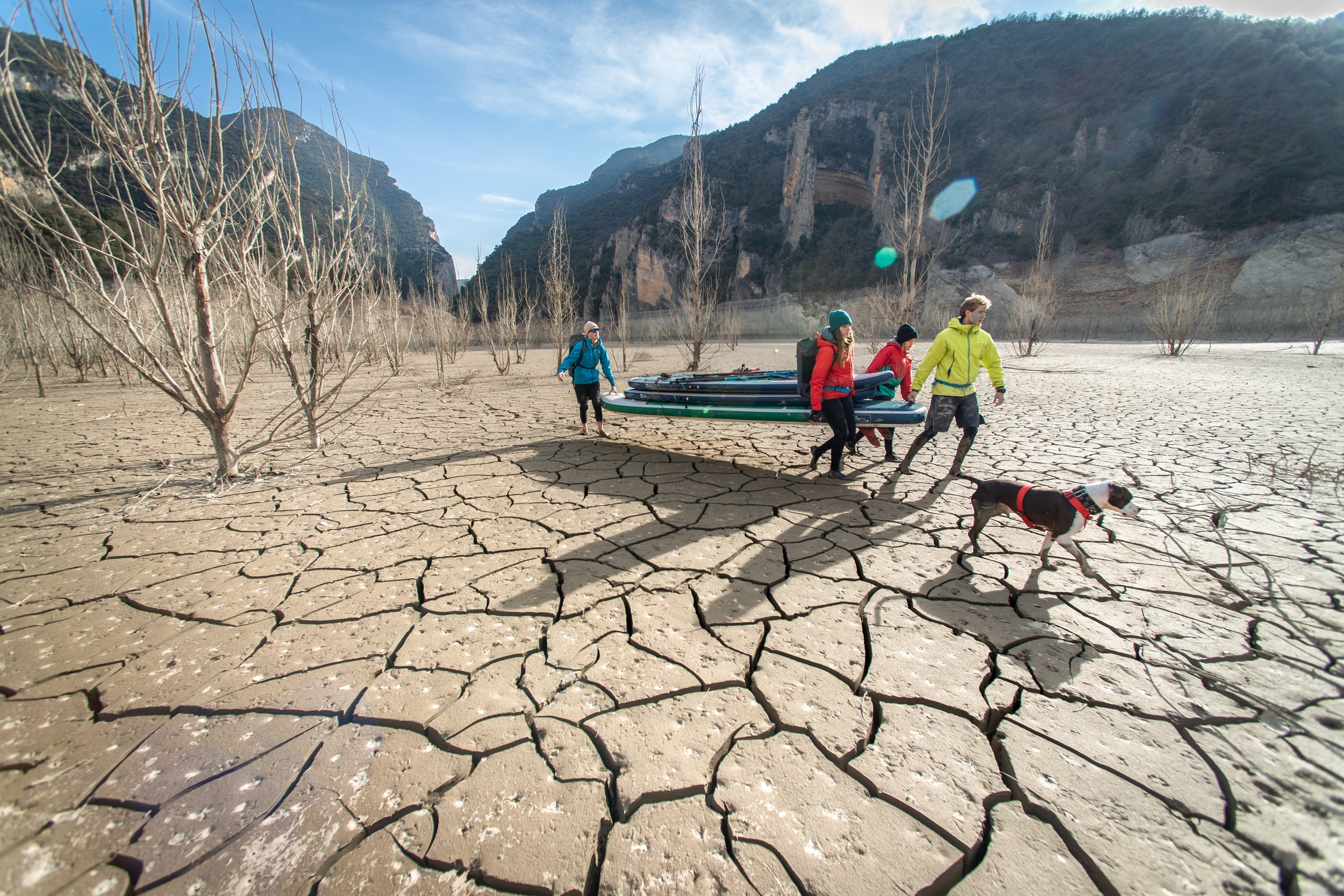
Hours later, they round the corner on the opposite side of the river. We’re only 30 metres apart, but first they have to ferry glide across a much faster current.
Faces and hands streaked with dried mud, the team pull their paddle boards up the last few metres and crumple to the ground. Chests heaving, but with mile-wide grins, the flip over onto their backs, elated. Tonight we feast on slow cooked Catalan stew, and sleep under moonlight, ready for whatever tomorrow brings.


Trinxat
Ingredients
1 head cabbage, cleaned, cut into 4
1kg potatoes, peeled and diced
8 cloves garlic, finely chopped
2 tsp black pepper
1 tsp nutmeg
Sea salt
Olive oil
Optional:
4 Fatty bacon slices, finely diced
1 leek, finely diced
Baby lettuce leaves to serve on the trail
Method:
In a big pot, bring salted water to the boil.
Cook the cabbage for 10 minutes.
Add the potatoes and cook for another 20 minutes.
Drain and mash together roughly.
Season with salt and pepper to taste.
Allow to cool slightly.
In a frying pan, heat up a little oil.
Add the garlic slices, cook for 1-2 minutes.
Add the mash and fry until there’s a good colour to the potatoes.
If you’re using bacon, add it after the garlic but before the mash.
Serve on a plate with Spanish Jamon, grilled black pudding or Bottifarra.
If you leave out the bacon, this is a great dish to chill then have on the trail for a hot lunch as it doesn’t have any animal fat.


Slow cooked rabbit stew.
If you don’t like rabbit, you can replace with lamb or goat.
Ingredients:
1 whole rabbit, cut into 8 (ask your butcher to do this)
Or
1.2 kg rabbit loin (left whole), plus 1 whole roasted chicken carcass
4 tbsp olive oil
8 cloves garlic, peeled
4 banana shallots, peeled and quartered
1 leek, cleaned and diced
1 jar roasted tomato puree
1 jar grilled red peppers
2 large potatoes, peeled and diced
4 carrots, peelde and sliced
1 glass red wine
1.5 litres good vegetable or chicken stock
Sea salt
4 tsp ground black pepper
4 tsp smoky paprika
To serve
Pimentos de padron, roasted and salted
Method
In a large frying pan heat the olive oil.
Season the rabbit with salt and 1 tsp black pepper.
Fry the shallots, garlic and rabbit until the rabbit is lightly caramelised.
Spoon into a slow cooker set to medium.
If you’re using rabbit loin and chicken carcass, add both to the cooker.
If you don’t have slow cooker, use a large stockpot, set on the lowest heat setting.
Add the rest of the ingredients to the cooker/stockpot.
Simmer for 6 hours until the rabbit is falling apart.
Allow to cool then remove as many bones as possible as rabbit has a lot small bones which can be a choking hazard.
When cool, store in the fridge if eating at home and reheat the next day.
If you want to eat this meal on the trail
When cool, transfer the rabbit to insulated food containers (with the lids off) freeze hard overnight.
Cap with the lids, and take with you on the trail.
A good insulated food container should keep the stew frozen for 5-6 hours, so on a full days hike it should be thawed by dinnertime.

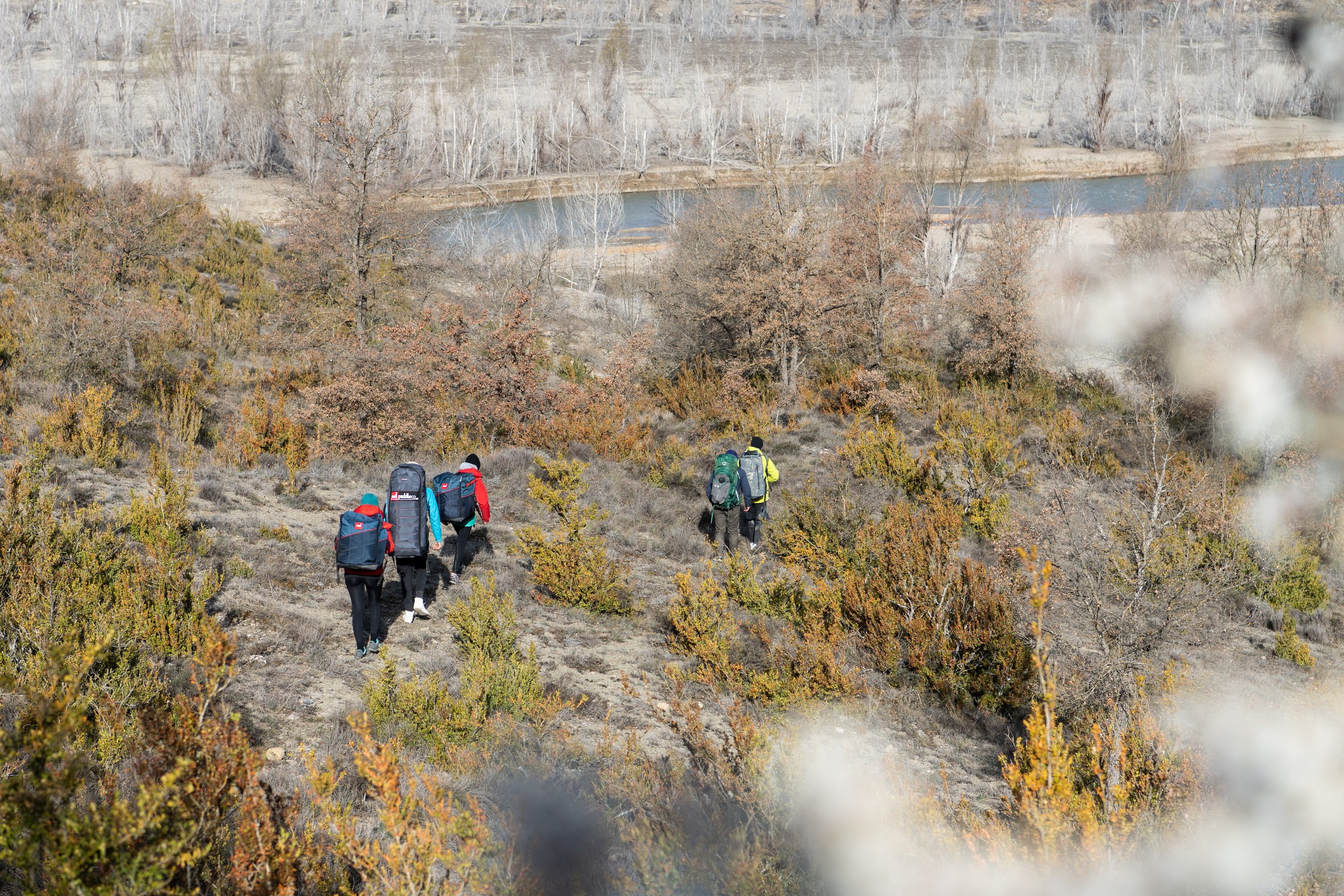


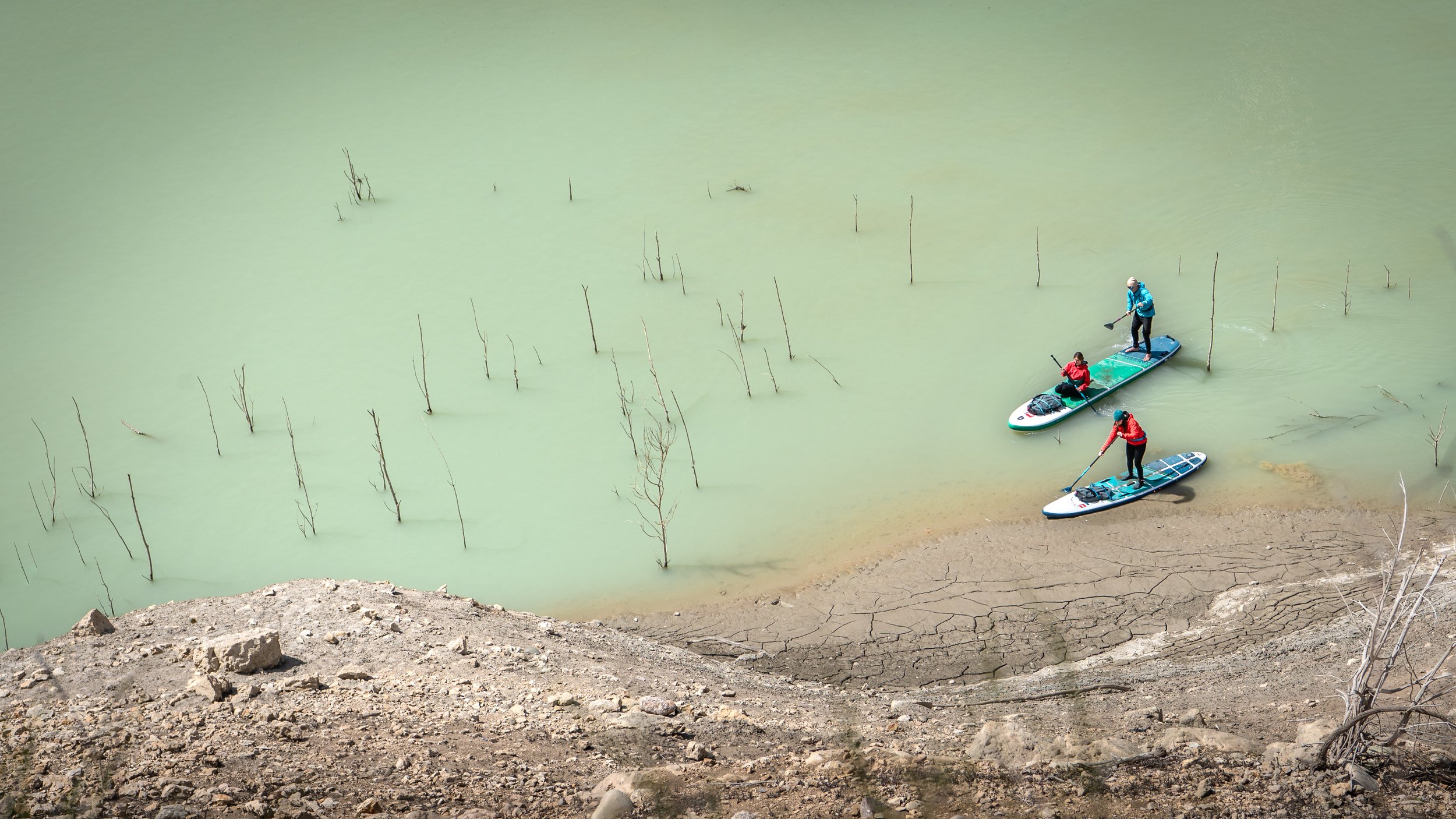

An Ode To Wales
Come and celebrate the Wales magazine with a photography exhibition in Hay-on-Wye!
Come and celebrate the (belated) launch of our Wales magazine with Farmers’ Welsh Lavender and Silver Circle Distillery at Tredegar House in Hay-on-Wye. Editor Liz will be on hand to wax lyrical, and we’ll be exhibiting work from a fabulous collection of photographers.

“It is difficult to put into words just how much I adore Wales. On my first night back in the country, on a balmy August evening in Hay-on-Wye, I sensed the sort of contentment I’d long associated with travel but, over lockdown, had somehow forgotten was possible. I was sojourning solo, biding my time until a photographer joined me for a road trip, and felt utterly calm. At the same time though, everything seemed heightened and the day’s simple pleasures - a forage around bookshops, a dip in a sun-bathed river - were imbued with romance. For the first time in months I was able to breathe, look around and drink it in. A weight was lifted and what I saw was divine.
However, my infatuation goes back further. I remember driving to Pembrokeshire on a grey December afternoon and being overcome by reverence, dwarfed by the landscape and - although I didn’t realise it then - the marks of time. Here, the past is etched into the terrain, present in the remnants of mining communities, myth-shrouded ruins and peaks weather-worn and proud. You’re aware of all that has come before, of the dedication and pride rippling down through the generations; the seeds of such devotion sown by the Druids, nurtured by the Celts, bolstered by the warriors of old and made glorious in poetry and song.“

I wrote the above words in the Editor’s Letter of the 2020 Wales magazine, and to me they still ring true. My adoration for this country and her landscapeshas not waned, and it’s wonderful to finally celebrate the issue with Farmers’ Welsh Lavender and photographs from a collection of artists besotted by Wales.

Featured photographers: Daniel Alford, Marsha Arnold, Finn Beales, Billie Charity, Holly Farrier, Leon Foggitt, Orlando Gili, Hollie Harmsworth, David Rich, Beth Squire & Jonathan Stokes.


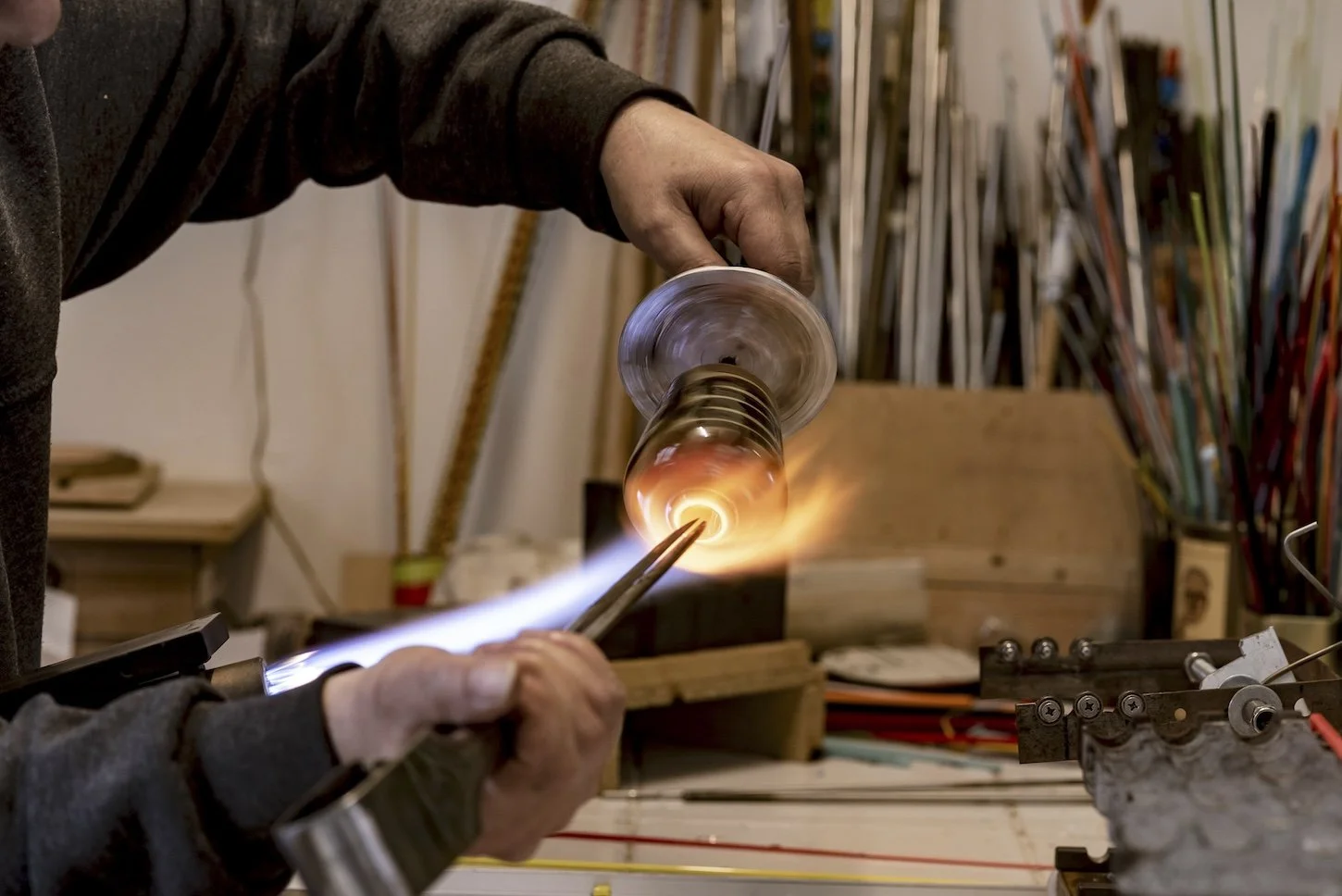
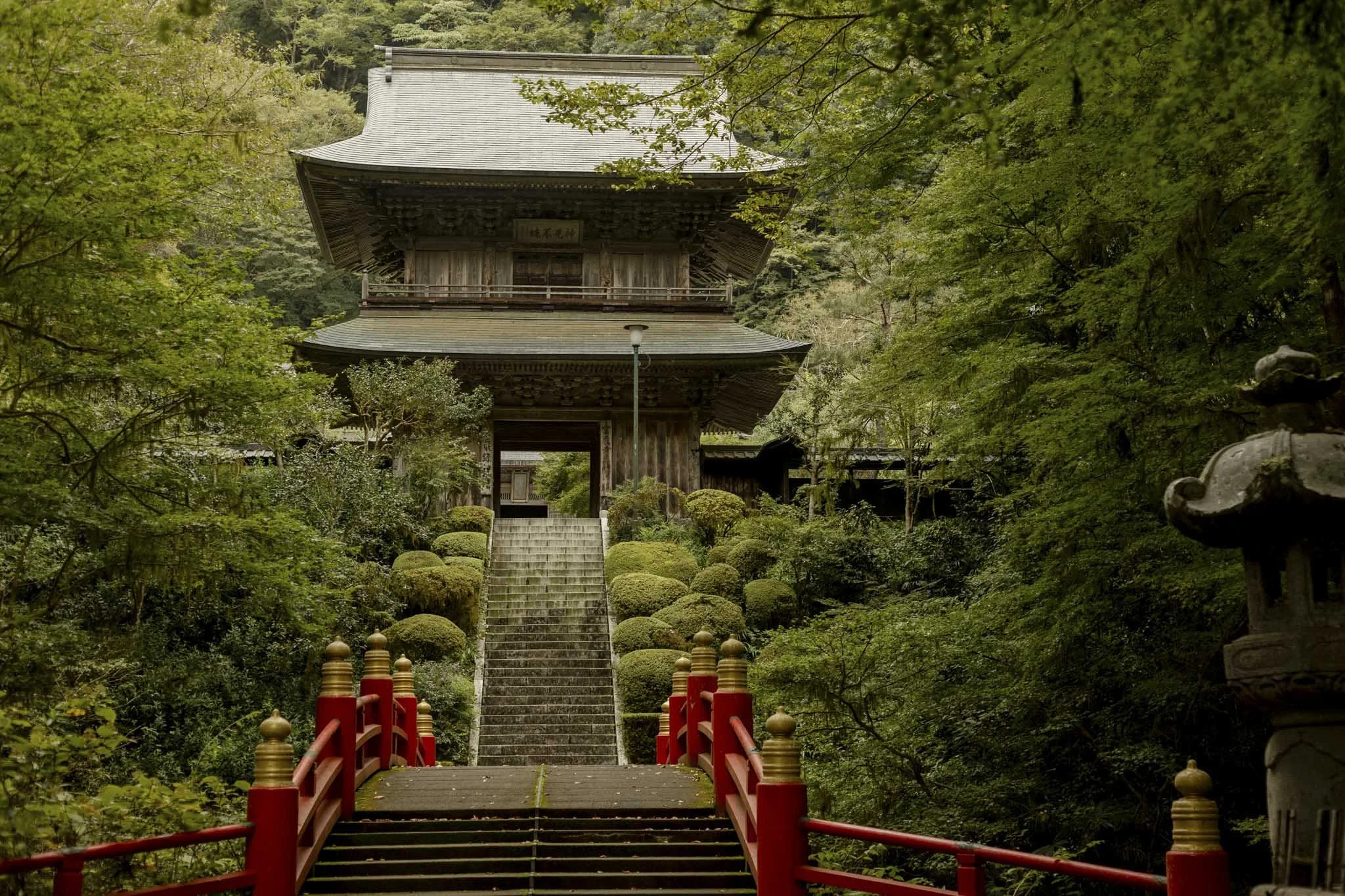


Celebrating Cecil Beaton at Wales’ Hawarden Estate.